



Parametry
Więcej o książce
The text provides a comprehensive overview of Practical Theology, structured into three main parts: the individual, the church, and society. It begins with an introduction to the field, exploring its origins and historical development. The first part focuses on the individual, discussing religion, the role of the pastor, and diaconal work, including the emergence of Protestant pastoral care and key principles of pastoral theology. It also addresses the significance of pastoral acts in relation to personal and communal life. The second part delves into the church, examining the evangelical understanding of the church, its relationship with theology, and the connection between the church and its members. It further explores the concept of ministry, ordination, preaching, and the foundations of evangelical worship, emphasizing the practice and theology of worship. The final part addresses societal aspects, discussing institutions, the role of the pastor in modern society, and church employment law. It also covers the history and fundamental questions of Christian education, the responsibilities involved, and the nature of the parish and ecumenism. The text concludes with literature references and indexes, encapsulating the multifaceted nature of Practical Theology and its relevance in contemporary contexts.
Zakup książki
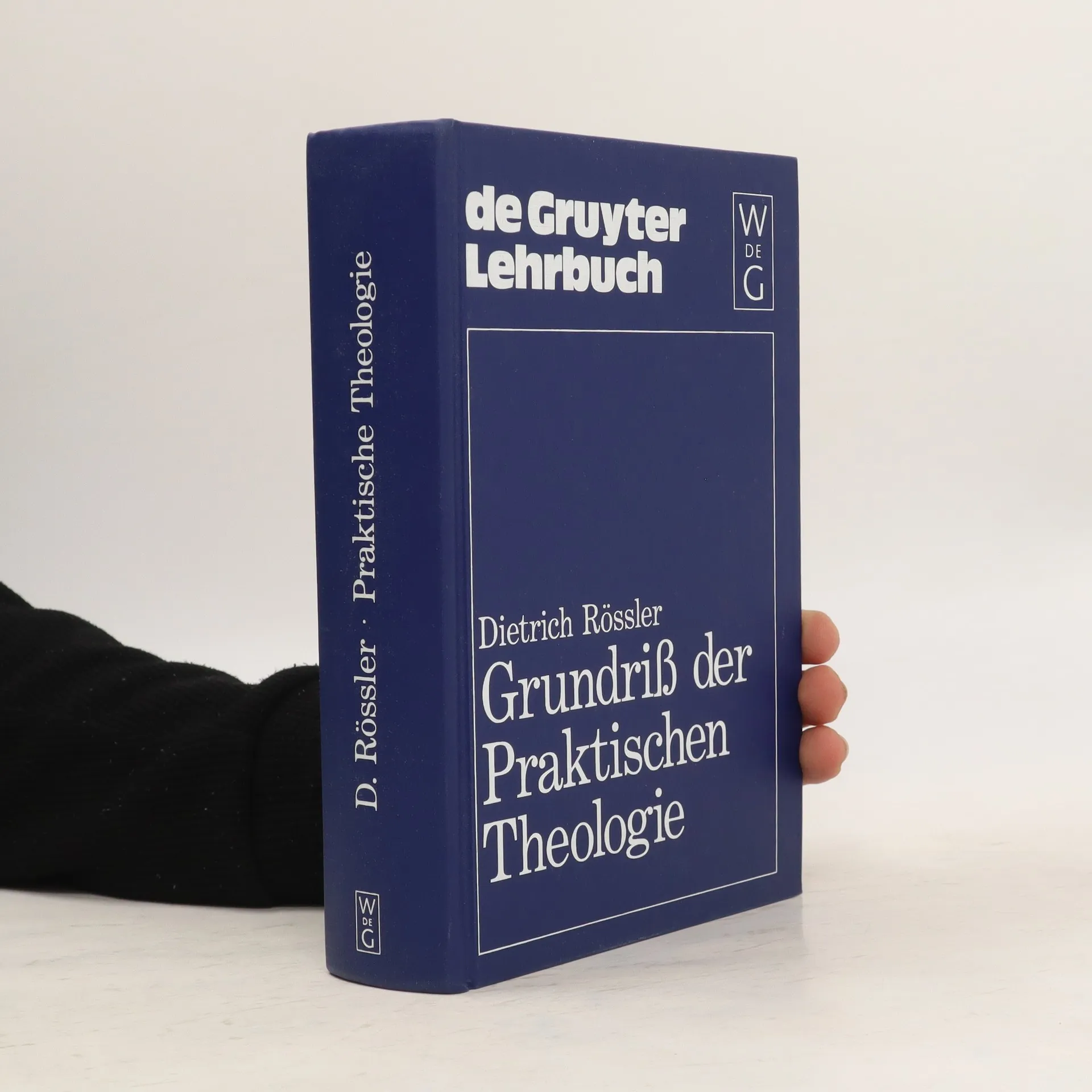
Grundriss der praktischen Theologie, Dietrich Rössler
- Język

- Rok wydania
- 1986
- Oprawa
- (twarda)
Metody płatności
Nikt jeszcze nie ocenił.
- Tytuł
- Grundriss der praktischen Theologie
- Język
- niemiecki
- Autorzy
- Dietrich Rössler
- Wydawca
- Walter de Gruyter
- Rok wydania
- 1986
- Oprawa
- twarda
- ISBN10
- 3110107783
- ISBN13
- 9783110107784
- Seria
- Kategorie
- Tagi
- Opis
- The text provides a comprehensive overview of Practical Theology, structured into three main parts: the individual, the church, and society. It begins with an introduction to the field, exploring its origins and historical development. The first part focuses on the individual, discussing religion, the role of the pastor, and diaconal work, including the emergence of Protestant pastoral care and key principles of pastoral theology. It also addresses the significance of pastoral acts in relation to personal and communal life. The second part delves into the church, examining the evangelical understanding of the church, its relationship with theology, and the connection between the church and its members. It further explores the concept of ministry, ordination, preaching, and the foundations of evangelical worship, emphasizing the practice and theology of worship. The final part addresses societal aspects, discussing institutions, the role of the pastor in modern society, and church employment law. It also covers the history and fundamental questions of Christian education, the responsibilities involved, and the nature of the parish and ecumenism. The text concludes with literature references and indexes, encapsulating the multifaceted nature of Practical Theology and its relevance in contemporary contexts.