

Więcej o książce
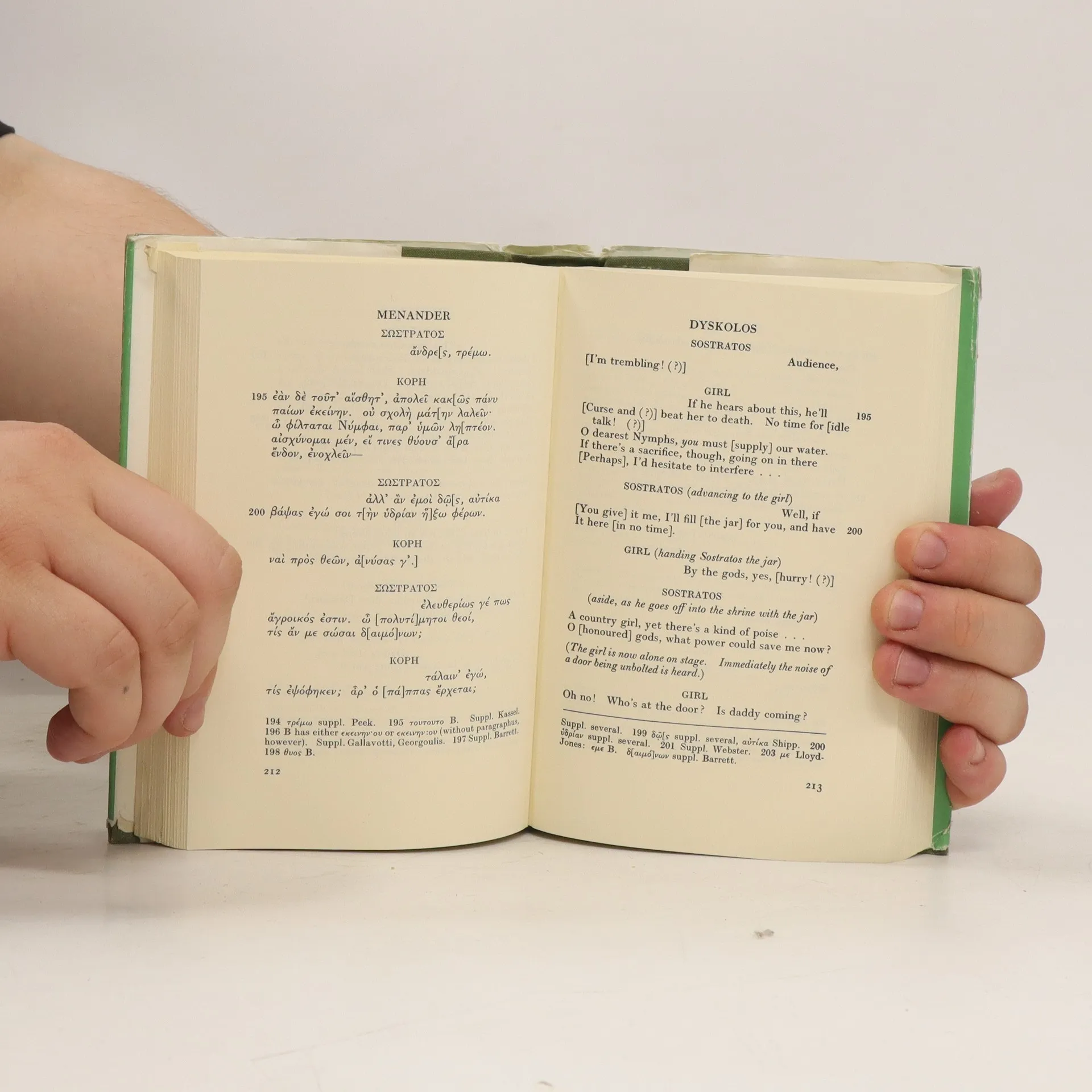
MENANDER (?344/3-292/1 B.C.) of Athens was the leading playright of the 'New Comedy', a type of drama which has influenced the modern 'Comedy of Manners' and (indirectly at least writers as disparate as Oscar Wilde and P.G. Wodehouse. Menander wrote more than 100 plays, but did not become a star until after his death. Many of his comedies were adapted by Roman dramatists. By the middle ages, however, his works were lost, apart from quotations like 'He whom the gods love dies while still a youngster.' Then at the end of the nineteenth century, papyrus texts, preserved from antiquity by the dry heat of Egypt, began to be discovered. These have yielded so far one play virtually complete (Dyskolos), large continuous portions of four more (Aspis, Epitrepontes, Perikeiromene, Samia), and sizable chunks of many others. Menander remains a paradox: artificial plots based on unlikely but conventional coincidences, enlivened by individualised characters, realistic situations and at times deeply moving dialogue. 'Menander and life, which of you imitated the other?'
Zakup książki
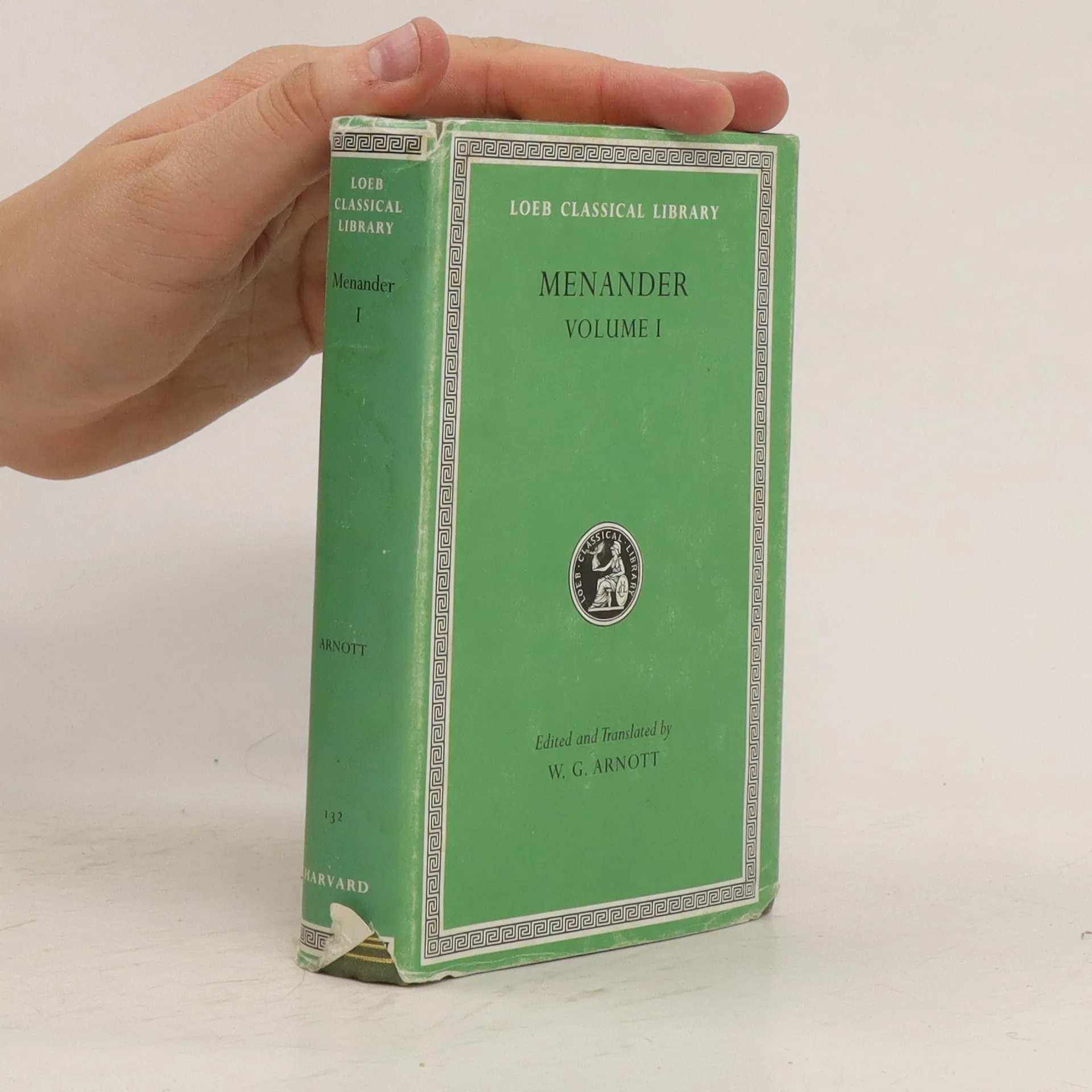
Menander. Vol. 1, Menander, W Geoffrey (William Geoffrey) Arnott
- Język

- Rok wydania
- 1979
- Oprawa
- (twarda)
Metody płatności
Brakuje nam tutaj Twojej recenzji.
- Tytuł
- Menander. Vol. 1
- Język
- angielski
- Wydawca
- Harvard University Press
- Rok wydania
- 1979
- Oprawa
- twarda
- Liczba stron
- 592
- ISBN10
- 0674991478
- ISBN13
- 9780674991477
- Seria
- Tagi
- Ocena
- 4,1 z 5
- Opis
- MENANDER (?344/3-292/1 B.C.) of Athens was the leading playright of the 'New Comedy', a type of drama which has influenced the modern 'Comedy of Manners' and (indirectly at least writers as disparate as Oscar Wilde and P.G. Wodehouse. Menander wrote more than 100 plays, but did not become a star until after his death. Many of his comedies were adapted by Roman dramatists. By the middle ages, however, his works were lost, apart from quotations like 'He whom the gods love dies while still a youngster.' Then at the end of the nineteenth century, papyrus texts, preserved from antiquity by the dry heat of Egypt, began to be discovered. These have yielded so far one play virtually complete (Dyskolos), large continuous portions of four more (Aspis, Epitrepontes, Perikeiromene, Samia), and sizable chunks of many others. Menander remains a paradox: artificial plots based on unlikely but conventional coincidences, enlivened by individualised characters, realistic situations and at times deeply moving dialogue. 'Menander and life, which of you imitated the other?'