

Więcej o książce
This book surveys the history of British adult education over the past two centuries, attempting to throw more light on the present and the future by critically analysing its historical development. Its intention is to contribute to a debate about the nature and significance of adult education in Britain by measuring its aims against achievements and comparing the rhetoric with the reality. It attempts to calculate how influential adult education has been and to what effect (if any) it has had on society. It relates the historical development to the wider policy and ideological context within which it took place. The book also asks what purpose did this adult education serve? Was it predominantly for individual personal fulfilment or for social development? Did adult education help to produce a more active citizenship or a better informed and participatory democracy? Was its prime purpose to make good the inadequacies of schooling by offering those who had 'failed' a second chance? Or was it merely more education in adulthood for whoever wanted it? Was it primarily vocational in orientation? Was it a form of social control? Was it in reality a mixture of most or all of these functions, some of which became more important than others at different times, and in different situations? These are the kinds of critical question that it attempts to answer.
Zakup książki
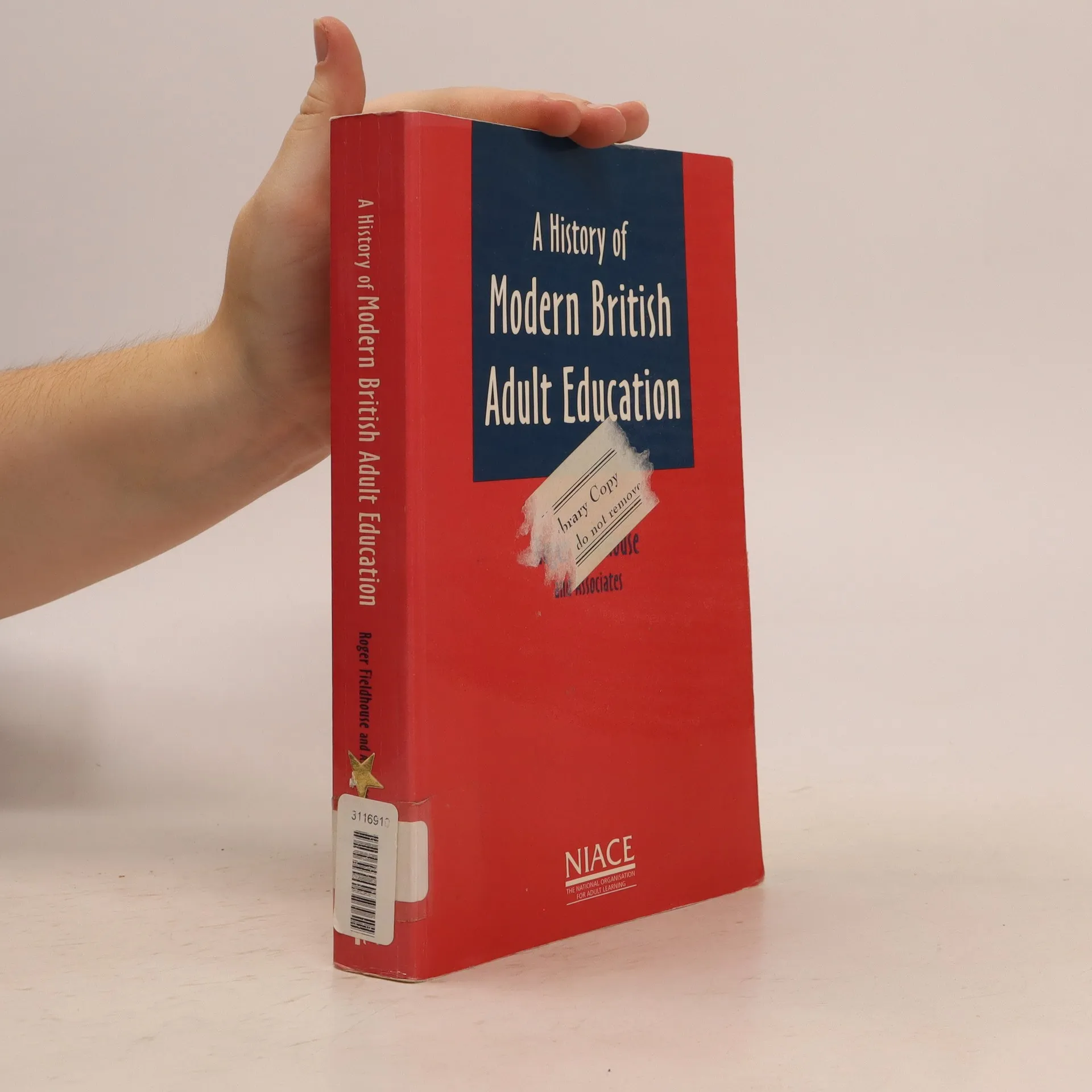
A History of Modern British Adult Education, Roger Fieldhouse
- Język

- Rok wydania
- 1996
- Oprawa
- (miękka)
Metody płatności
Brakuje nam tutaj Twojej recenzji.
- Tytuł
- A History of Modern British Adult Education
- Język
- angielski
- Autorzy
- Roger Fieldhouse
- Rok wydania
- 1996
- Oprawa
- miękka
- Liczba stron
- 464
- ISBN10
- 1872941664
- ISBN13
- 9781872941660
- Seria
- Tagi
- Ocena
- 4 z 5
- Opis
- This book surveys the history of British adult education over the past two centuries, attempting to throw more light on the present and the future by critically analysing its historical development. Its intention is to contribute to a debate about the nature and significance of adult education in Britain by measuring its aims against achievements and comparing the rhetoric with the reality. It attempts to calculate how influential adult education has been and to what effect (if any) it has had on society. It relates the historical development to the wider policy and ideological context within which it took place. The book also asks what purpose did this adult education serve? Was it predominantly for individual personal fulfilment or for social development? Did adult education help to produce a more active citizenship or a better informed and participatory democracy? Was its prime purpose to make good the inadequacies of schooling by offering those who had 'failed' a second chance? Or was it merely more education in adulthood for whoever wanted it? Was it primarily vocational in orientation? Was it a form of social control? Was it in reality a mixture of most or all of these functions, some of which became more important than others at different times, and in different situations? These are the kinds of critical question that it attempts to answer.