

Więcej o książce
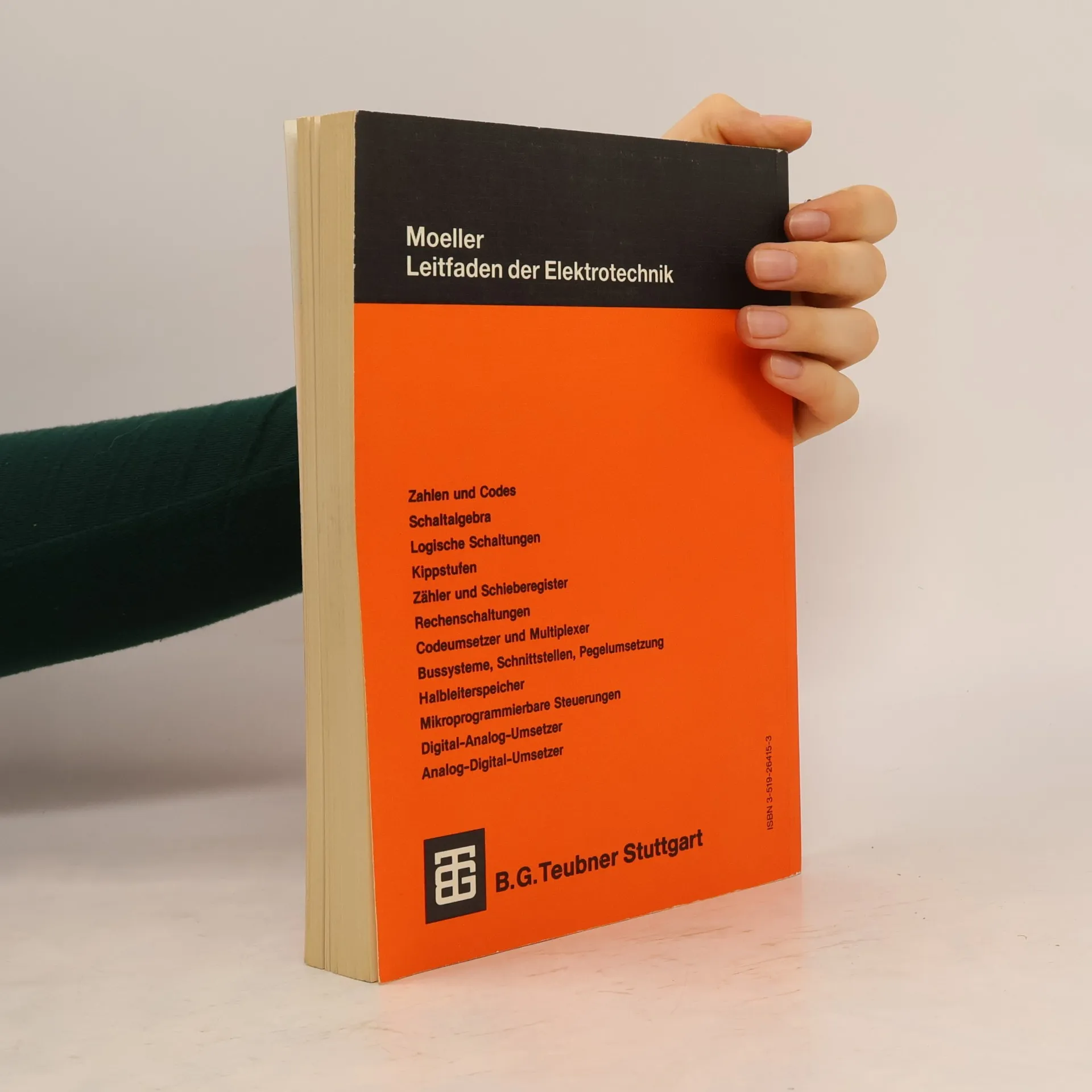
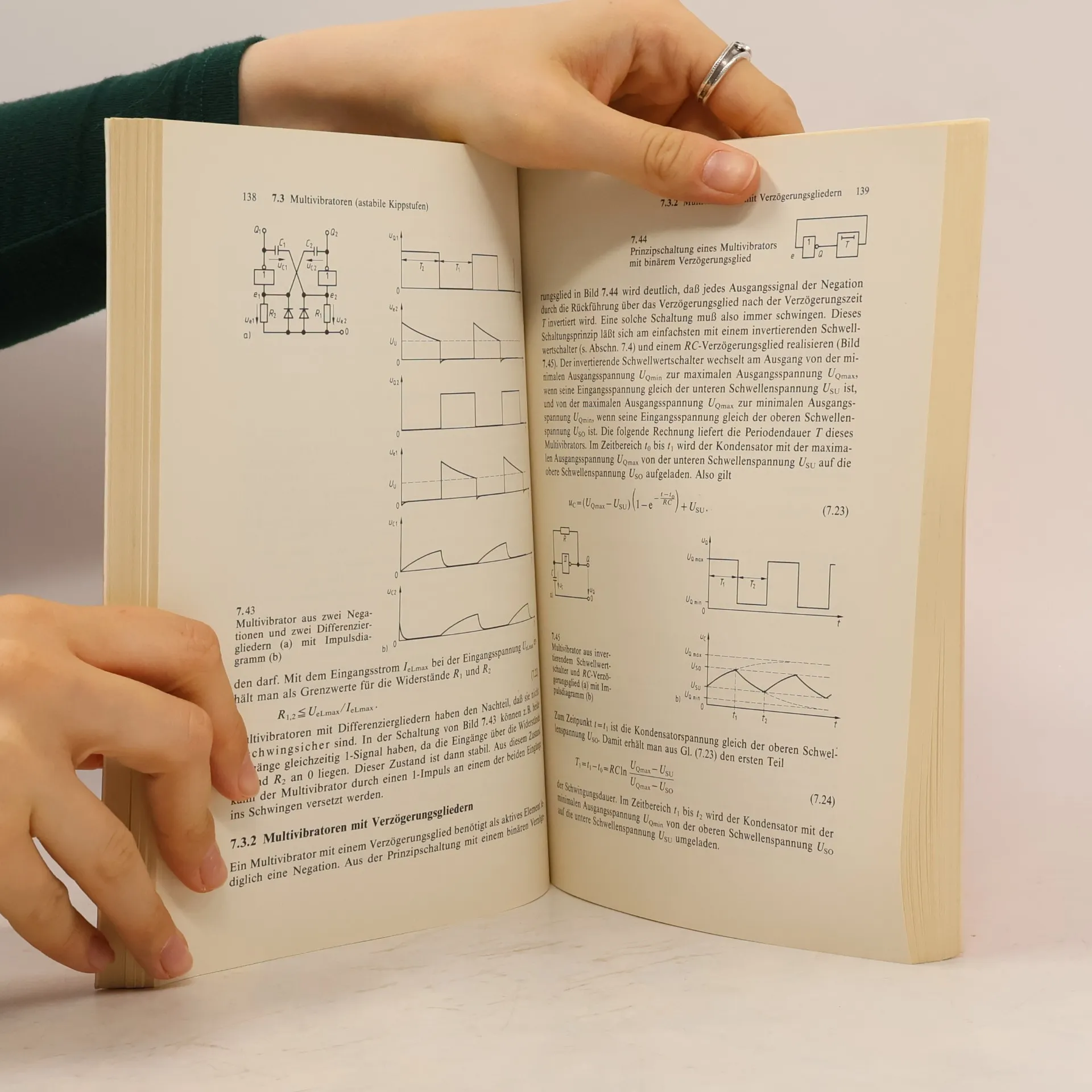
The content covers a comprehensive range of topics in digital technology and communication systems. It begins with defining digital technology and exploring various representation methods for messages, as well as systems for processing these messages. The discussion on numbers includes numeral systems, conversions to and from decimal, fixed and floating-point representations, and binary arithmetic. The section on codes details definitions and types, including binary-coded decimal and secure codes. Shifting to switch algebra, the text outlines its fundamentals, functions, and rules for constructing and simplifying functions. It then examines electronic switches, highlighting both ideal and real switches, focusing on bipolar and unipolar transistors. Logical circuits are introduced with basic AND and OR circuits, along with NAND and NOR variations. The book also delves into flip-flops, monostable and astable circuits, and threshold switches. Further analysis and synthesis of sequential circuits are discussed, alongside synchronous and asynchronous counters and shift registers. Arithmetic circuits are presented, detailing half and full adders, multi-digit binary addition, and arithmetic logic units. Additional topics include static and dynamic number comparison circuits, code converters, multiplexers, bus systems, and semiconductor memory. The content also touches on microprogrammable controls, digital-to-analog converters, an
Zakup książki
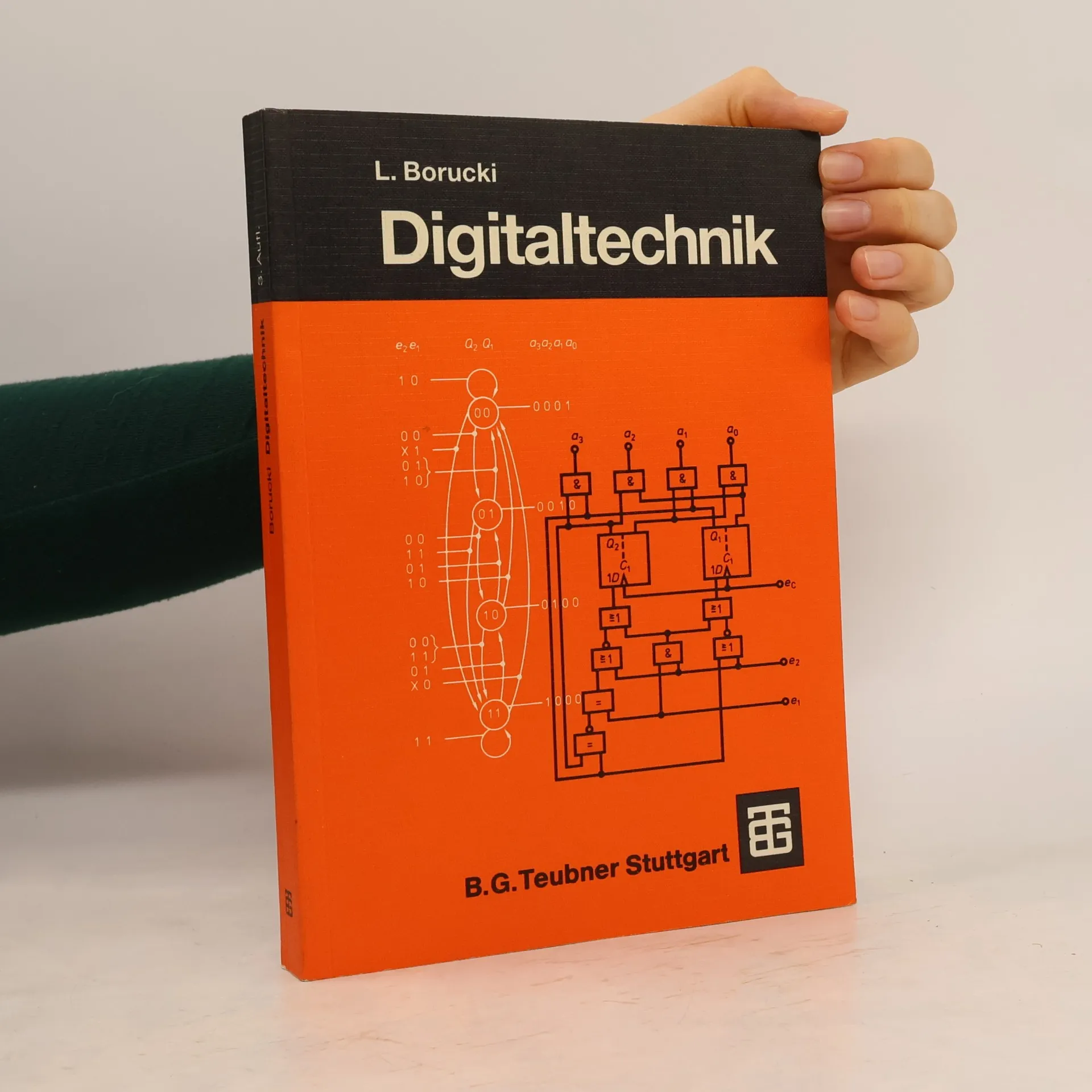
Digitaltechnik, Lorenz Borucki
- Język

- Rok wydania
- 1989
- Oprawa
- (miękka)
Metody płatności
Nikt jeszcze nie ocenił.
- Tytuł
- Digitaltechnik
- Język
- niemiecki
- Autorzy
- Lorenz Borucki
- Wydawca
- Teubner
- Rok wydania
- 1989
- Oprawa
- miękka
- Liczba stron
- 338
- ISBN10
- 3519264153
- ISBN13
- 9783519264156
- Seria
- Tagi
- Opis
- The content covers a comprehensive range of topics in digital technology and communication systems. It begins with defining digital technology and exploring various representation methods for messages, as well as systems for processing these messages. The discussion on numbers includes numeral systems, conversions to and from decimal, fixed and floating-point representations, and binary arithmetic. The section on codes details definitions and types, including binary-coded decimal and secure codes. Shifting to switch algebra, the text outlines its fundamentals, functions, and rules for constructing and simplifying functions. It then examines electronic switches, highlighting both ideal and real switches, focusing on bipolar and unipolar transistors. Logical circuits are introduced with basic AND and OR circuits, along with NAND and NOR variations. The book also delves into flip-flops, monostable and astable circuits, and threshold switches. Further analysis and synthesis of sequential circuits are discussed, alongside synchronous and asynchronous counters and shift registers. Arithmetic circuits are presented, detailing half and full adders, multi-digit binary addition, and arithmetic logic units. Additional topics include static and dynamic number comparison circuits, code converters, multiplexers, bus systems, and semiconductor memory. The content also touches on microprogrammable controls, digital-to-analog converters, an