






Więcej o książce
The second edition of this remarkably lucid text offers a comprehensive historical introduction to social theory, enhancing its clarity, reliability, and scholarship. It covers a wide range of theorists, including Montesquieu, Adam Smith, Hegel, Marx, Tocqueville, and many others, examining how social theory emerged from the Enlightenment. During this period, Western societies shifted from relying on tradition to seeking scientific knowledge for validation. The text explores the connections between social theory, modern philosophy, political economy, and the influence of evolutionary biology on social thought. Carefully updated, the book engages with contemporary debates in social theory and concludes with a substantial new chapter assessing the significance of globalization. It addresses the resurgence of critiques of capitalism and imperialism, highlighting the work of theorists like Michael Hardt, Toni Negri, and Slavoj Zizek. This updated edition is essential reading for students of politics, sociology, and social and political thought, providing insights into the evolution and current discussions within social theory.
Zakup książki
Social theory. A historical introduction, Alex Callinicos
- Język

- Rok wydania
- 2013
- Oprawa
- (miękka)
Metody płatności
Brakuje nam tutaj Twojej recenzji.
- Tytuł
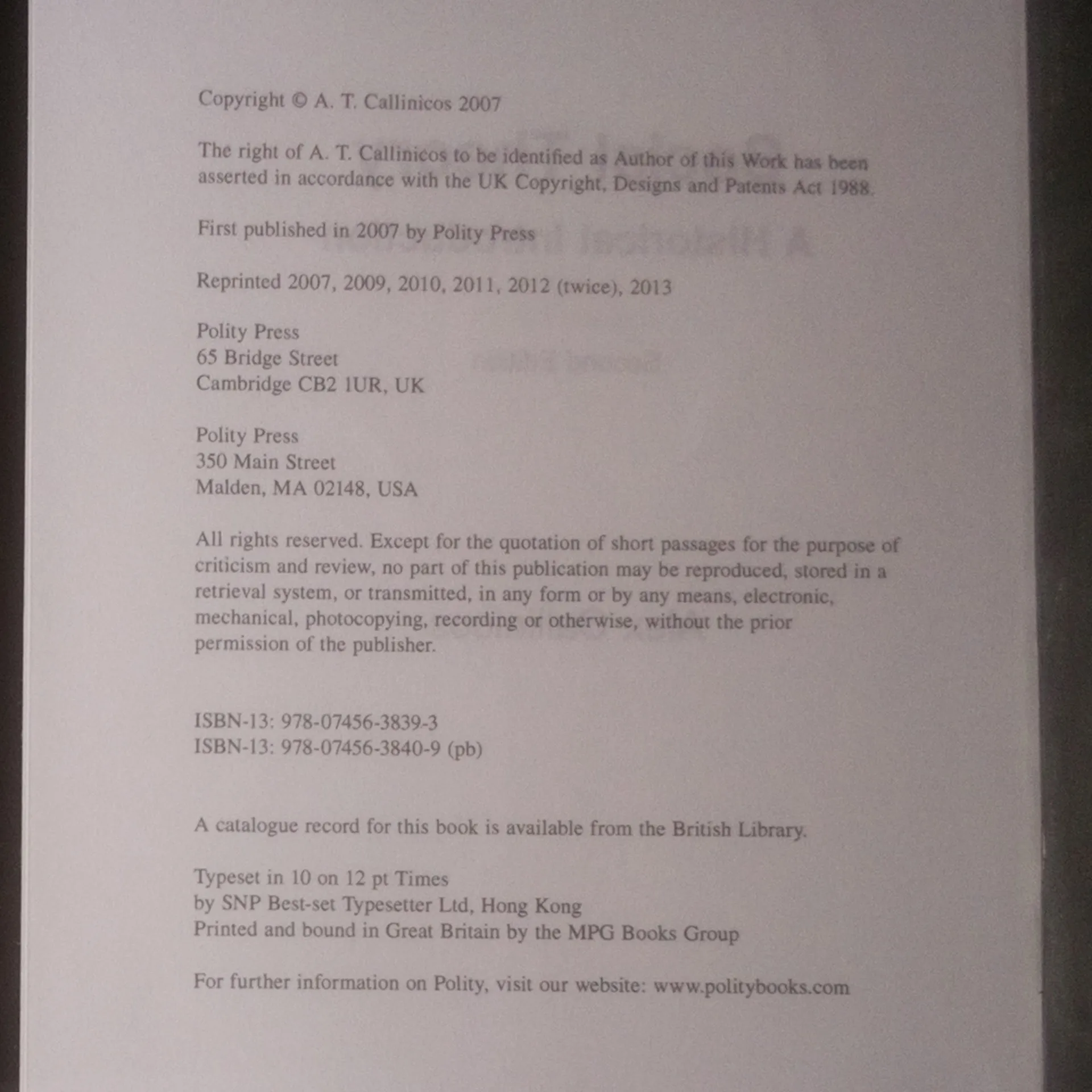
- Social theory. A historical introduction
- Język
- angielski
- Autorzy
- Alex Callinicos
- Wydawca
- Polity Press
- Rok wydania
- 2013
- Oprawa
- miękka
- Liczba stron
- 368
- ISBN10
- 0745638406
- ISBN13
- 9780745638409
- Seria
- Kategorie
- Ocena
- 4,4 z 5
- Opis
- The second edition of this remarkably lucid text offers a comprehensive historical introduction to social theory, enhancing its clarity, reliability, and scholarship. It covers a wide range of theorists, including Montesquieu, Adam Smith, Hegel, Marx, Tocqueville, and many others, examining how social theory emerged from the Enlightenment. During this period, Western societies shifted from relying on tradition to seeking scientific knowledge for validation. The text explores the connections between social theory, modern philosophy, political economy, and the influence of evolutionary biology on social thought. Carefully updated, the book engages with contemporary debates in social theory and concludes with a substantial new chapter assessing the significance of globalization. It addresses the resurgence of critiques of capitalism and imperialism, highlighting the work of theorists like Michael Hardt, Toni Negri, and Slavoj Zizek. This updated edition is essential reading for students of politics, sociology, and social and political thought, providing insights into the evolution and current discussions within social theory.