



Więcej o książce
The second volume describes the formation, in the sixth century BC, of the earliest multi-national empire, its administration, its confrontation with Greece, and its eventual dissolution under the impact of Alexander's conquest of Iran in 331 BC. This was a time of great importance in the history of the entire Middle East, and embraced figures of the stature of Cyrus, Darius and Xerxes. The sources for this period are more diverse than for any other in Iran's history, the bulk of the evidence being preserved in Babylonian, Elamite, Egyptian and Greek. The involvement in this volume of specialists in each of these fields has ensured that the results of the intensive research of recent years are incorporated in this synthesis. In addition to the strictly historical accounts there are chapters on art and architecture, metalwork and glyptic, calendar systems, weights and measures, religion, and the eastern Iranian world as reflected in the Avesta.
Zakup książki
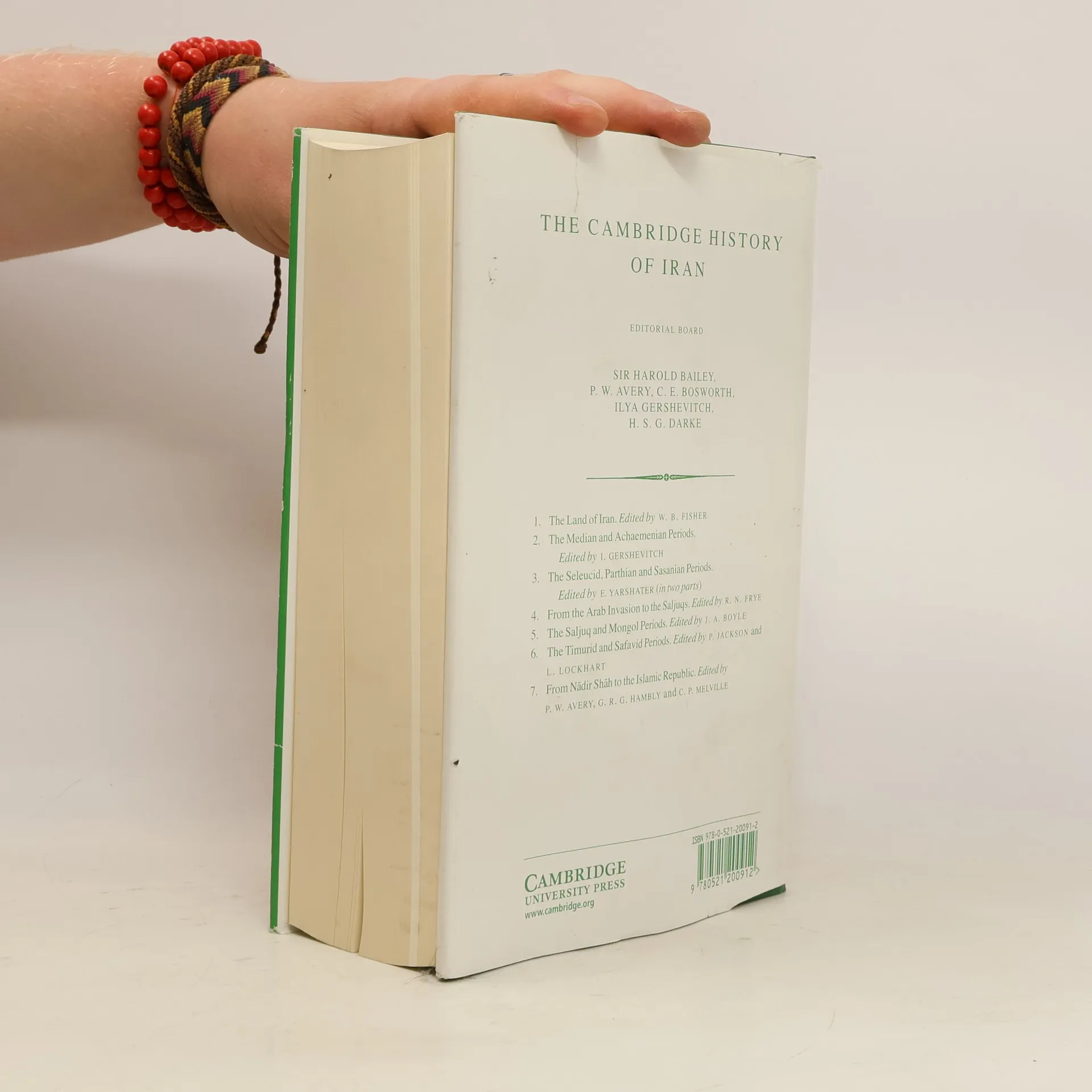
The Cambridge history of Iran. 2. The Median and Achaemenian periods, Ilya Gershevitch, Harold J. Bailey
- Język

- Rok wydania
- 2010
- Oprawa
- (twarda)
Metody płatności
Brakuje nam tutaj Twojej recenzji.
- Tytuł
- The Cambridge history of Iran. 2. The Median and Achaemenian periods
- Język
- angielski
- Autorzy
- Ilya Gershevitch, Harold J. Bailey
- Wydawca
- Cambridge University Press
- Rok wydania
- 2010
- Oprawa
- twarda
- Liczba stron
- 964
- ISBN10
- 0521200911
- ISBN13
- 9780521200912
- Seria
- Tagi
- Tematy historyczne, Iran
- Ocena
- 4,1 z 5
- Opis
- The second volume describes the formation, in the sixth century BC, of the earliest multi-national empire, its administration, its confrontation with Greece, and its eventual dissolution under the impact of Alexander's conquest of Iran in 331 BC. This was a time of great importance in the history of the entire Middle East, and embraced figures of the stature of Cyrus, Darius and Xerxes. The sources for this period are more diverse than for any other in Iran's history, the bulk of the evidence being preserved in Babylonian, Elamite, Egyptian and Greek. The involvement in this volume of specialists in each of these fields has ensured that the results of the intensive research of recent years are incorporated in this synthesis. In addition to the strictly historical accounts there are chapters on art and architecture, metalwork and glyptic, calendar systems, weights and measures, religion, and the eastern Iranian world as reflected in the Avesta.