


Więcej o książce
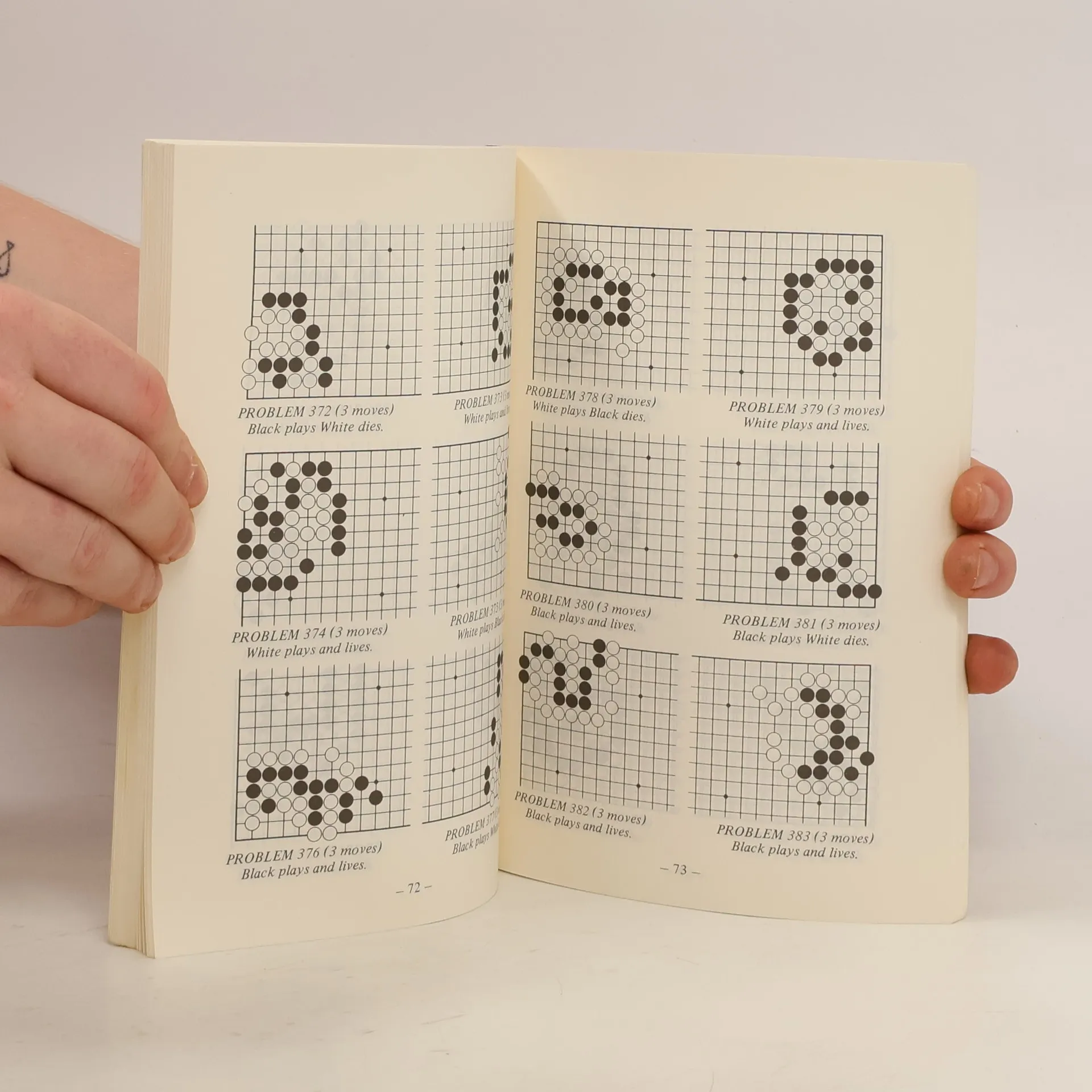
This volume is a continuation of Graded Go Problems For Beginners, Volume 2 and is aimed at the 20-kyu to 15-kyu player. The problems presented here will require a bit of thought, but none of them is so difficult that a player who understands the rules, has had some experience playing games, and has studied the first and second volumes would not be able to solve in less than a minute. Since the main aim of this series is to present as many examples of go technique as possible, I have avoided giving a lot of different variations of possible answers. Furthermore, the answers are sometimes abbreviated and not played out to the final conclusion. The reader is advised to play out these sequences to the end and attempt to 'refute' the correct answer until he knows beyond doubt that the correct answer works. In problems where there are numerous stone captures, the reader should play out the moves on a board. By pondering each problem in this way, the reader will develop an instinct for finding the winning move in his games.
Zakup książki
Graded Go Problems for Beginners: Intermediate problems (Vol. 3), Yoshinori Kanō
- Język

- Rok wydania
- 1997
- Oprawa
- (miękka)
Metody płatności
Brakuje nam tutaj Twojej recenzji.
- Tytuł
- Graded Go Problems for Beginners: Intermediate problems (Vol. 3)
- Język
- angielski
- Autorzy
- Yoshinori Kanō
- Rok wydania
- 1997
- Oprawa
- miękka
- Liczba stron
- 208
- ISBN10
- 4906574483
- ISBN13
- 9784906574483
- Seria
- Kategorie
- Tagi
- Gry
- Ocena
- 4 z 5
- Opis
- This volume is a continuation of Graded Go Problems For Beginners, Volume 2 and is aimed at the 20-kyu to 15-kyu player. The problems presented here will require a bit of thought, but none of them is so difficult that a player who understands the rules, has had some experience playing games, and has studied the first and second volumes would not be able to solve in less than a minute. Since the main aim of this series is to present as many examples of go technique as possible, I have avoided giving a lot of different variations of possible answers. Furthermore, the answers are sometimes abbreviated and not played out to the final conclusion. The reader is advised to play out these sequences to the end and attempt to 'refute' the correct answer until he knows beyond doubt that the correct answer works. In problems where there are numerous stone captures, the reader should play out the moves on a board. By pondering each problem in this way, the reader will develop an instinct for finding the winning move in his games.