

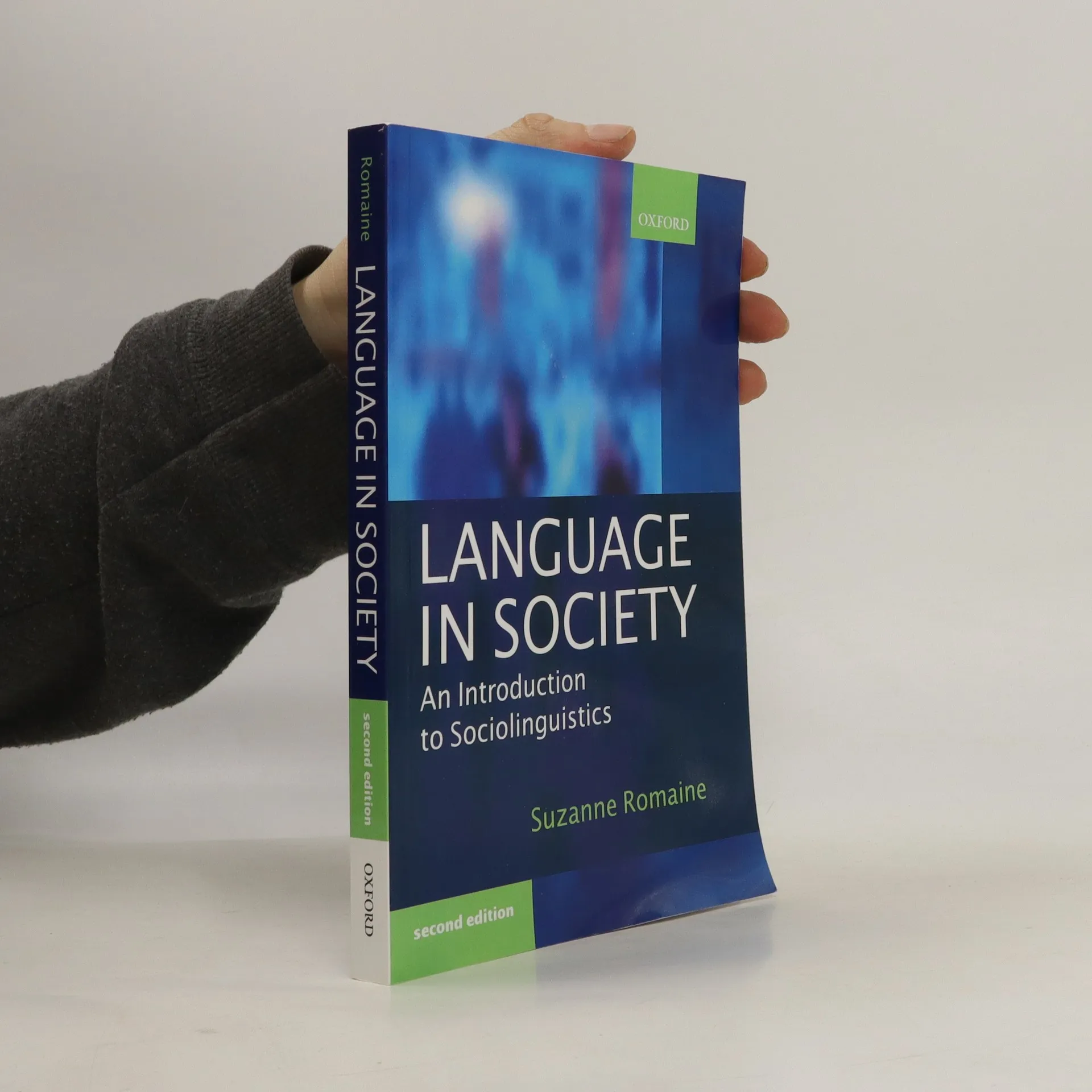


Więcej o książce
Why have 1500 separate languages developed in the Pacific region? Why do Danes understand Norwegians better than Norwegians understand Danish? Is Ebonics a language or a dialect?Linguistics tends to ignore the relationship between languages and the societies in which they are spoken, while sociology generally overlooks the role of language in the constitution of society. In this book Suzanne Romaine provides a clear, lively, and accessible introduction to the field of sociolinguistics and emphasizes the constant interaction between society and language. She shows how our linguistic choices are motivated by social factors, and how certain ways of speaking come to be vested with symbolic value, drawing from evidence from studies of cultures and languages all over the world.This new edition incorporates new material on current issues in the study of gender as well as other topics such as the linguistic dimension to the ethnic conflict in the Balkans, and the controversy over Ebonics in the United States.
Zakup książki
Language in society. An introduction to sociolinguistics, Suzanne Romaine, Inc ebrary
- Język

- Rok wydania
- 2000
- Oprawa
- (miękka)
Metody płatności
Brakuje nam tutaj Twojej recenzji.
- Tytuł
- Language in society. An introduction to sociolinguistics
- Język
- angielski
- Autorzy
- Suzanne Romaine, Inc ebrary
- Rok wydania
- 2000
- Oprawa
- miękka
- Liczba stron
- 280
- ISBN10
- 0198731922
- ISBN13
- 9780198731924
- Seria
- Kategorie
- Ocena
- 3,65 z 5
- Opis
- Why have 1500 separate languages developed in the Pacific region? Why do Danes understand Norwegians better than Norwegians understand Danish? Is Ebonics a language or a dialect?Linguistics tends to ignore the relationship between languages and the societies in which they are spoken, while sociology generally overlooks the role of language in the constitution of society. In this book Suzanne Romaine provides a clear, lively, and accessible introduction to the field of sociolinguistics and emphasizes the constant interaction between society and language. She shows how our linguistic choices are motivated by social factors, and how certain ways of speaking come to be vested with symbolic value, drawing from evidence from studies of cultures and languages all over the world.This new edition incorporates new material on current issues in the study of gender as well as other topics such as the linguistic dimension to the ethnic conflict in the Balkans, and the controversy over Ebonics in the United States.