



Więcej o książce
During the 2008 Global Financial Crisis, our financial infrastructure collapsed, prompting governments to bail out failing institutions. This crisis led to a critical reassessment of our financial system. Questions arose: Why does it take two days to settle stock transactions? Why do retailers incur a 3% fee for credit card swipes? Why are savings rates so low? Why is financing difficult for entrepreneurs through traditional banks? In this context, the authors introduce Decentralized Finance (DeFi) as a transformative approach to finance. They argue that the current financial landscape is primed for disruption, highlighting how DeFi addresses many existing issues. By facilitating peer-to-peer interactions without physical institutions, DeFi reinvents savings, lending, and trading through innovative algorithms. The book explores groundbreaking protocols like Uniswap and Compound, showcasing companies that may soon gain prominence. While acknowledging the risks associated with new technologies, the authors provide a thorough analysis of these challenges and potential mitigations. This work is ideal for finance professionals and policymakers, offering a vision of a future where the financial landscape will be fundamentally altered. Readers are encouraged to engage with this disruption rather than be left behind.
Zakup książki
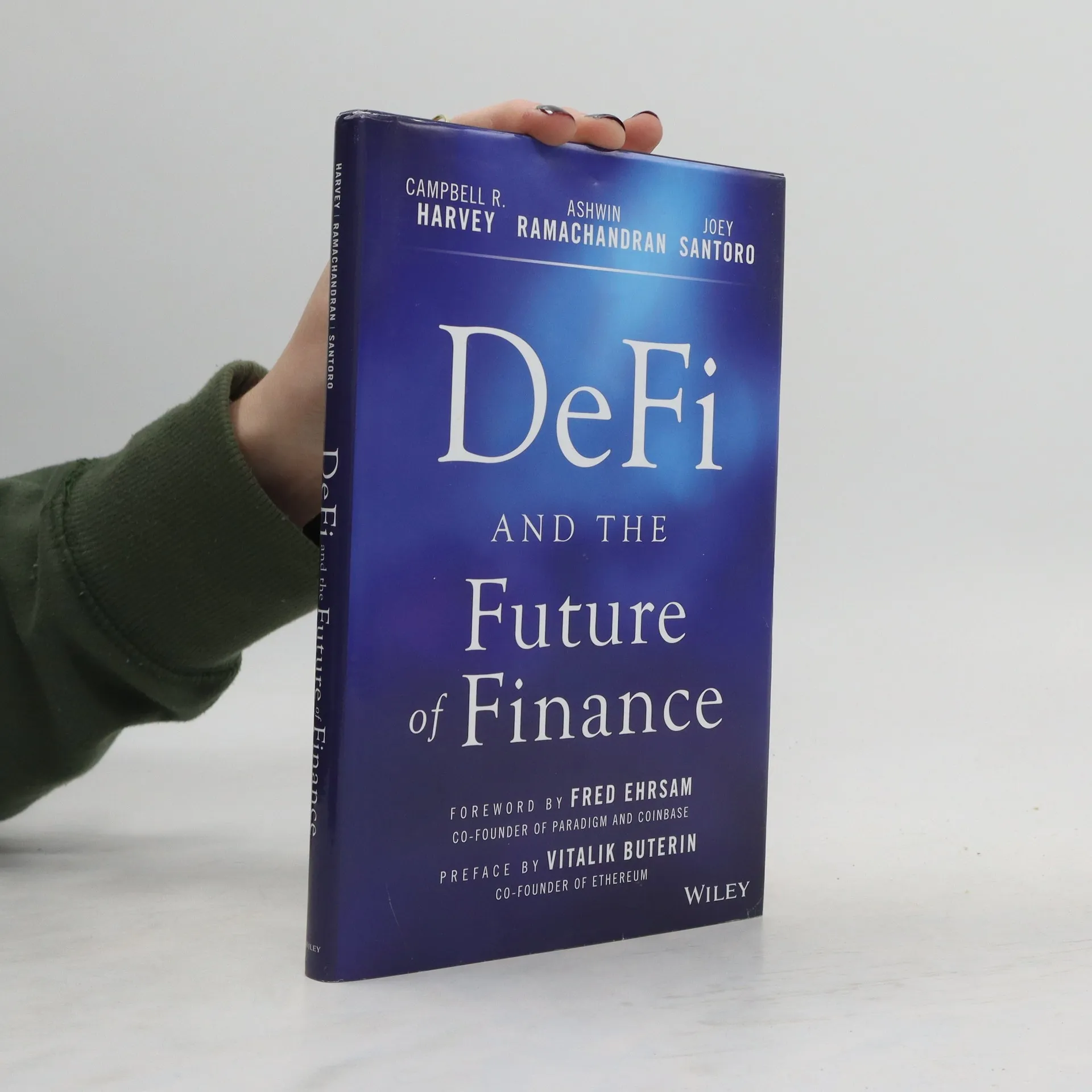
DeFi and the Future of Finance, Campbell R. Harvey
- Język

- Rok wydania
- 2021
- Oprawa
- (twarda)
Metody płatności
Brakuje nam tutaj Twojej recenzji.
- Tytuł
- DeFi and the Future of Finance
- Język
- angielski
- Autorzy
- Campbell R. Harvey
- Wydawca
- John Wiley & Sons Inc
- Rok wydania
- 2021
- Oprawa
- twarda
- Liczba stron
- 208
- ISBN10
- 1119836018
- ISBN13
- 9781119836018
- Seria
- Tagi
- Biznes, Technologia, Finanse, Pieniądze
- Ocena
- 3,45 z 5
- Opis
- During the 2008 Global Financial Crisis, our financial infrastructure collapsed, prompting governments to bail out failing institutions. This crisis led to a critical reassessment of our financial system. Questions arose: Why does it take two days to settle stock transactions? Why do retailers incur a 3% fee for credit card swipes? Why are savings rates so low? Why is financing difficult for entrepreneurs through traditional banks? In this context, the authors introduce Decentralized Finance (DeFi) as a transformative approach to finance. They argue that the current financial landscape is primed for disruption, highlighting how DeFi addresses many existing issues. By facilitating peer-to-peer interactions without physical institutions, DeFi reinvents savings, lending, and trading through innovative algorithms. The book explores groundbreaking protocols like Uniswap and Compound, showcasing companies that may soon gain prominence. While acknowledging the risks associated with new technologies, the authors provide a thorough analysis of these challenges and potential mitigations. This work is ideal for finance professionals and policymakers, offering a vision of a future where the financial landscape will be fundamentally altered. Readers are encouraged to engage with this disruption rather than be left behind.