

Więcej o książce
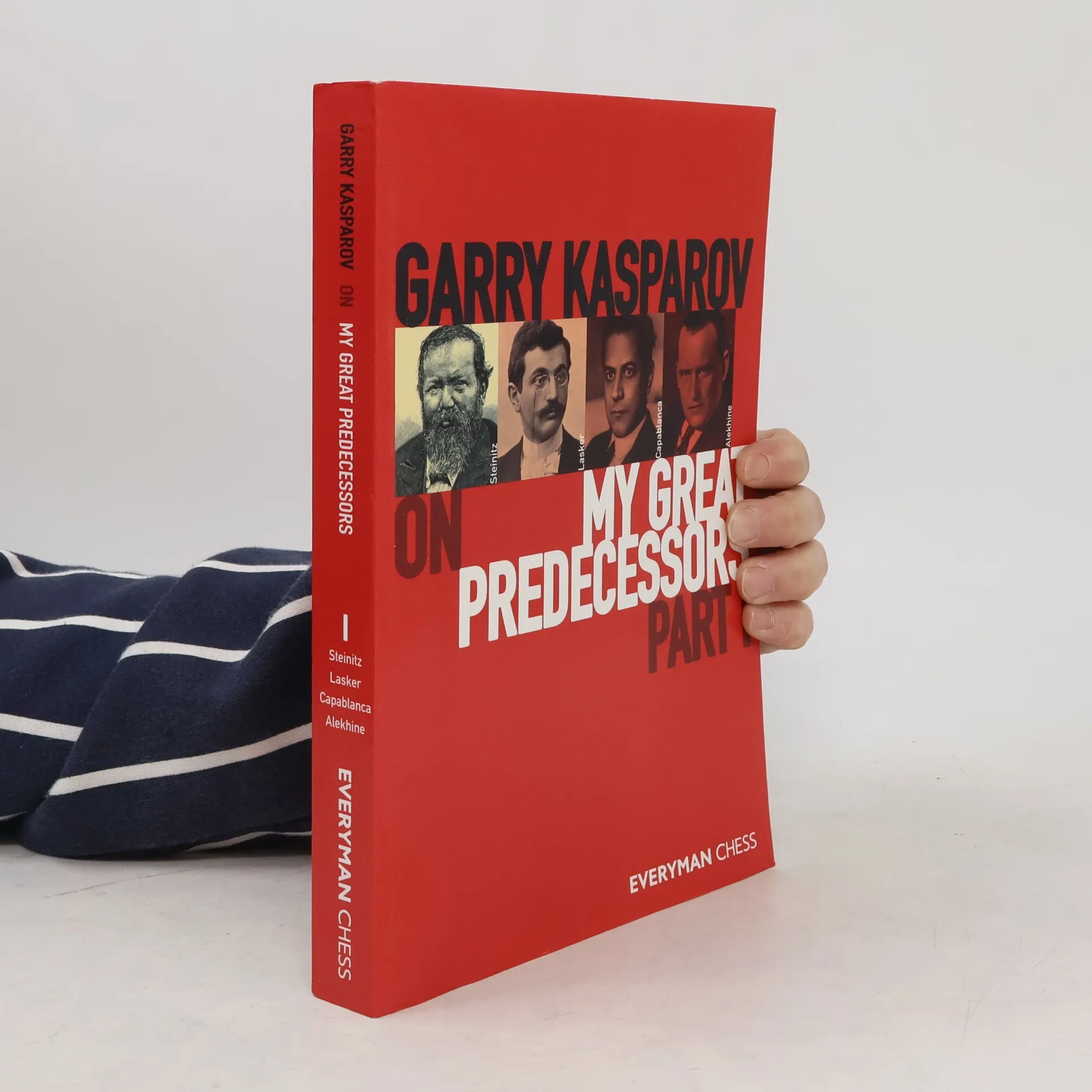
The battle for the World Chess Championship has witnessed numerous titanic struggles which have engaged the interest not only of chess enthusiasts but also of the public at large. The chessboard is the ultimate mental battleground and the world champions themselves are supreme intellectual gladiators. This magnificent compilation of chess form the basis of the first part of Garry Kasparov's definitive history of the World Chess Championship. Garry Kasparov, who is universally acclaimed as the greatest chessplayer ever, subjects the play of his predecessors to a rigorous analysis. Part one features the play of champions Wilhelm Steinitz (1886-1894), Emanuel Lasker (1894-1921), Jose Capablanca (1921-1927) and Alexander Alekhine (1927-1935 and 1937-1946).
Zakup książki
Garry Kasparov on My Great Predecessors, Part One, Garry Kasparov
- Język

- Rok wydania
- 2020
- Oprawa
- (miękka)
Metody płatności
Brakuje nam tutaj Twojej recenzji.
- Tytuł
- Garry Kasparov on My Great Predecessors, Part One
- Język
- angielski
- Autorzy
- Garry Kasparov
- Wydawca
- Everyman Chess
- Rok wydania
- 2020
- Oprawa
- miękka
- Liczba stron
- 466
- ISBN10
- 1781945152
- ISBN13
- 9781781945155
- Tagi
- Tematy historyczne, Poradniki, Gry, Szachy
- Ocena
- 4,5 z 5
- Opis
- The battle for the World Chess Championship has witnessed numerous titanic struggles which have engaged the interest not only of chess enthusiasts but also of the public at large. The chessboard is the ultimate mental battleground and the world champions themselves are supreme intellectual gladiators. This magnificent compilation of chess form the basis of the first part of Garry Kasparov's definitive history of the World Chess Championship. Garry Kasparov, who is universally acclaimed as the greatest chessplayer ever, subjects the play of his predecessors to a rigorous analysis. Part one features the play of champions Wilhelm Steinitz (1886-1894), Emanuel Lasker (1894-1921), Jose Capablanca (1921-1927) and Alexander Alekhine (1927-1935 and 1937-1946).