



Więcej o książce
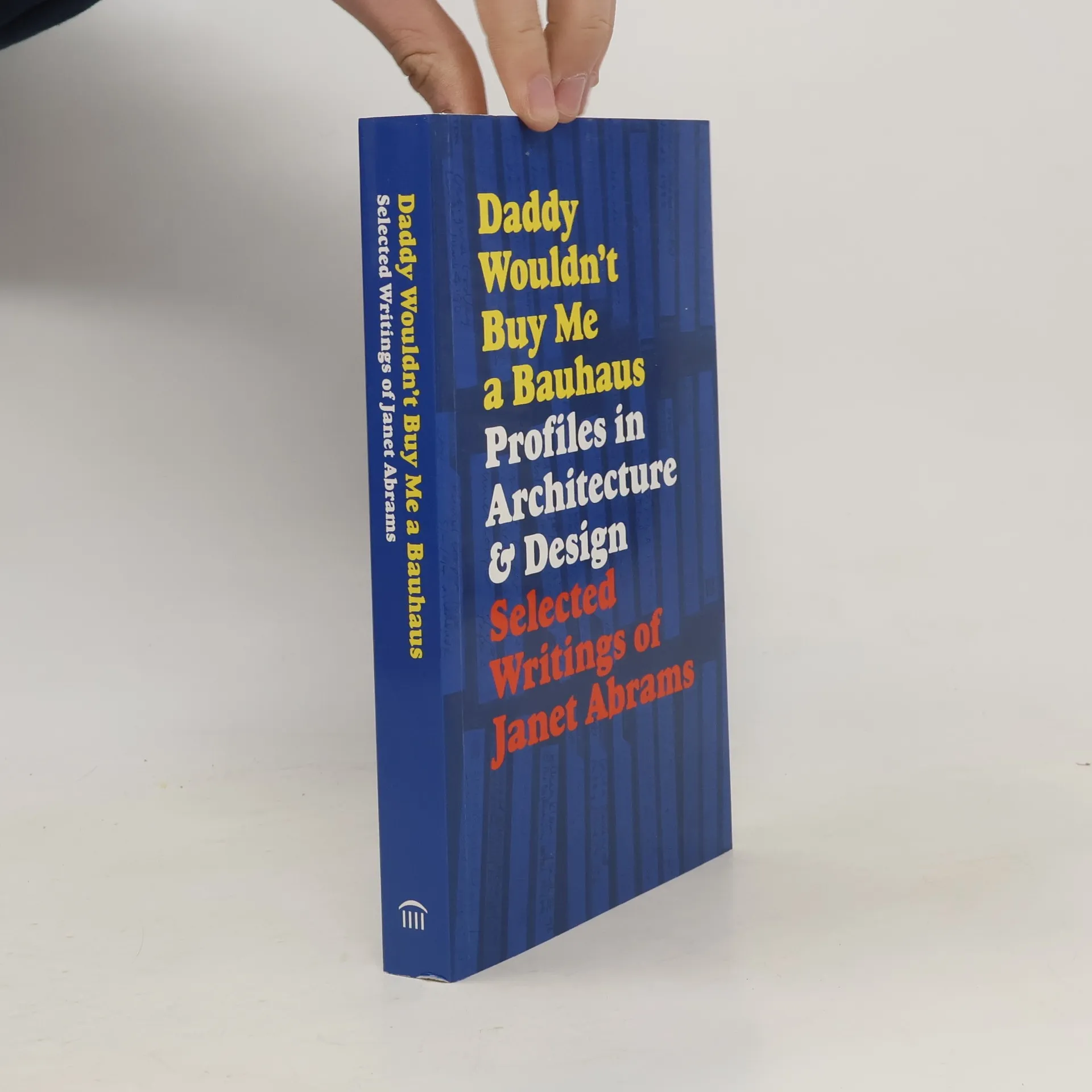
Daddy Wouldn't Buy Me a Bauhaus collects the unparalleled writings of legendary British wordsmith Janet Abrams for the first time. From pivotal figures in international modernism to the pioneers of digital medium, Abrams explored the ideas, theories, and emotions that fueled their work.The book's twenty-six profiles, written in Abrams's signature, personal, often hilarious style, include Reyner Banham, Berthold Lubetkin, Philip Johnson, Paul Rand, Phyllis Lambert, Frank Gehry, Rem Koolhaas, Muriel Cooper, April Greiman, and Michael Bloomberg. Many of the profiles are back in print for the first time, having originally appeared in Blueprint, I.D. magazine, the Independent, and in books and catalogs from the 1980s through the early 2000s. A foreword by Blueprint's founding editor, Deyan Sudjic, and new reflections by Abrams set the stage.
Zakup książki
Daddy Wouldn't Buy Me a Bauhaus, Janet Abrams
- Język

- Rok wydania
- 2020
- Oprawa
- (miękka)
Metody płatności
Brakuje nam tutaj Twojej recenzji.
- Tytuł
- Daddy Wouldn't Buy Me a Bauhaus
- Język
- angielski
- Autorzy
- Janet Abrams
- Wydawca
- Abrams & Chronicle Books
- Rok wydania
- 2020
- Oprawa
- miękka
- Liczba stron
- 320
- ISBN10
- 1616899514
- ISBN13
- 9781616899516
- Seria
- Kategorie
- Tagi
- Ocena
- 4,65 z 5
- Opis
- Daddy Wouldn't Buy Me a Bauhaus collects the unparalleled writings of legendary British wordsmith Janet Abrams for the first time. From pivotal figures in international modernism to the pioneers of digital medium, Abrams explored the ideas, theories, and emotions that fueled their work.The book's twenty-six profiles, written in Abrams's signature, personal, often hilarious style, include Reyner Banham, Berthold Lubetkin, Philip Johnson, Paul Rand, Phyllis Lambert, Frank Gehry, Rem Koolhaas, Muriel Cooper, April Greiman, and Michael Bloomberg. Many of the profiles are back in print for the first time, having originally appeared in Blueprint, I.D. magazine, the Independent, and in books and catalogs from the 1980s through the early 2000s. A foreword by Blueprint's founding editor, Deyan Sudjic, and new reflections by Abrams set the stage.