

Parametry
Więcej o książce
In Infinity and the Mind, Rudy Rucker leads an excursion to that stretch of the universe he calls the "Mindscape," where he explores infinity in all its forms: potential and actual, mathematical and physical, theological and mundane. Rucker acquaints us with Godel's rotating universe, in which it is theoretically possible to travel into the past, and explains an interpretation of quantum mechanics in which billions of parallel worlds are produced every microsecond. It is in the realm of infinity, he maintains, that mathematics, science, and logic merge with the fantastic. By closely examining the paradoxes that arise from this merging, we can learn a great deal about the human mind, its powers, and its limitations. Using cartoons, puzzles, and quotations to enliven his text, Rucker guides us through such topics as the paradoxes of set theory, the possibilities of physical infinities, and the results of Godel's incompleteness theorems. His personal encounters with Godel the mathematician and philosopher provide a rare glimpse at genius and reveal what very few mathematicians have dared to admit: the transcendent implications of Platonic realism.
Zakup książki
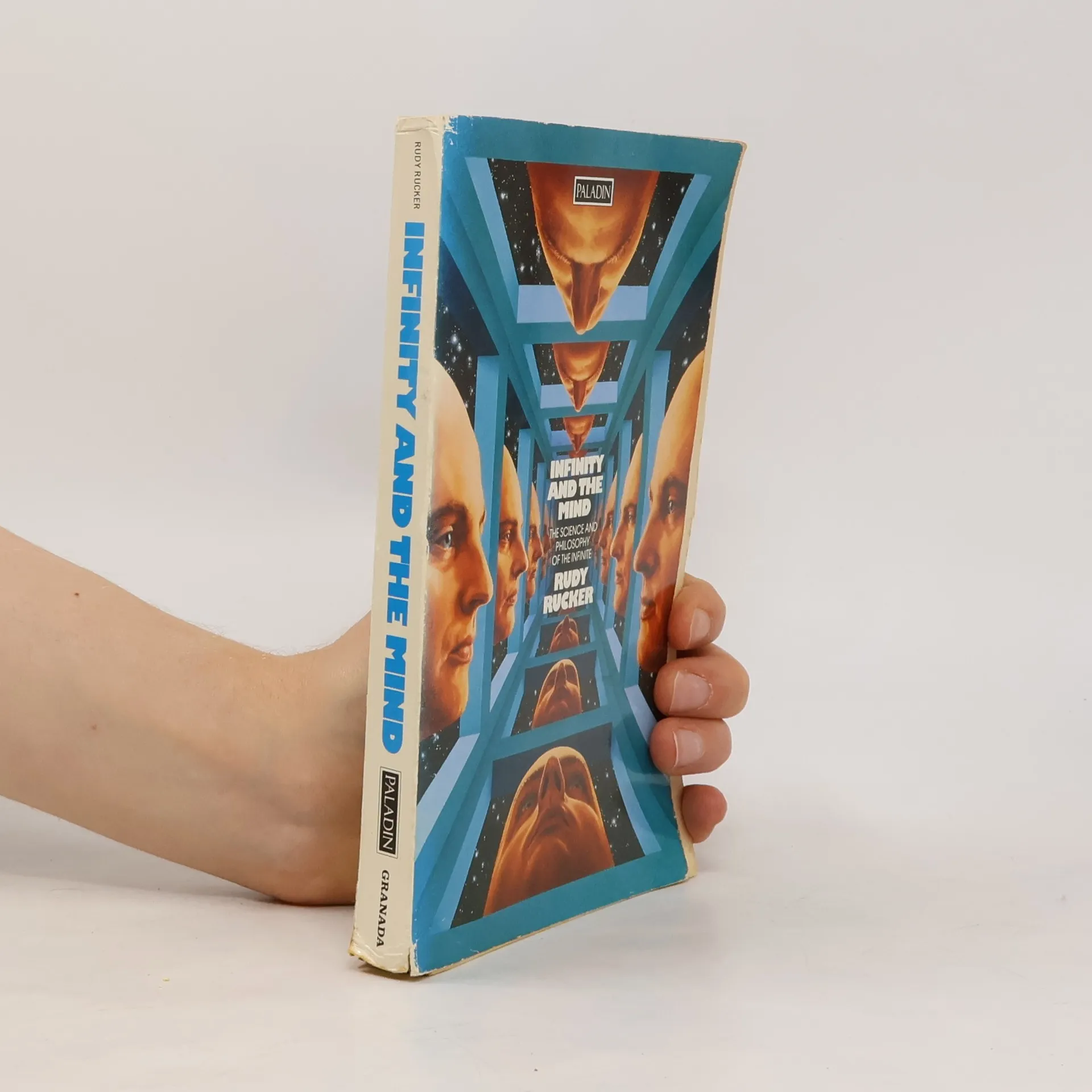
Infinity and the Mind, Rudy Rucker
- Język

- Rok wydania
- 1982
- Oprawa
- (miękka)
Metody płatności
Brakuje nam tutaj Twojej recenzji.
- Tytuł
- Infinity and the Mind
- Podtytuł
- The Science and Philosophy of the Infinite
- Język
- angielski
- Autorzy
- Rudy Rucker
- Wydawca
- Paladin
- Rok wydania
- 1982
- Oprawa
- miękka
- ISBN10
- 0586084657
- ISBN13
- 9780586084656
- Seria
- Kategorie
- Tagi
- Nauki przyrodnicze, Duchowość, Nauka
- Ocena
- 3,85 z 5
- Opis
- In Infinity and the Mind, Rudy Rucker leads an excursion to that stretch of the universe he calls the "Mindscape," where he explores infinity in all its forms: potential and actual, mathematical and physical, theological and mundane. Rucker acquaints us with Godel's rotating universe, in which it is theoretically possible to travel into the past, and explains an interpretation of quantum mechanics in which billions of parallel worlds are produced every microsecond. It is in the realm of infinity, he maintains, that mathematics, science, and logic merge with the fantastic. By closely examining the paradoxes that arise from this merging, we can learn a great deal about the human mind, its powers, and its limitations. Using cartoons, puzzles, and quotations to enliven his text, Rucker guides us through such topics as the paradoxes of set theory, the possibilities of physical infinities, and the results of Godel's incompleteness theorems. His personal encounters with Godel the mathematician and philosopher provide a rare glimpse at genius and reveal what very few mathematicians have dared to admit: the transcendent implications of Platonic realism.