



Parametry
Więcej o książce
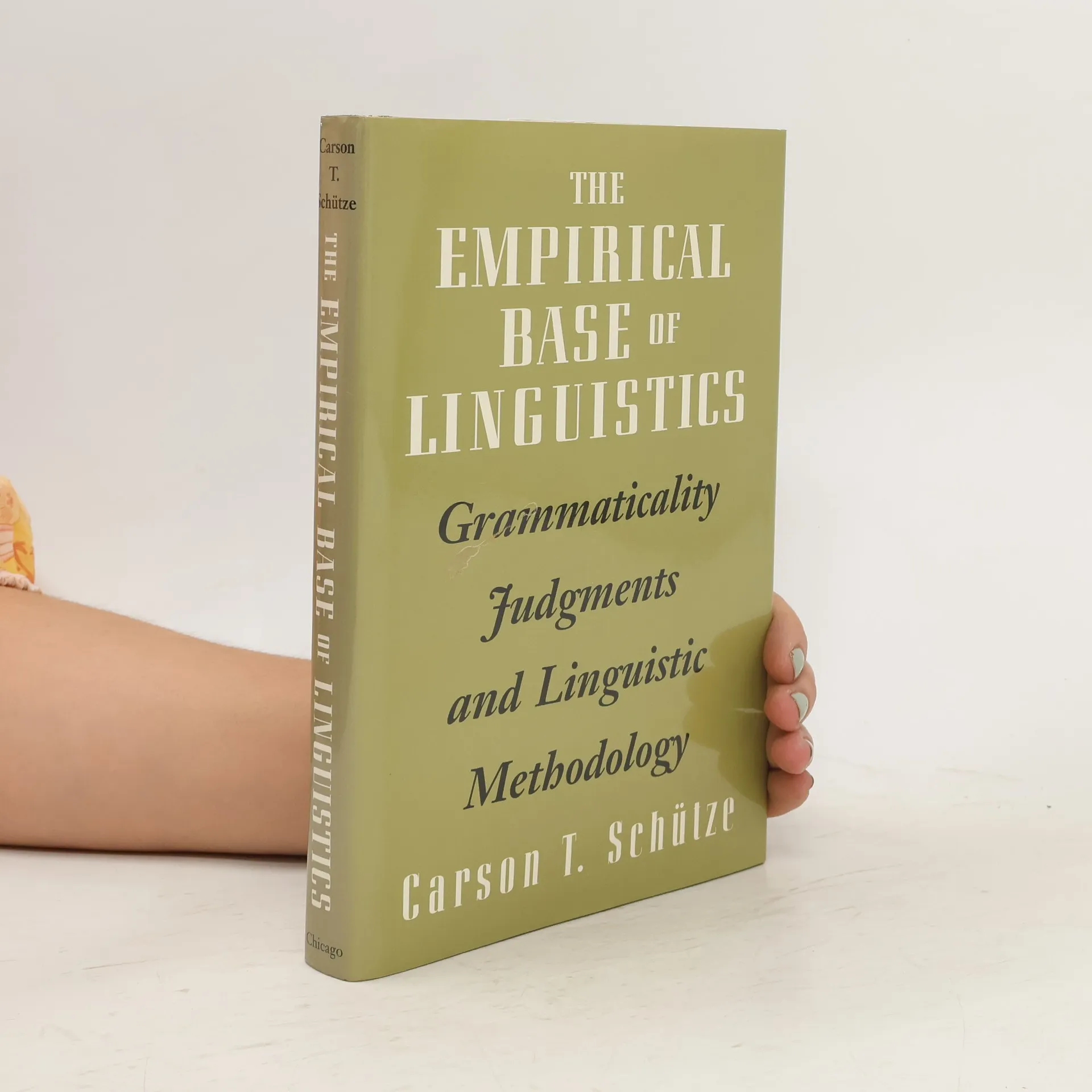
Grammaticality judgments—intuitions about the well-formedness of sentences—often rest on subtle discriminations that are notoriously unstable and unreliable. Carson T. Schütze presents a detailed critical overview of the vast literature on the nature and utility of grammaticality judgments and other linguistic intuitions, and the ways they have been used in linguistic research. He shows how variation in the judgment process can arise and assesses the status of judgments as reliable indicators of a speaker's grammar.Integrating substantive and methodological findings, Schütze proposes a model in which judgments result from interactions of linguistic competence with general cognitive processes, and offers practical suggestions about collecting more useful data. The result is a work of importance to linguists, cognitive psychologists, and philosophers of language alike.
Zakup książki
The Empirical Base of Linguistics, Carson T. Schütze
- Język

- Rok wydania
- 1996
- Oprawa
- (twarda)
Metody płatności
Brakuje nam tutaj Twojej recenzji.
- Tytuł
- The Empirical Base of Linguistics
- Język
- angielski
- Autorzy
- Carson T. Schütze
- Rok wydania
- 1996
- Oprawa
- twarda
- ISBN10
- 0226741540
- ISBN13
- 9780226741543
- Seria
- Ocena
- 4,2 z 5
- Opis
- Grammaticality judgments—intuitions about the well-formedness of sentences—often rest on subtle discriminations that are notoriously unstable and unreliable. Carson T. Schütze presents a detailed critical overview of the vast literature on the nature and utility of grammaticality judgments and other linguistic intuitions, and the ways they have been used in linguistic research. He shows how variation in the judgment process can arise and assesses the status of judgments as reliable indicators of a speaker's grammar.Integrating substantive and methodological findings, Schütze proposes a model in which judgments result from interactions of linguistic competence with general cognitive processes, and offers practical suggestions about collecting more useful data. The result is a work of importance to linguists, cognitive psychologists, and philosophers of language alike.