

Więcej o książce
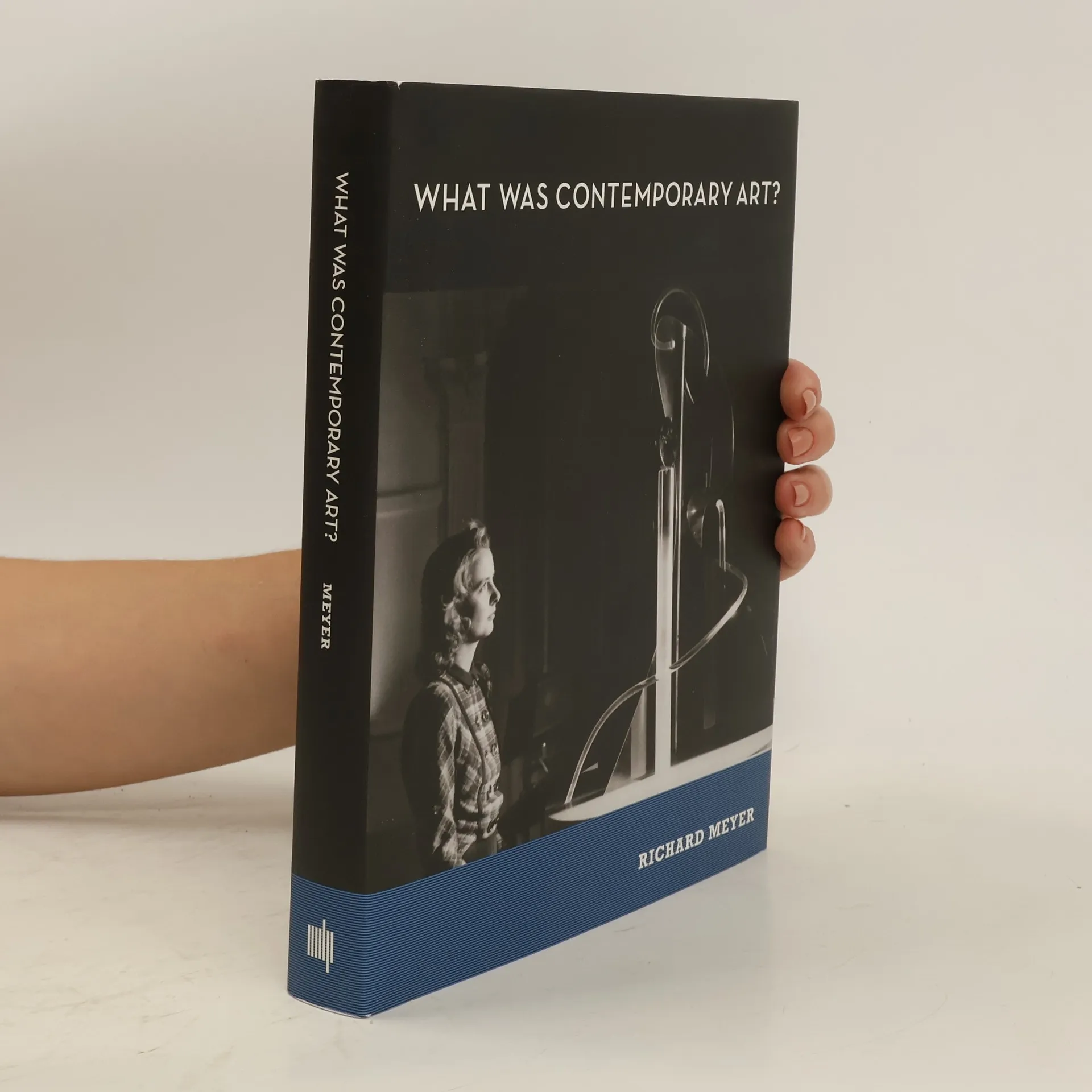
"Contemporary art in the early twenty-first century is often discussed as though it were a radically new phenomenon unmoored from history. Yet all works of art were once contemporary to the artist and culture that produced them. In What Was Contemporary Art? Richard Meyer reclaims the contemporary from historical amnesia, exploring episodes in the study, exhibition, and reception of early twentieth-century art and visual culture. Meyer analyzes an undergraduate course taught by Alfred Barr at Wellesley College in 1927 as a key moment in the introduction of works by living artists into the discipline of art history, then turns to a series of exhibitions from the 1930s that put contemporary art in dialogue with premodern works ranging from prehistoric cave pictures to Italian Renaissance paintings. Meyer also treats the controversy that arose in 1948 over the decision by Boston's Institute of Modern Art to change its name to the Institute of Contemporary Art. By retrieving moments in the history of once-current art, Meyer redefines "the contemporary" as a condition of being alive to and alongside other moments, artists, and objects. A generous selection of images, many in color -- from works of fine art to museum brochures and magazine covers -- support and extend Meyer's narrative. These works were contemporary to their own moment. Now, in Meyer's account, they become contemporary to ours as well."
Zakup książki
What was Contemporary Art?, Richard Meyer
- Język

- Rok wydania
- 2013
- Oprawa
- (twarda)
Metody płatności
Brakuje nam tutaj Twojej recenzji.
- Tytuł
- What was Contemporary Art?
- Język
- angielski
- Autorzy
- Richard Meyer
- Wydawca
- MIT Press
- Rok wydania
- 2013
- Oprawa
- twarda
- Liczba stron
- 361
- ISBN10
- 0262135086
- ISBN13
- 9780262135085
- Seria
- Tagi
- Ocena
- 3,85 z 5
- Opis
- "Contemporary art in the early twenty-first century is often discussed as though it were a radically new phenomenon unmoored from history. Yet all works of art were once contemporary to the artist and culture that produced them. In What Was Contemporary Art? Richard Meyer reclaims the contemporary from historical amnesia, exploring episodes in the study, exhibition, and reception of early twentieth-century art and visual culture. Meyer analyzes an undergraduate course taught by Alfred Barr at Wellesley College in 1927 as a key moment in the introduction of works by living artists into the discipline of art history, then turns to a series of exhibitions from the 1930s that put contemporary art in dialogue with premodern works ranging from prehistoric cave pictures to Italian Renaissance paintings. Meyer also treats the controversy that arose in 1948 over the decision by Boston's Institute of Modern Art to change its name to the Institute of Contemporary Art. By retrieving moments in the history of once-current art, Meyer redefines "the contemporary" as a condition of being alive to and alongside other moments, artists, and objects. A generous selection of images, many in color -- from works of fine art to museum brochures and magazine covers -- support and extend Meyer's narrative. These works were contemporary to their own moment. Now, in Meyer's account, they become contemporary to ours as well."