

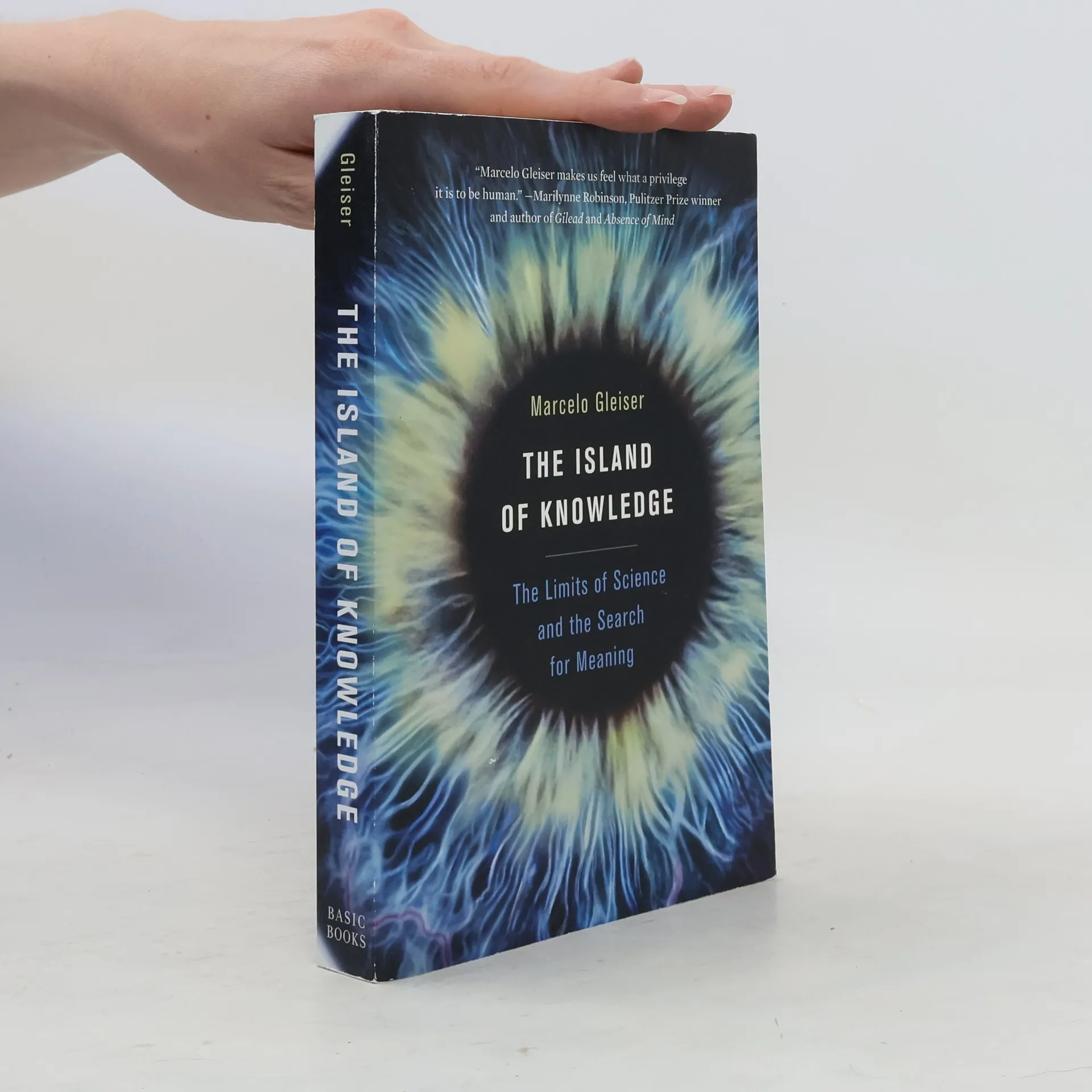


Więcej o książce
Do all questions have answers? How much can we know about the world? Is there such a thing as an ultimate truth? To be human is to want to know, to understand our origins and the meaning of our lives. In The Island of Knowledge, physicist Marcelo Gleiser traces our search for answers to the most fundamental questions of existence, the origin of the universe, the nature of reality, and the limits of knowledge. In so doing, he reaches a provocative conclusion: science, the main tool we use to find answers, is fundamentally limited. As science and its philosophical interpretations advance, we are often faced with the unsettling recognition of how much we don't know. Limits to our knowledge of the world arise both from our tools of exploration and from the nature of physical reality: the speed of light, the uncertainty principle, the second law of thermodynamics, the incompleteness theorem, and our own limitations as an intelligent species. Our view of physical reality depends fundamentally on who we are and on how we interact with the cosmos
Zakup książki
The Island of Knowledge, Marcelo Gleiser
- Język

- Rok wydania
- 2015
- Oprawa
- (miękka)
Metody płatności
Brakuje nam tutaj Twojej recenzji.
- Tytuł
- The Island of Knowledge
- Język
- angielski
- Autorzy
- Marcelo Gleiser
- Wydawca
- Ingram Publisher Services US
- Rok wydania
- 2015
- Oprawa
- miękka
- Liczba stron
- 368
- ISBN10
- 0465049648
- ISBN13
- 9780465049646
- Seria
- Kategorie
- Ocena
- 4,1 z 5
- Opis
- Do all questions have answers? How much can we know about the world? Is there such a thing as an ultimate truth? To be human is to want to know, to understand our origins and the meaning of our lives. In The Island of Knowledge, physicist Marcelo Gleiser traces our search for answers to the most fundamental questions of existence, the origin of the universe, the nature of reality, and the limits of knowledge. In so doing, he reaches a provocative conclusion: science, the main tool we use to find answers, is fundamentally limited. As science and its philosophical interpretations advance, we are often faced with the unsettling recognition of how much we don't know. Limits to our knowledge of the world arise both from our tools of exploration and from the nature of physical reality: the speed of light, the uncertainty principle, the second law of thermodynamics, the incompleteness theorem, and our own limitations as an intelligent species. Our view of physical reality depends fundamentally on who we are and on how we interact with the cosmos