



Więcej o książce
"Much has been written about how awful the German Democratic Republic supposedly was: a people imprisoned by a wall and subjugated by an omnipresent Stasi security apparatus. Such descriptions are based largely on prejudice, ignorance and wilful animosity. This book is an attempt to provide a more balanced evaluation and to examine GDR-style socialism in terms of what we can learn from it. The authors, while not ignoring the real deficiencies of GDR society, emphasise the many aspects that were positive, and demonstrate that alternative ways of organising society are possible. This volume is an updated and much expanded edition of the authors' booklet first published in 2009. Thee have added more detail on how the GDR came into being as a separate state, about how society functioned and what values determined the every-day life of its citizens. There is also a whole new section on what happened in the aftermath of unification, particularly to the economy. While unification brought East Germans access to a more affluent society, freedom to travel throughout the world and the end to an over-centralised political system, it also brought with it unemployment, social breakdown and loss of hope, particularly in the once thriving rural areas." -- From back cover.
Zakup książki
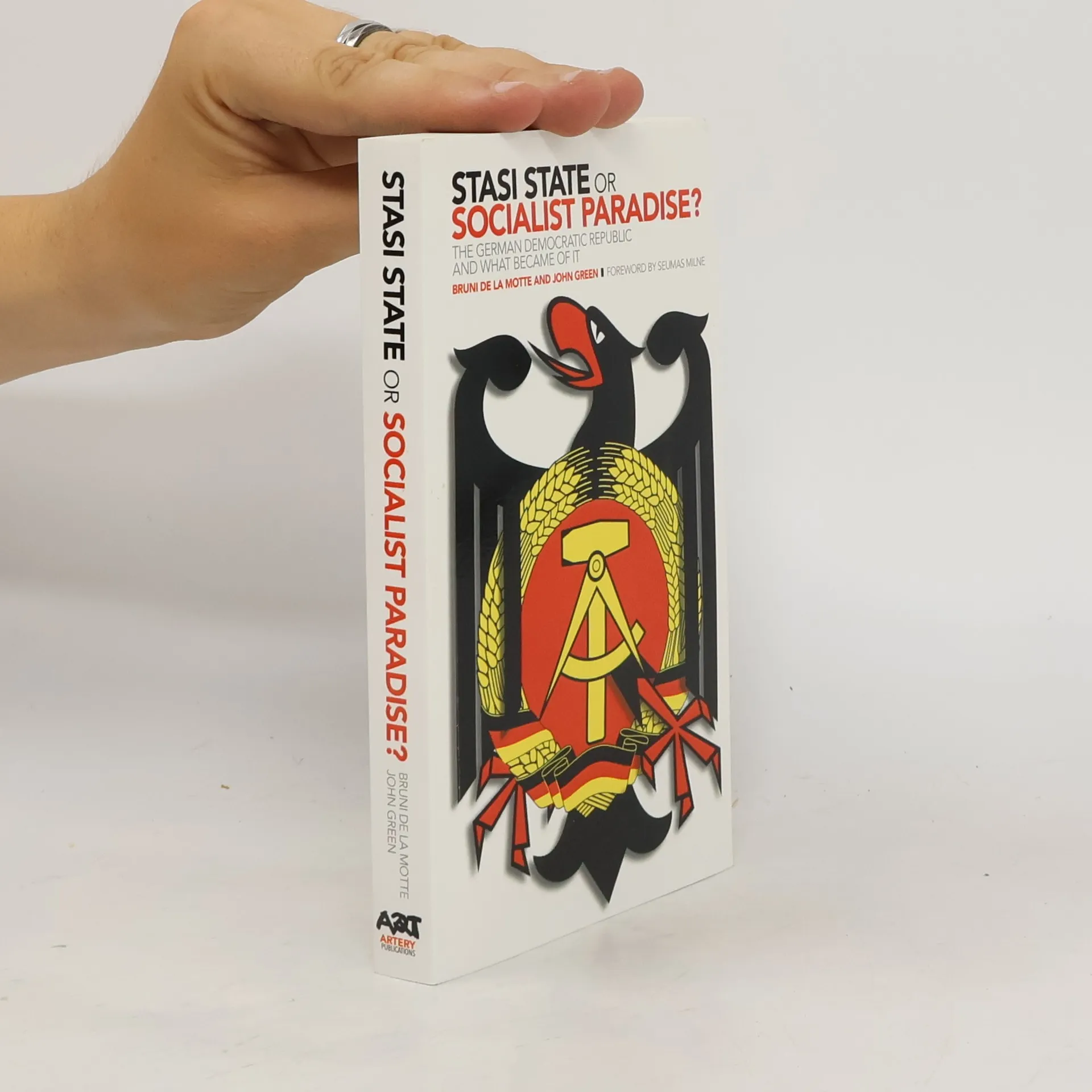
Stasi State or Socialist Paradise?, Bruni De La Motte, John Green
- Język

- Rok wydania
- 2015
- Oprawa
- (miękka)
Metody płatności
Brakuje nam tutaj Twojej recenzji.
- Tytuł
- Stasi State or Socialist Paradise?
- Język
- angielski
- Autorzy
- Bruni De La Motte, John Green
- Wydawca
- Artery Publications
- Rok wydania
- 2015
- Oprawa
- miękka
- Liczba stron
- 184
- ISBN10
- 0955822866
- ISBN13
- 9780955822865
- Seria
- Kategorie
- Tagi
- Tematy historyczne, Biznes, Polityka, Niemcy
- Ocena
- 4,2 z 5
- Opis
- "Much has been written about how awful the German Democratic Republic supposedly was: a people imprisoned by a wall and subjugated by an omnipresent Stasi security apparatus. Such descriptions are based largely on prejudice, ignorance and wilful animosity. This book is an attempt to provide a more balanced evaluation and to examine GDR-style socialism in terms of what we can learn from it. The authors, while not ignoring the real deficiencies of GDR society, emphasise the many aspects that were positive, and demonstrate that alternative ways of organising society are possible. This volume is an updated and much expanded edition of the authors' booklet first published in 2009. Thee have added more detail on how the GDR came into being as a separate state, about how society functioned and what values determined the every-day life of its citizens. There is also a whole new section on what happened in the aftermath of unification, particularly to the economy. While unification brought East Germans access to a more affluent society, freedom to travel throughout the world and the end to an over-centralised political system, it also brought with it unemployment, social breakdown and loss of hope, particularly in the once thriving rural areas." -- From back cover.