





Więcej o książce
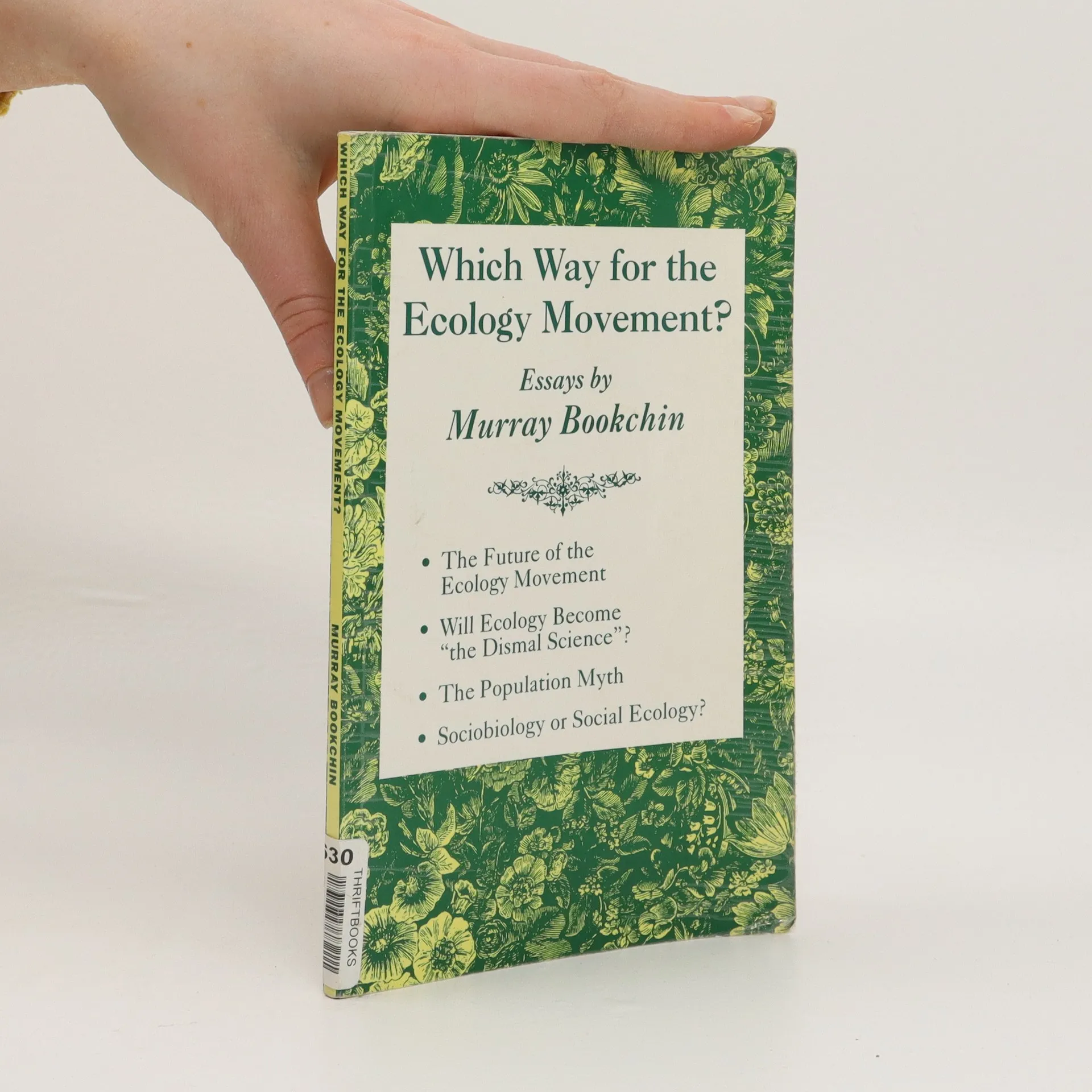
In the essays that make up this book, Murray Bookchin calls for a critical social standpoint that transcends both "biocentrism" and "ecocentrism." A call for new politics and ethics of complementarity, in which people, fighting for a free, nonhierarchical, and cooperative society, begin to play a creative role in natural evolution. Bookchin attacks the misanthropic notion that the environmental crisis is caused mainly by overpopulation or humanity's genetic makeup.He resolutely points to social causes—patriarchy, racism, and a capitalistic "grow or die" economy—as some of the problems the environmental movement must deal with. These ideas have to be confronted by environmentally concerned readers if the ecology movement is not to destroy its own potential as a force for social change and the achievement of a truly ecological society.Murray Bookchin's writings have profoundly influenced ecological thinking over the last forty years. Now in his 80s, he has been a life-long radical, a trade union activist in the 30s and 40s, an innovative theorist in the 60s, and a leading participant in the anti-nuclear and radical wing of the Greens in the 70s and 80s. His ideas on social ecology have been important contributions to left libertarian thinking.
Zakup książki
Which Way for the Ecology Movement?, Murray Bookchin
- Język

- Rok wydania
- 1994
- Oprawa
- (miękka)
Metody płatności
Brakuje nam tutaj Twojej recenzji.
- Tytuł
- Which Way for the Ecology Movement?
- Język
- angielski
- Autorzy
- Murray Bookchin
- Wydawca
- AK Press
- Rok wydania
- 1994
- Oprawa
- miękka
- Liczba stron
- 75
- ISBN10
- 1873176260
- ISBN13
- 9781873176269
- Seria
- Kategorie
- Ocena
- 3,75 z 5
- Opis
- In the essays that make up this book, Murray Bookchin calls for a critical social standpoint that transcends both "biocentrism" and "ecocentrism." A call for new politics and ethics of complementarity, in which people, fighting for a free, nonhierarchical, and cooperative society, begin to play a creative role in natural evolution. Bookchin attacks the misanthropic notion that the environmental crisis is caused mainly by overpopulation or humanity's genetic makeup.He resolutely points to social causes—patriarchy, racism, and a capitalistic "grow or die" economy—as some of the problems the environmental movement must deal with. These ideas have to be confronted by environmentally concerned readers if the ecology movement is not to destroy its own potential as a force for social change and the achievement of a truly ecological society.Murray Bookchin's writings have profoundly influenced ecological thinking over the last forty years. Now in his 80s, he has been a life-long radical, a trade union activist in the 30s and 40s, an innovative theorist in the 60s, and a leading participant in the anti-nuclear and radical wing of the Greens in the 70s and 80s. His ideas on social ecology have been important contributions to left libertarian thinking.