





Więcej o książce
The authors analyze the mechanisms behind financial market crises, particularly in the context of the recent subprime crisis. They explore the transmission mechanisms and drivers of such crises by discussing key players, strategies, and the financial instruments involved. Key questions addressed include the recurring nature of financial crises, the origins of risks, the roles of various market participants, and the strategies that can precipitate a crisis. The prologue sets the framework, introducing essential topics like the relevant players (banks, investment banks, hedge funds, regulators, and rating agencies) and instruments (ABS/RMBS, CDOs, SIVs, leveraged loans). It also highlights the underestimated risks associated with leveraged exposure to correlated risks. The following chapter delves deeper into these topics, explaining the infection and transmission mechanisms, as well as the business and investment concepts of key players. It illustrates how structured credit products facilitated leveraged bets and discusses the evolution of financial crises, including the failures of certain institutions. In the epilogue, the authors conclude with insights on how markets navigate crises and the potential benefits of crises for the stability of financial markets.
Zakup książki
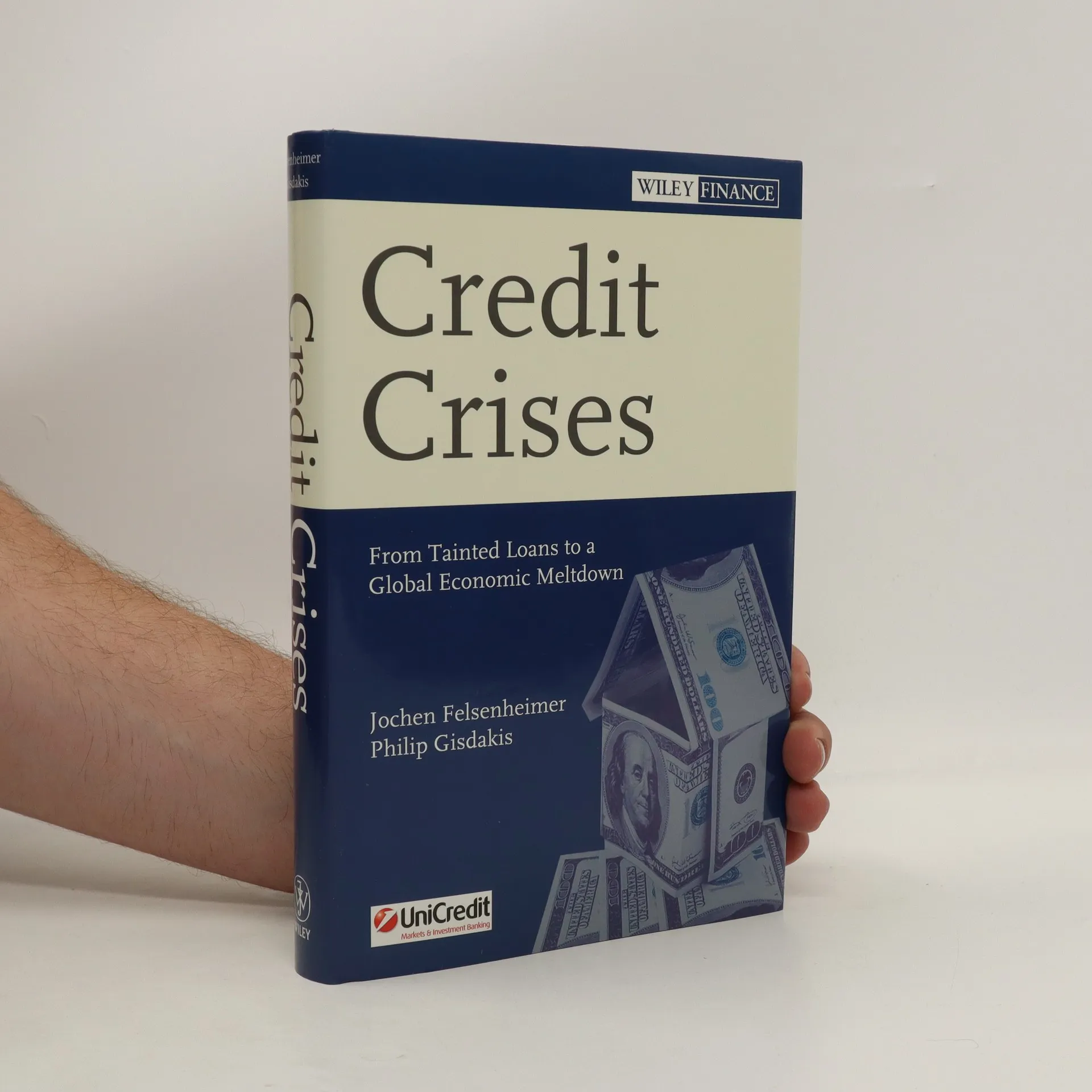
Credit crises : from tainted loans to a global economic meltdown, Jochen Felsenheimer, Philip Gisdakis
- Język

- Rok wydania
- 2008
- Oprawa
- (twarda)
Metody płatności
Brakuje nam tutaj Twojej recenzji.
- Tytuł
- Credit crises : from tainted loans to a global economic meltdown
- Język
- angielski
- Autorzy
- Jochen Felsenheimer, Philip Gisdakis
- Wydawca
- Wiley-VCH
- Rok wydania
- 2008
- Oprawa
- twarda
- Liczba stron
- 277
- ISBN10
- 3527503757
- ISBN13
- 9783527503759
- Seria
- Kolekcja
- Wiley finance series
- Tagi
- Biznes
- Ocena
- 4,5 z 5
- Opis
- The authors analyze the mechanisms behind financial market crises, particularly in the context of the recent subprime crisis. They explore the transmission mechanisms and drivers of such crises by discussing key players, strategies, and the financial instruments involved. Key questions addressed include the recurring nature of financial crises, the origins of risks, the roles of various market participants, and the strategies that can precipitate a crisis. The prologue sets the framework, introducing essential topics like the relevant players (banks, investment banks, hedge funds, regulators, and rating agencies) and instruments (ABS/RMBS, CDOs, SIVs, leveraged loans). It also highlights the underestimated risks associated with leveraged exposure to correlated risks. The following chapter delves deeper into these topics, explaining the infection and transmission mechanisms, as well as the business and investment concepts of key players. It illustrates how structured credit products facilitated leveraged bets and discusses the evolution of financial crises, including the failures of certain institutions. In the epilogue, the authors conclude with insights on how markets navigate crises and the potential benefits of crises for the stability of financial markets.