




Parametry
Więcej o książce
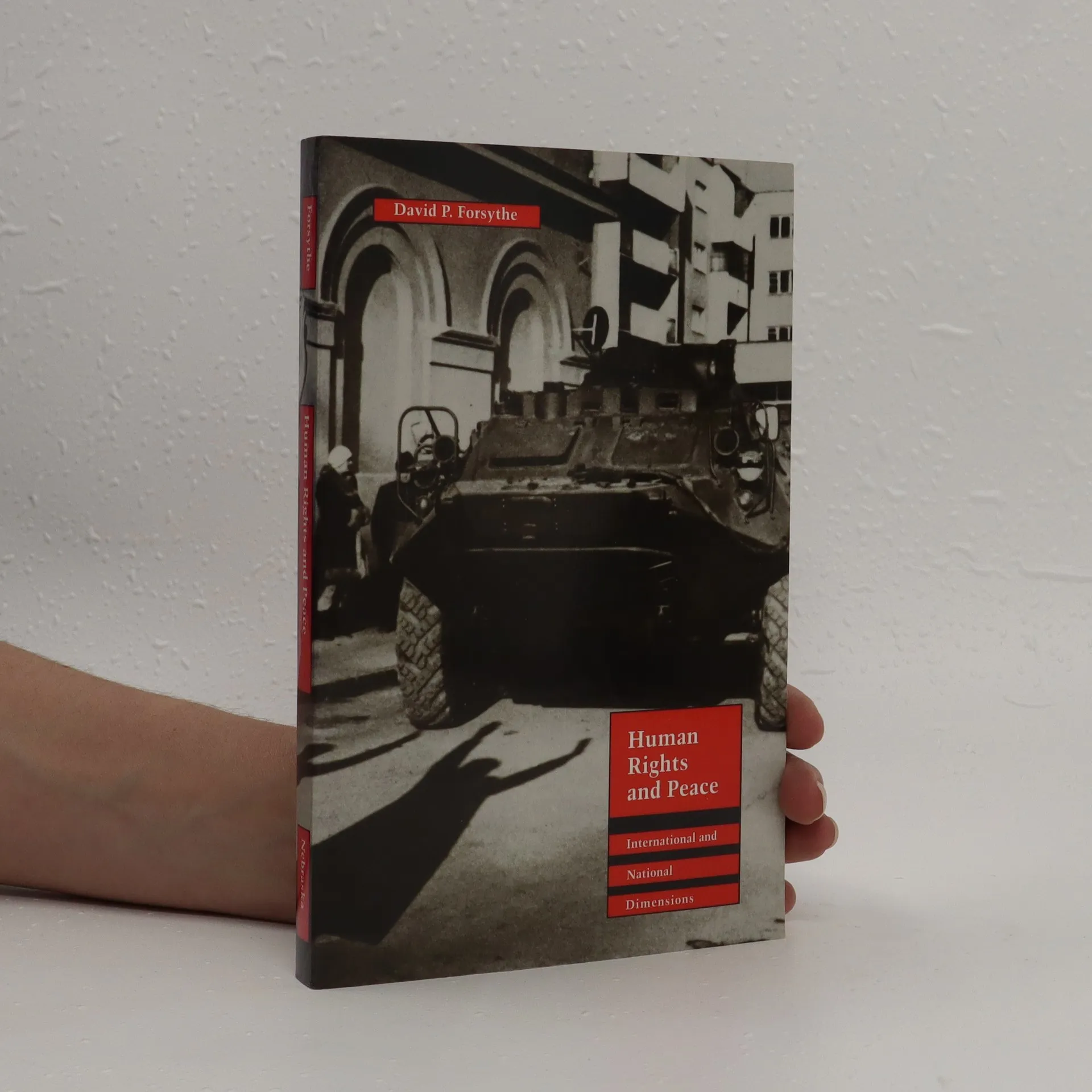
As our world becomes a truly global village through instantaneous media transmission of events, the relationship between human rights and peaceful international relations receives more and more attention. David P. Forsythe's book analyzes and discusses the dimensions of cover and overt human rights violations and how they militate against the establishment of democracies in the Third World.øPart One describes the paradox of internationally recognized human rights standards and international violence. Forsythe draws a crucial comparison between the lack of overt force between industrialized democracies and the use of covert force by certain democracies against some elected Third World governments.øPart Two deals with human rights and intrastate violence. A creative framework of analysis, centering on the concept of political legitimacy, is illustrated by case studies of Sri Lanka, Liberia, and Romania. Forsythe shows that, in different ways and in different situations, the violation of human rights standards can be correlated with political revolution.øHuman Rights and Peace evaluates critically the argument that human rights in general and democracy in particular contribute to peaceful international relations.
Zakup książki
Human Rights and Peace : International and National Dimensions, David P. Forsythe
- Język

- Rok wydania
- 1994
- Oprawa
- (miękka)
Metody płatności
Nikt jeszcze nie ocenił.
- Tytuł
- Human Rights and Peace : International and National Dimensions
- Język
- angielski
- Autorzy
- David P. Forsythe
- Rok wydania
- 1994
- Oprawa
- miękka
- ISBN10
- 0803268807
- ISBN13
- 9780803268807
- Seria
- Tagi
- Opis
- As our world becomes a truly global village through instantaneous media transmission of events, the relationship between human rights and peaceful international relations receives more and more attention. David P. Forsythe's book analyzes and discusses the dimensions of cover and overt human rights violations and how they militate against the establishment of democracies in the Third World.øPart One describes the paradox of internationally recognized human rights standards and international violence. Forsythe draws a crucial comparison between the lack of overt force between industrialized democracies and the use of covert force by certain democracies against some elected Third World governments.øPart Two deals with human rights and intrastate violence. A creative framework of analysis, centering on the concept of political legitimacy, is illustrated by case studies of Sri Lanka, Liberia, and Romania. Forsythe shows that, in different ways and in different situations, the violation of human rights standards can be correlated with political revolution.øHuman Rights and Peace evaluates critically the argument that human rights in general and democracy in particular contribute to peaceful international relations.