



Więcej o książce
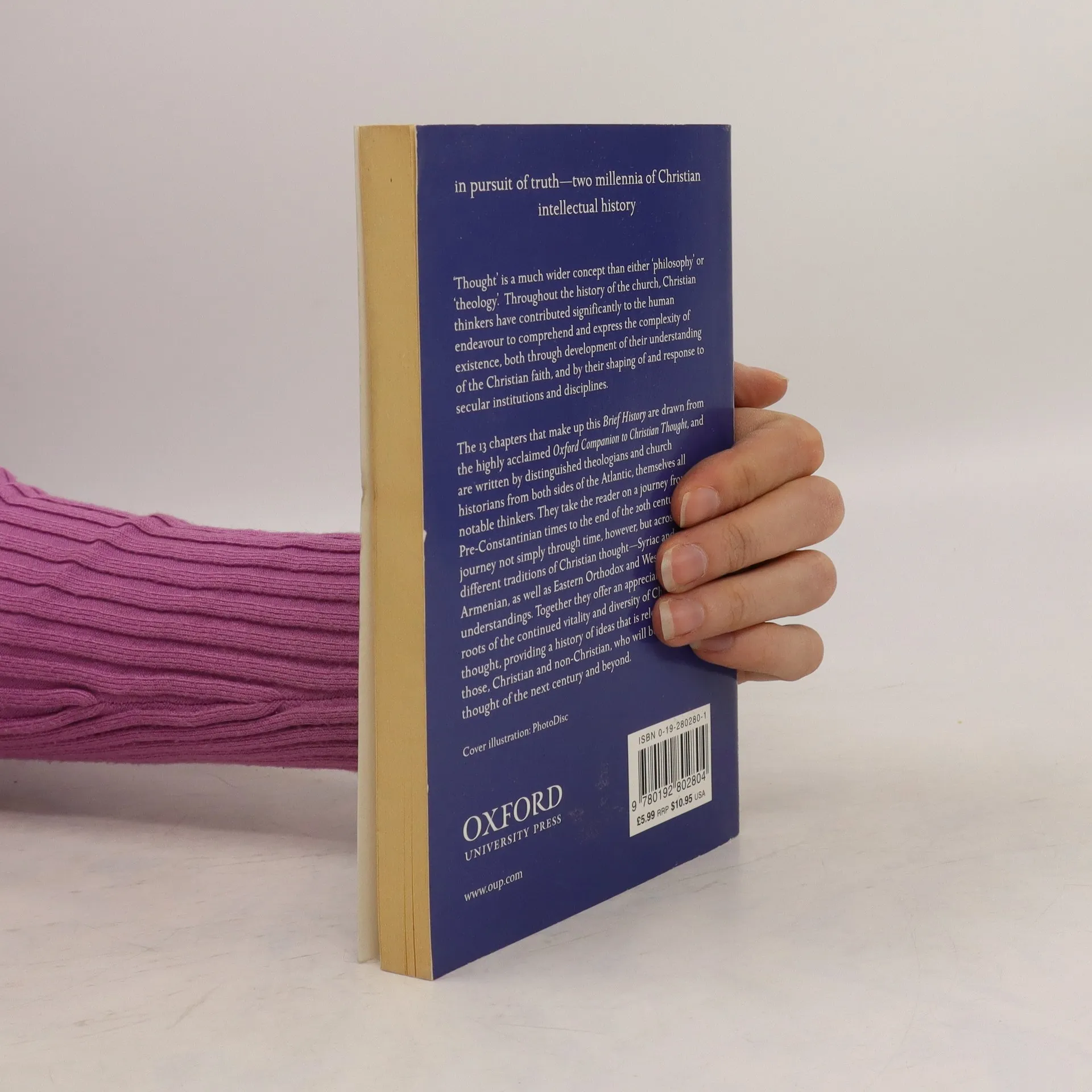
What does it mean to be a Christian at the dawn of the third millennium? This work explores the evolution of Christian thought over the past 2,000 years, addressing fundamental questions about existence and creation. Organized into 13 chronologically arranged chapters, it draws from the acclaimed Oxford Companion to Christian Thought, featuring contributions from distinguished theologians and church historians across the Atlantic. The narrative spans from Pre-Constantinian times to the end of the twentieth century, traversing various traditions of thought, including Eastern Orthodox, Armenian, Syriac, Byzantine, and Western perspectives. It emphasizes that there is no singular 'Christian thinking'; rather, the history is composed of diverse strands that, while converging at points, retain their distinct identities. The chapters go beyond mere storytelling; they reflect the authors' scholarly insights and aim to provoke further exploration and study among readers. Through this examination, the work invites contemplation on the rich tapestry of Christian thought and its relevance in today's world.
Zakup książki
Christian thought : a brief history, Alistair Mason, Adrian Hastings, Hugh S. Pyper
- Język

- Rok wydania
- 2002
- Oprawa
- (miękka)
Metody płatności
Brakuje nam tutaj Twojej recenzji.
- Tytuł
- Christian thought : a brief history
- Język
- angielski
- Autorzy
- Alistair Mason, Adrian Hastings, Hugh S. Pyper
- Wydawca
- Oxford University Press
- Rok wydania
- 2002
- Oprawa
- miękka
- Liczba stron
- 188
- ISBN10
- 0192802801
- ISBN13
- 9780192802804
- Seria
- Kategorie
- Ocena
- 3,75 z 5
- Opis
- What does it mean to be a Christian at the dawn of the third millennium? This work explores the evolution of Christian thought over the past 2,000 years, addressing fundamental questions about existence and creation. Organized into 13 chronologically arranged chapters, it draws from the acclaimed Oxford Companion to Christian Thought, featuring contributions from distinguished theologians and church historians across the Atlantic. The narrative spans from Pre-Constantinian times to the end of the twentieth century, traversing various traditions of thought, including Eastern Orthodox, Armenian, Syriac, Byzantine, and Western perspectives. It emphasizes that there is no singular 'Christian thinking'; rather, the history is composed of diverse strands that, while converging at points, retain their distinct identities. The chapters go beyond mere storytelling; they reflect the authors' scholarly insights and aim to provoke further exploration and study among readers. Through this examination, the work invites contemplation on the rich tapestry of Christian thought and its relevance in today's world.