

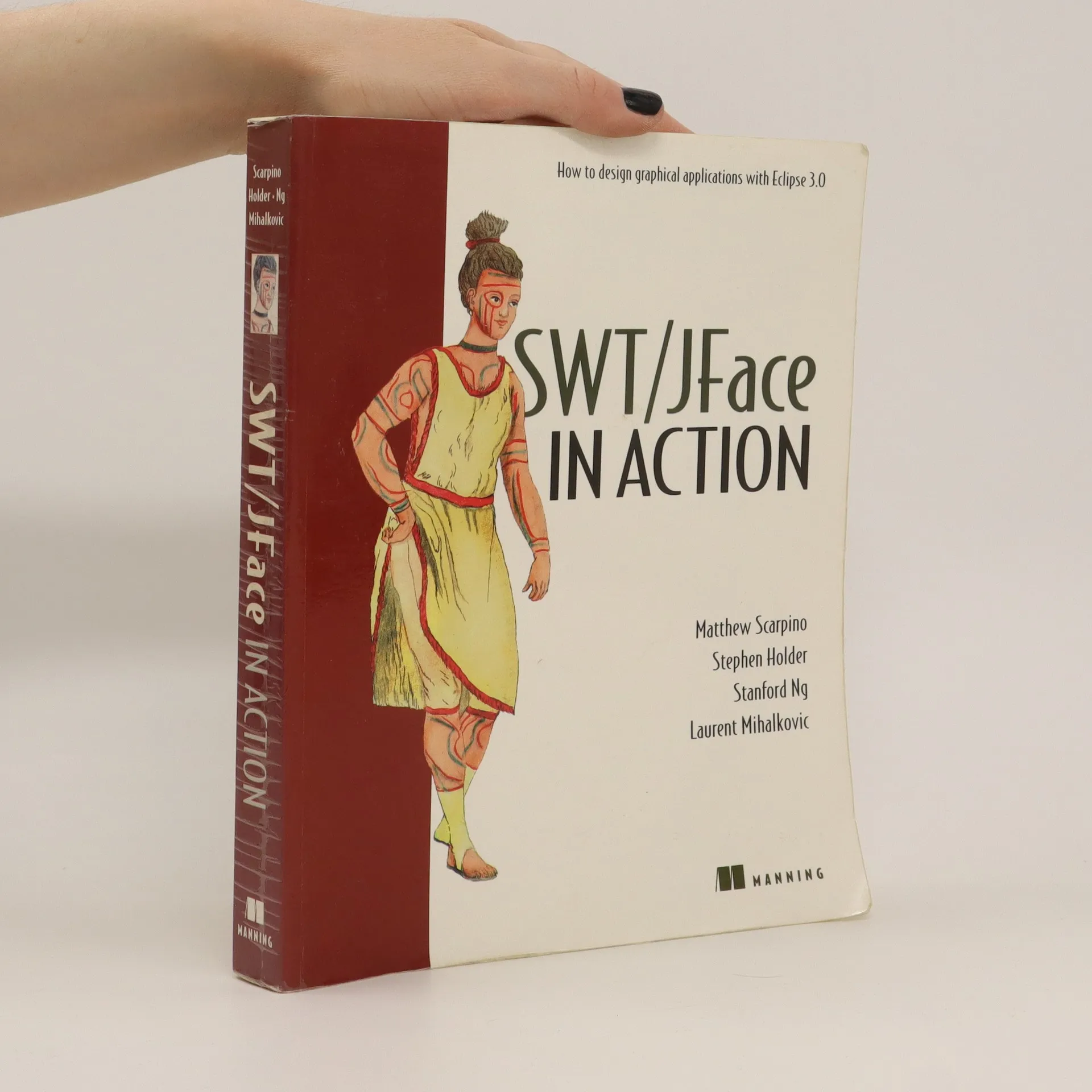
Więcej o książce
Covering Eclipse's new capability for building graphical user interfaces with version 3.0, the Standard Widget Toolkit (SWT) and JFace, this guide demonstrates how these award-winning tools have received broad support for creating desktop applications. Theory and practical examples reveal how to build GUIs that combine the look and feel of native interfaces with the platform independence of Java. This guide also shows how SWT makes use of the widgets provided by the operating system and describes how these components can be associated with events, containers, and graphics. With this knowledge, programmers can build fully featured user interfaces that communicate directly with the underlying platform. JFace's ability to simplify and organize the process of GUI design is then demonstrated, enabling developers to modify and adapt components, and separate their information from their appearance.
Zakup książki
SWT/JFace in Action, Matthew Scarpino
- Język

- Rok wydania
- 2005
- Oprawa
- (miękka)
Metody płatności
Brakuje nam tutaj Twojej recenzji.
- Tytuł
- SWT/JFace in Action
- Język
- angielski
- Autorzy
- Matthew Scarpino
- Wydawca
- Manning
- Rok wydania
- 2005
- Oprawa
- miękka
- Liczba stron
- 496
- ISBN10
- 1932394273
- ISBN13
- 9781932394276
- Seria
- Tagi
- Technologia
- Ocena
- 3 z 5
- Opis
- Covering Eclipse's new capability for building graphical user interfaces with version 3.0, the Standard Widget Toolkit (SWT) and JFace, this guide demonstrates how these award-winning tools have received broad support for creating desktop applications. Theory and practical examples reveal how to build GUIs that combine the look and feel of native interfaces with the platform independence of Java. This guide also shows how SWT makes use of the widgets provided by the operating system and describes how these components can be associated with events, containers, and graphics. With this knowledge, programmers can build fully featured user interfaces that communicate directly with the underlying platform. JFace's ability to simplify and organize the process of GUI design is then demonstrated, enabling developers to modify and adapt components, and separate their information from their appearance.