



Parametry
Więcej o książce
The underlying thesis of these lectures, volume XX in the "Foundations of Waldorf Education" series, is that true education must be based on knowledge of the whole human being and that such knowledge cannot be attained without love. On this basis, Steiner presents his understanding of every aspect of child development-bodily, psychological, and spiritual. At the same time, he shows that, to prove worthy of their calling, teachers must begin a process of inner development. In Steiner's view, it is human beings who give value and meaning to the world. Modern education, however, is gradually undermining this meaning. These lectures demonstrate that education can heal that lack of meaning and restore the meaning of humankind for the world. Steiner also discusses the practical, day-to-day operation of the school. He talks about styles of teaching, teacher conferences, parent-teacher meetings, and how Waldorf education is related to the anthroposophic movement. This book, while serving as a good introduction to Steiner's ideas on education, also represents the fruits of four years experience in the Waldorf school.
Zakup książki
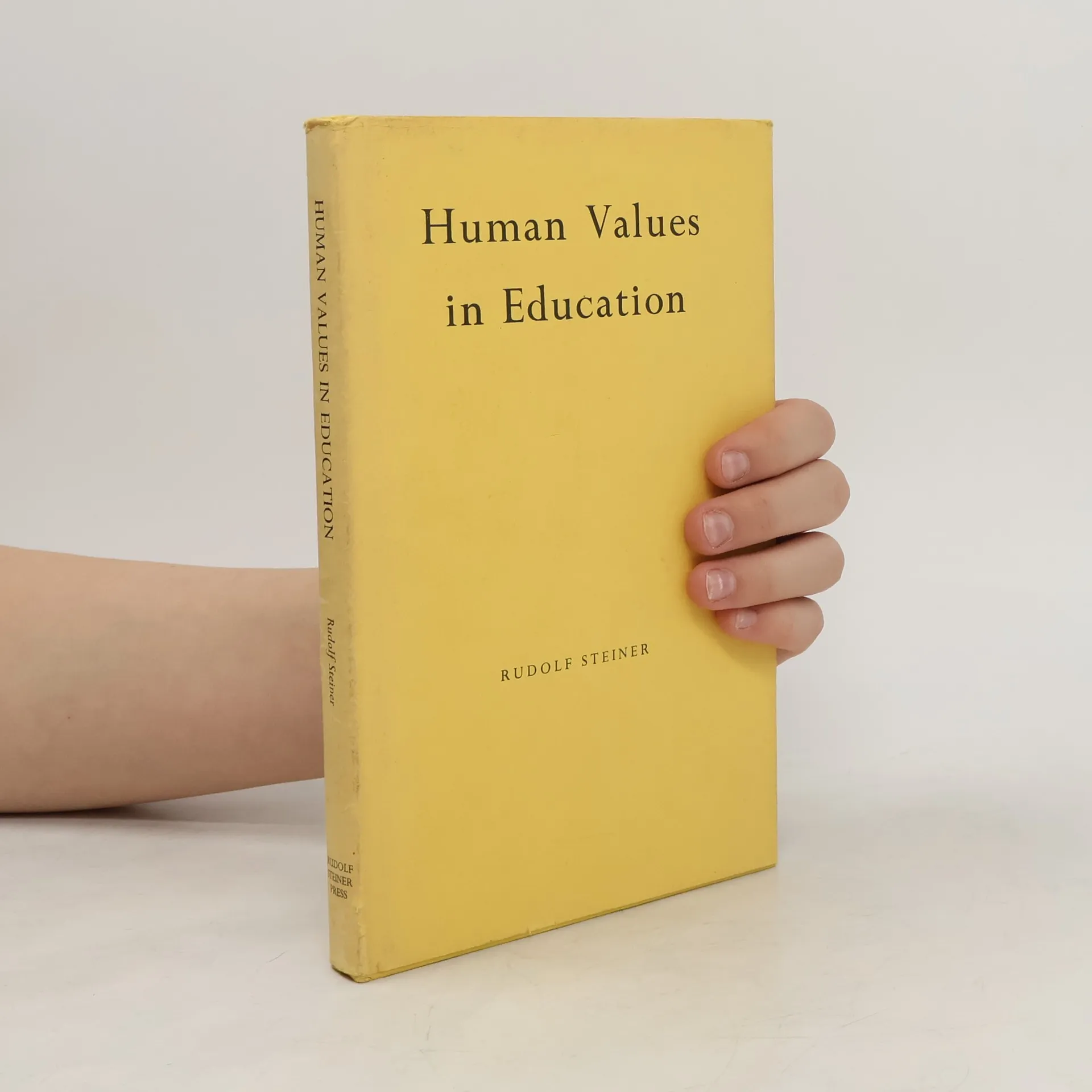
Human Values in Education, Rudolf Steiner
- Język

- Rok wydania
- 1971
- Oprawa
- (twarda)
Metody płatności
Brakuje nam tutaj Twojej recenzji.
- Tytuł
- Human Values in Education
- Język
- angielski
- Autorzy
- Rudolf Steiner
- Wydawca
- Rudolf Steiner Press
- Rok wydania
- 1971
- Oprawa
- twarda
- ISBN10
- 0854402500
- ISBN13
- 9780854402502
- Seria
- Kategorie
- Ocena
- 5 z 5
- Opis
- The underlying thesis of these lectures, volume XX in the "Foundations of Waldorf Education" series, is that true education must be based on knowledge of the whole human being and that such knowledge cannot be attained without love. On this basis, Steiner presents his understanding of every aspect of child development-bodily, psychological, and spiritual. At the same time, he shows that, to prove worthy of their calling, teachers must begin a process of inner development. In Steiner's view, it is human beings who give value and meaning to the world. Modern education, however, is gradually undermining this meaning. These lectures demonstrate that education can heal that lack of meaning and restore the meaning of humankind for the world. Steiner also discusses the practical, day-to-day operation of the school. He talks about styles of teaching, teacher conferences, parent-teacher meetings, and how Waldorf education is related to the anthroposophic movement. This book, while serving as a good introduction to Steiner's ideas on education, also represents the fruits of four years experience in the Waldorf school.