


Parametry
Więcej o książce
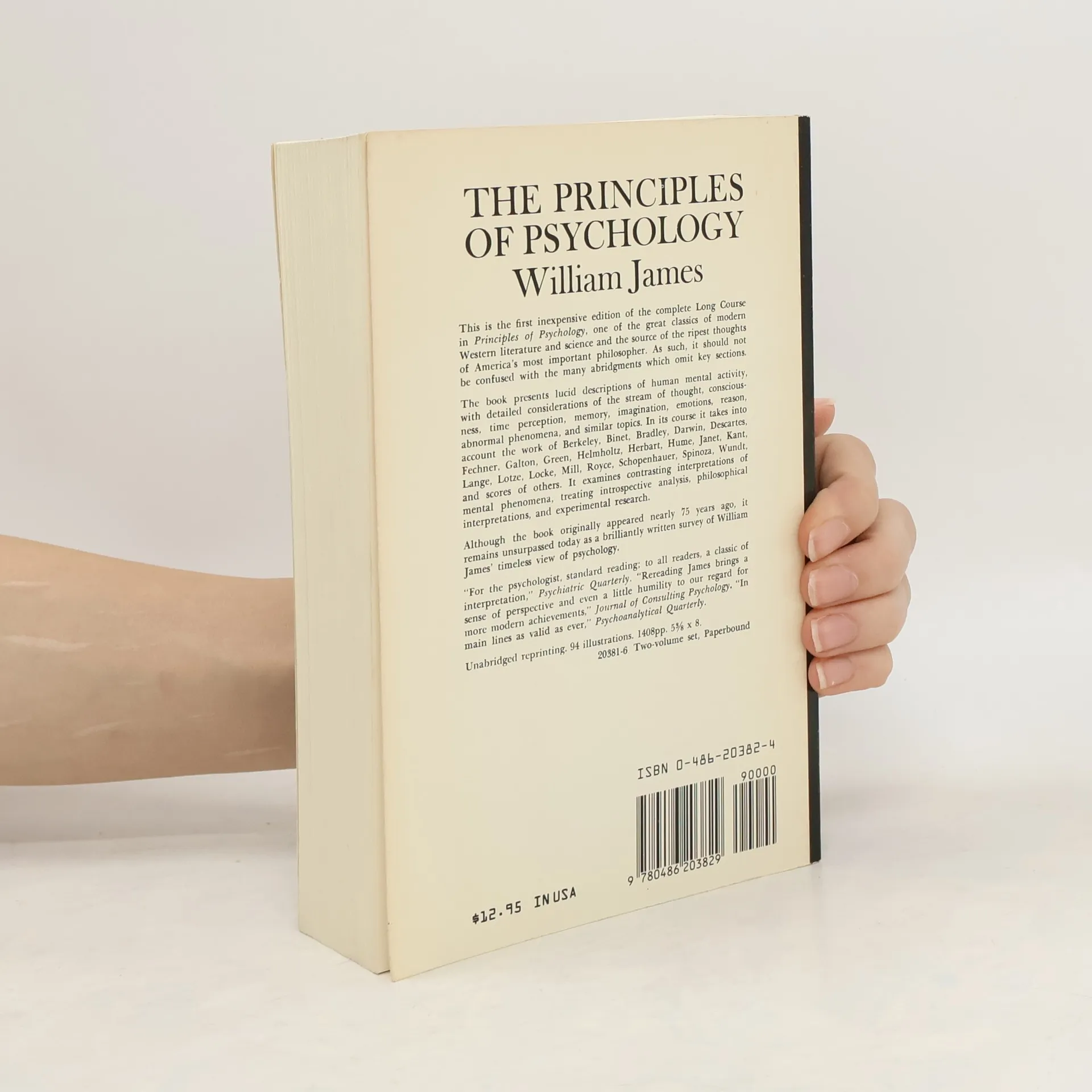
This is the first inexpensive edition of the complete Long Course in Principles of Psychology, one of the great classics of modern Western literature and science and the source of the ripest thoughts of America’s most important philosopher. As such, it should not be confused with the many abridgements that omit key sections. The book presents lucid descriptions of human mental activity, with detailed considerations of the stream of thought, consciousness, time perception, memory, imagination, emotions, reason, abnormal phenomena, and similar topics. In its course it takes into account the work of Berkeley, Binet, Bradley, Darwin, Descartes, Fechner, Galton, Green, Helmholtz, Herbart, Hume, Janet, Kant, Lange, Lotze, Locke, Mill, Royce, Schopenhauer, Spinoza, Wundt, and scores of others. It examines contrasting interpretations of mental phenomena, treating introspective analysis, philosophical interpretations, and experimental research. Although the book originally appeared nearly 75 years ago, it remains unsurpassed today as a brilliantly written survey of William James’ timeless view of psychology.
Zakup książki
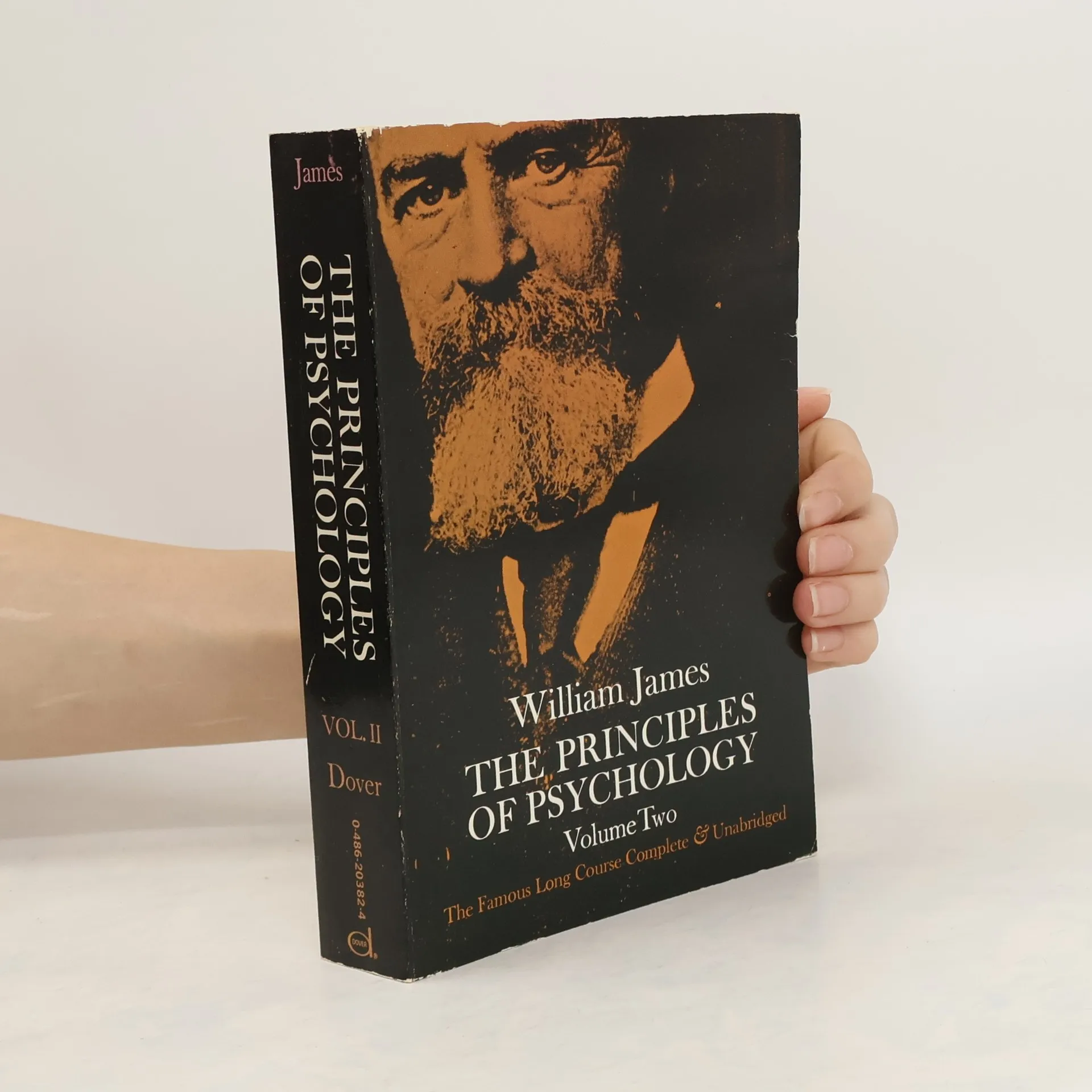
The Principles of Psychology, Vol. 2, William James
- Język

- Rok wydania
- 2000
- Oprawa
- (miękka)
Metody płatności
Brakuje nam tutaj Twojej recenzji.
- Tytuł
- The Principles of Psychology, Vol. 2
- Język
- angielski
- Autorzy
- William James
- Wydawca
- Dover Publications Inc.
- Rok wydania
- 2000
- Oprawa
- miękka
- ISBN10
- 0486203824
- ISBN13
- 9780486203829
- Seria
- Ocena
- 4,15 z 5
- Opis
- This is the first inexpensive edition of the complete Long Course in Principles of Psychology, one of the great classics of modern Western literature and science and the source of the ripest thoughts of America’s most important philosopher. As such, it should not be confused with the many abridgements that omit key sections. The book presents lucid descriptions of human mental activity, with detailed considerations of the stream of thought, consciousness, time perception, memory, imagination, emotions, reason, abnormal phenomena, and similar topics. In its course it takes into account the work of Berkeley, Binet, Bradley, Darwin, Descartes, Fechner, Galton, Green, Helmholtz, Herbart, Hume, Janet, Kant, Lange, Lotze, Locke, Mill, Royce, Schopenhauer, Spinoza, Wundt, and scores of others. It examines contrasting interpretations of mental phenomena, treating introspective analysis, philosophical interpretations, and experimental research. Although the book originally appeared nearly 75 years ago, it remains unsurpassed today as a brilliantly written survey of William James’ timeless view of psychology.