



Więcej o książce
Rationalism in Politics, first published in 1962, has established the late Michael Oakeshott as the leading conservative political theorist in modern Britain. This expanded collection of essays astutely points out the limits of "reason" in rationalist politics.Oakeshott criticizes ideological schemes to reform society according to supposedly "scientific" or rationalistic principles that ignore the wealth and variety of human experience. "Rationalism in politics," says Oakeshott, "involves a misconception with regard to the nature of human knowledge." History has shown that it produces unexpected, often disastrous results. "Having cut himself off from the traditional knowledge of his society, and denied the value of any education more extensive than a training in a technique of analysis," the Rationalist succeeds only in undermining the institutions that hold civilized society together. In this regard, rationalism in politics is "a corruption of the mind."Timothy Fuller is Professor of Political Science and Dean of the College at Colorado College.
Zakup książki
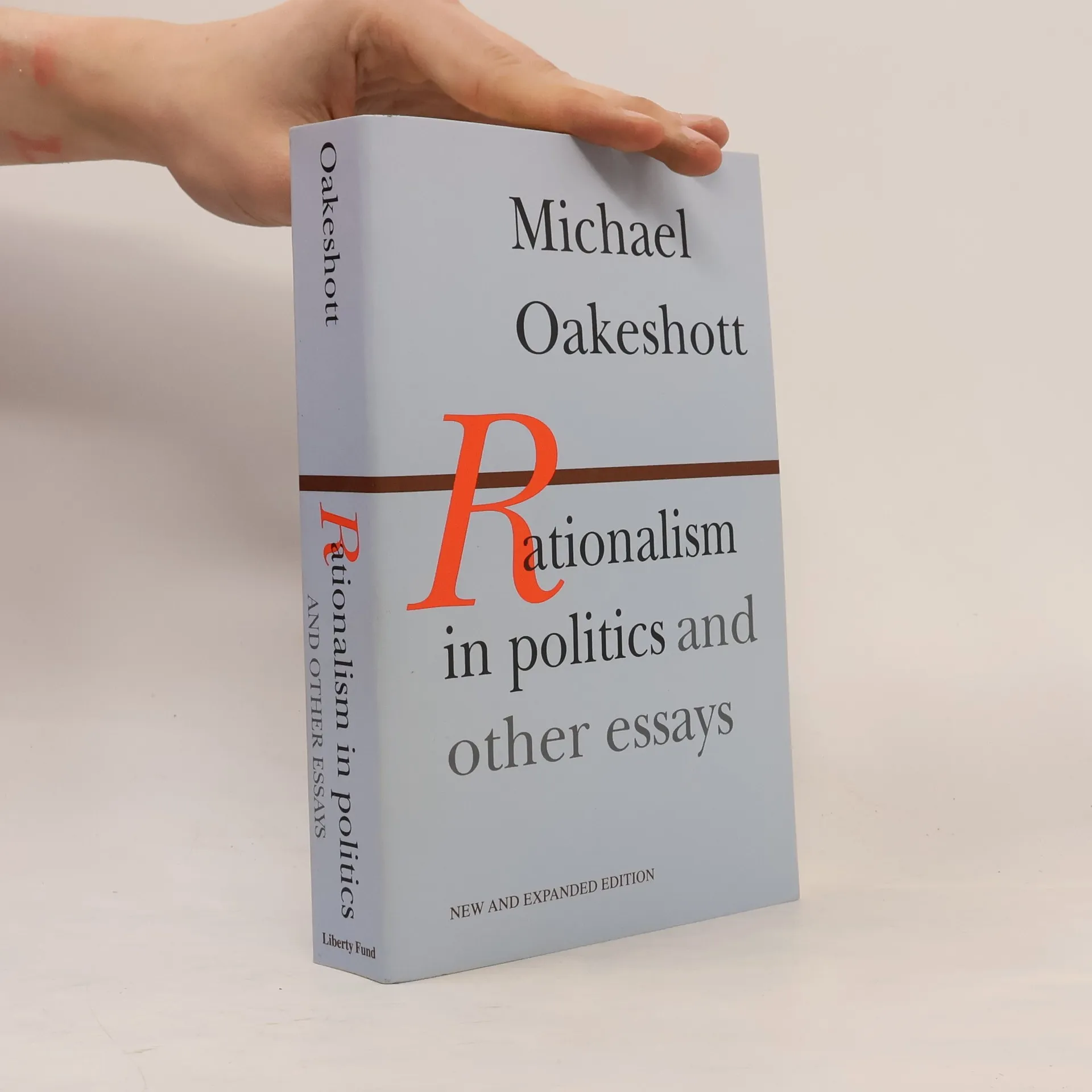
Rationalism in Politics and Other Essays, Michael Joseph Oakeshott
- Język

- Rok wydania
- 1991
- Oprawa
- (miękka)
Metody płatności
Brakuje nam tutaj Twojej recenzji.
- Tytuł
- Rationalism in Politics and Other Essays
- Język
- angielski
- Autorzy
- Michael Joseph Oakeshott
- Wydawca
- Liberty Fund Inc
- Rok wydania
- 1991
- Oprawa
- miękka
- Liczba stron
- 582
- ISBN10
- 0865970955
- ISBN13
- 9780865970953
- Seria
- Kategorie
- Ocena
- 4 z 5
- Opis
- Rationalism in Politics, first published in 1962, has established the late Michael Oakeshott as the leading conservative political theorist in modern Britain. This expanded collection of essays astutely points out the limits of "reason" in rationalist politics.Oakeshott criticizes ideological schemes to reform society according to supposedly "scientific" or rationalistic principles that ignore the wealth and variety of human experience. "Rationalism in politics," says Oakeshott, "involves a misconception with regard to the nature of human knowledge." History has shown that it produces unexpected, often disastrous results. "Having cut himself off from the traditional knowledge of his society, and denied the value of any education more extensive than a training in a technique of analysis," the Rationalist succeeds only in undermining the institutions that hold civilized society together. In this regard, rationalism in politics is "a corruption of the mind."Timothy Fuller is Professor of Political Science and Dean of the College at Colorado College.