



Więcej o książce
Professor Langbaum offers insightful observations on Victorian culture, noting that the Victorians sought to reconcile change with continuity and order. In his best essay, "The Victorian Idea of Culture," he succinctly outlines various post-Enlightenment themes related to nature, society, humanism, and religion, claiming they embody "the modern spirit." However, his analysis overlooks significant modern thinkers like Hegel, Marx, Darwin, Freud, Einstein, and Wittgenstein, which raises questions about the relevance of his title. Langbaum effectively explores Wordsworth's blend of Lockean self-awareness with romantic nostalgia, Tennyson's struggles with faith and doubt, and Browning's use of personae, linking these themes to specific phases of English history and later mythmakers like Yeats, Eliot, and Joyce. Yet, his connections between the tragicomic elements of The Tempest and certain ironic archetypes in contemporary literature feel more suggestive than foundational. While Langbaum's essays are scholarly and sophisticated, they appear as preliminary work for a more comprehensive structure he has yet to develop.
Zakup książki
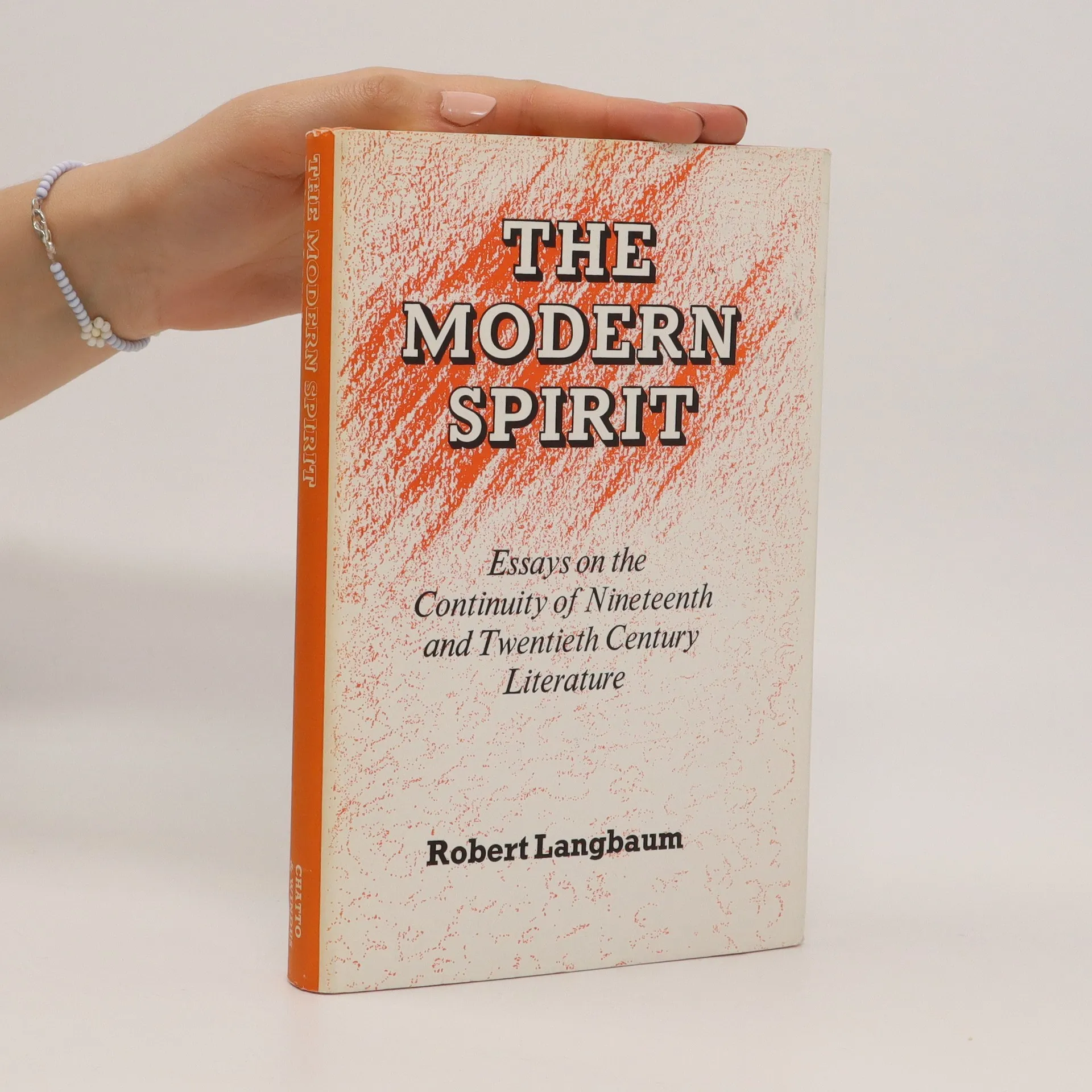
The Modern Spirit, Robert Langbaum
- Język

- Rok wydania
- 1970
- Oprawa
- (twarda)
Metody płatności
Nikt jeszcze nie ocenił.
- Tytuł
- The Modern Spirit
- Język
- angielski
- Autorzy
- Robert Langbaum
- Wydawca
- Chatto&Windus
- Rok wydania
- 1970
- Oprawa
- twarda
- Liczba stron
- 240
- ISBN10
- 0701116153
- ISBN13
- 9780701116156
- Seria
- Kategorie
- Opis
- Professor Langbaum offers insightful observations on Victorian culture, noting that the Victorians sought to reconcile change with continuity and order. In his best essay, "The Victorian Idea of Culture," he succinctly outlines various post-Enlightenment themes related to nature, society, humanism, and religion, claiming they embody "the modern spirit." However, his analysis overlooks significant modern thinkers like Hegel, Marx, Darwin, Freud, Einstein, and Wittgenstein, which raises questions about the relevance of his title. Langbaum effectively explores Wordsworth's blend of Lockean self-awareness with romantic nostalgia, Tennyson's struggles with faith and doubt, and Browning's use of personae, linking these themes to specific phases of English history and later mythmakers like Yeats, Eliot, and Joyce. Yet, his connections between the tragicomic elements of The Tempest and certain ironic archetypes in contemporary literature feel more suggestive than foundational. While Langbaum's essays are scholarly and sophisticated, they appear as preliminary work for a more comprehensive structure he has yet to develop.