

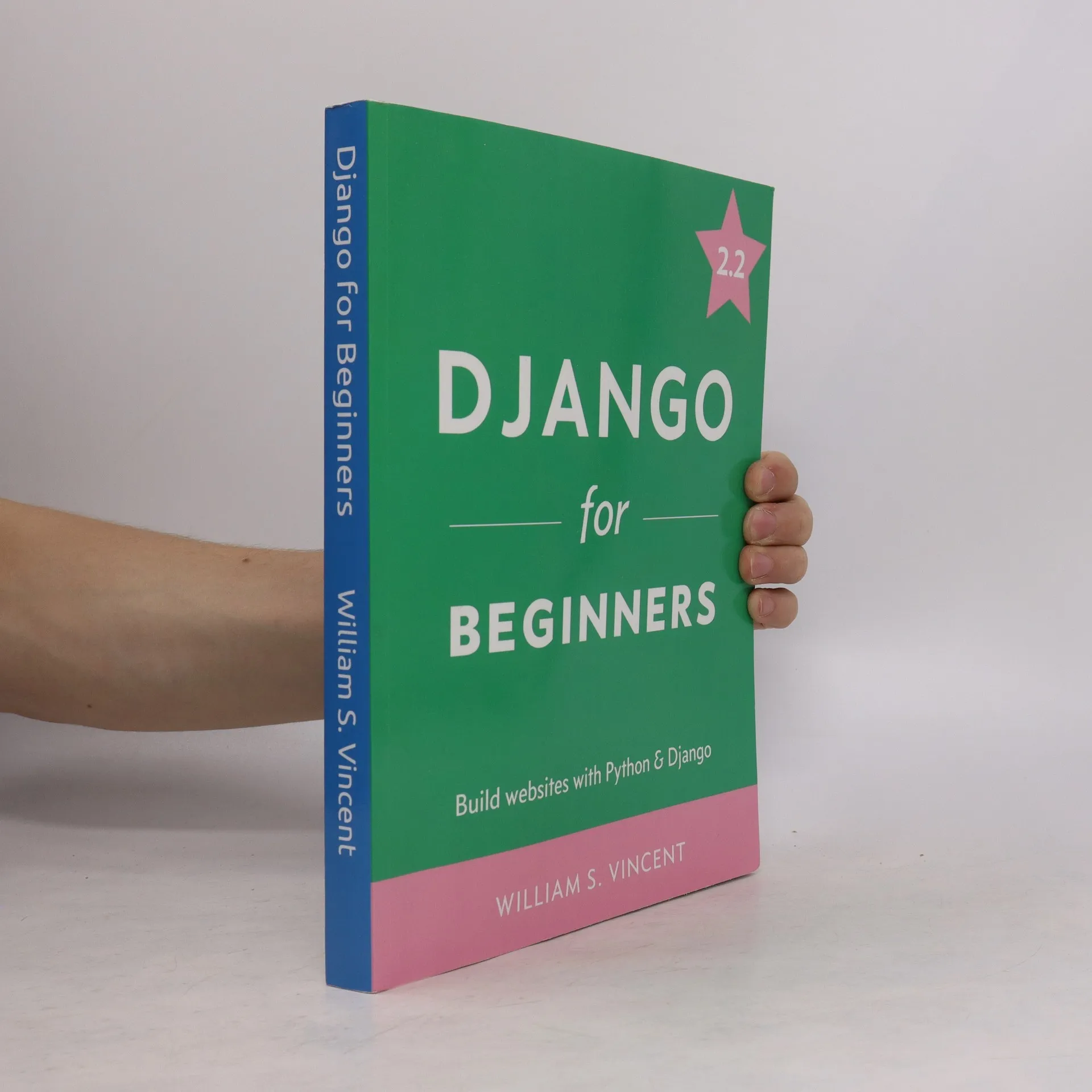


Więcej o książce
Newly updated for Django 2.1 and Python 3.7. Django for Beginners takes you from total beginner to confident Django developer. Proceed step-by-step through five progressively more complex projects: from a Hello World app all the way to a robust Newspaper app with a custom user model, complete user authentication flow, foreign key relationships, and more. Learn current best practices around class-based views, templates, urls, user authentication, testing, and deployment. TABLE OF CONTENTS: Introduction Chapter 1: Initial Setup Chapter 2: Hello World app Chapter 3: Pages app Chapter 4: Message Board app Chapter 5: Blog app Chapter 6: Forms Chapter 7: User Accounts Chapter 8: Custom User Model Chapter 9: User Authentication Chapter 10: Bootstrap Chapter 11: Password Change and Reset Chapter 12: Email Chapter 13: Newspaper app Chapter 14: Permissions and Authorizations Chapter 15: Comments Conclusion
Zakup książki
Django for Beginners, William S. Vincent
- Język

- Rok wydania
- 2018
- Oprawa
- (miękka)
Metody płatności
Brakuje nam tutaj Twojej recenzji.
- Tytuł
- Django for Beginners
- Język
- angielski
- Autorzy
- William S. Vincent
- Rok wydania
- 2018
- Oprawa
- miękka
- Liczba stron
- 332
- ISBN10
- 1983172669
- ISBN13
- 9781983172663
- Seria
- Tagi
- Ocena
- 4,55 z 5
- Opis
- Newly updated for Django 2.1 and Python 3.7. Django for Beginners takes you from total beginner to confident Django developer. Proceed step-by-step through five progressively more complex projects: from a Hello World app all the way to a robust Newspaper app with a custom user model, complete user authentication flow, foreign key relationships, and more. Learn current best practices around class-based views, templates, urls, user authentication, testing, and deployment. TABLE OF CONTENTS: Introduction Chapter 1: Initial Setup Chapter 2: Hello World app Chapter 3: Pages app Chapter 4: Message Board app Chapter 5: Blog app Chapter 6: Forms Chapter 7: User Accounts Chapter 8: Custom User Model Chapter 9: User Authentication Chapter 10: Bootstrap Chapter 11: Password Change and Reset Chapter 12: Email Chapter 13: Newspaper app Chapter 14: Permissions and Authorizations Chapter 15: Comments Conclusion