


Więcej o książce
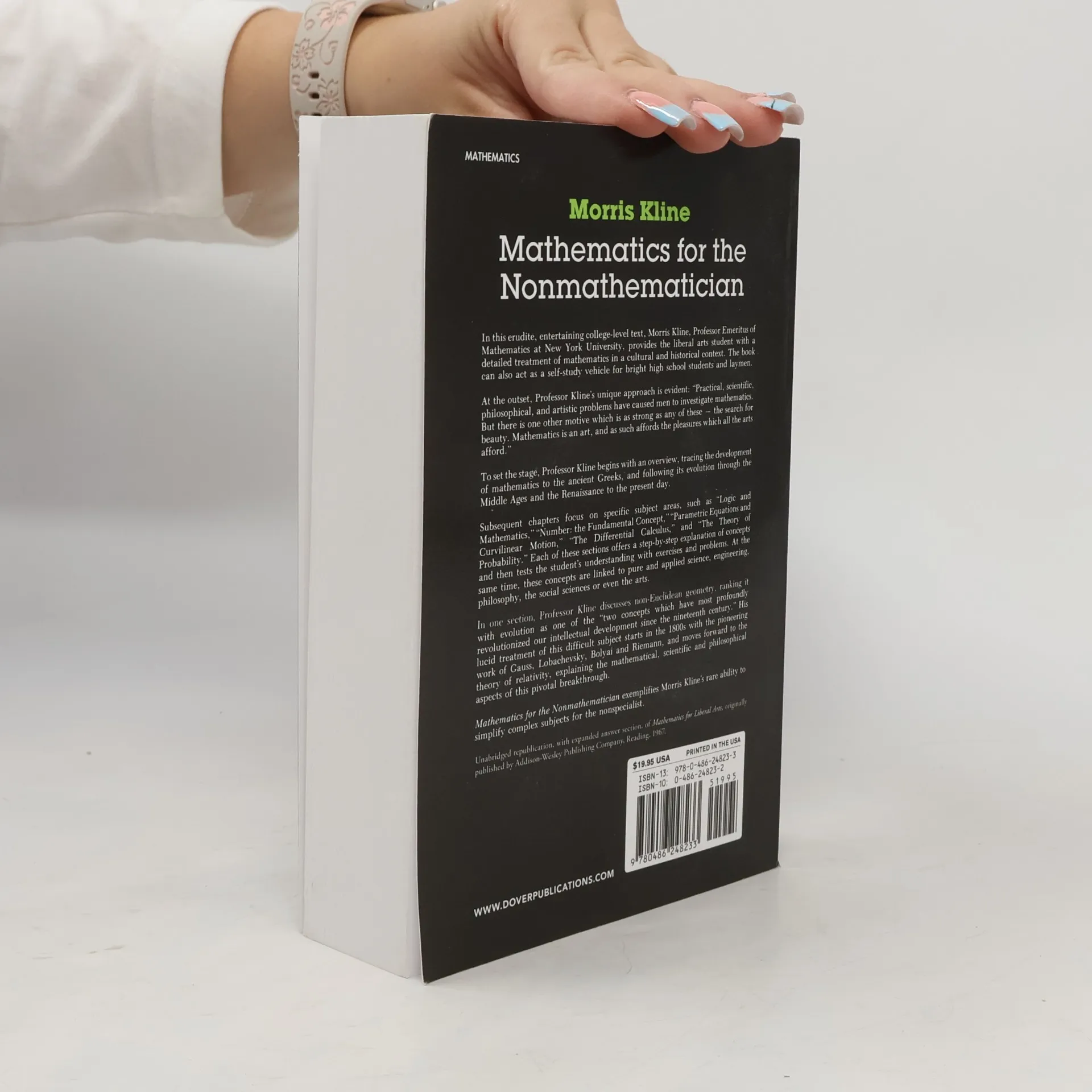
Practical, scientific, philosophical, and artistic problems have caused men to investigate mathematics. But there is one other motive which is as strong as any of these—the search for beauty. Mathematics is an art, and as such affords the pleasures which all the arts afford. The book covers various topics including the historical orientation of mathematics, logic and mathematics, the fundamental concept of numbers, algebra, Euclidean geometry, charting the earth and the heavens, the mathematical order of nature, the awakening of Europe, mathematics and painting in the Renaissance, projective and coordinate geometry, parametric equations, the application of formulas to gravitation, differential and integral calculus, trigonometric functions and oscillatory motion, non-Euclidean geometries, arithmetics and their algebras, the statistical approach to the social and biological sciences, and the theory of probability. It also discusses the nature and values of mathematics, includes a table of trigonometric ratios, answers to selected and review exercises, additional answers and solutions, and an index.
Zakup książki
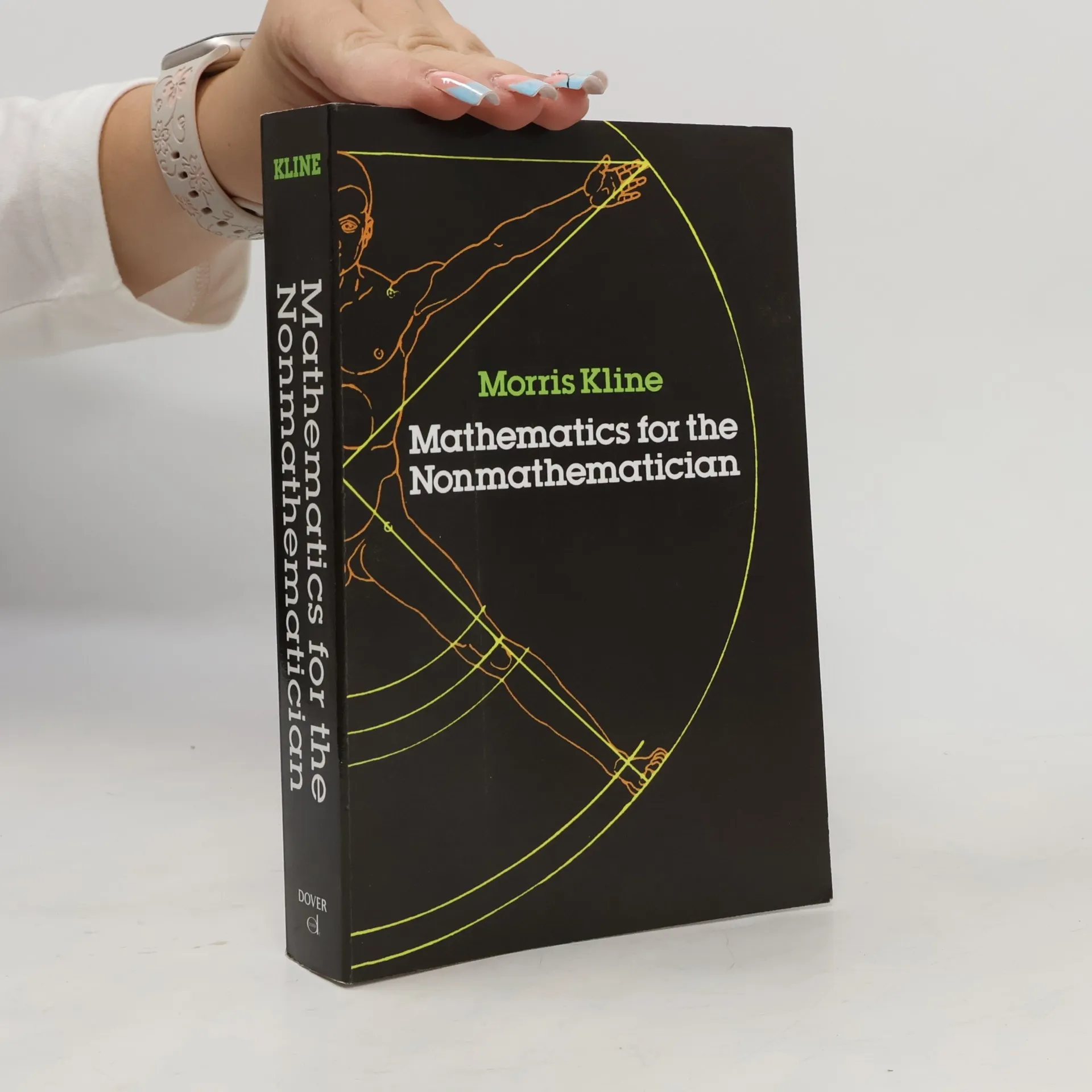
Mathematics for the Non-mathematician, Morris Klein
- Język

- Rok wydania
- 1985
- Oprawa
- (miękka)
Metody płatności
Brakuje nam tutaj Twojej recenzji.
- Tytuł
- Mathematics for the Non-mathematician
- Język
- angielski
- Autorzy
- Morris Klein
- Wydawca
- Dover Publications Inc.
- Rok wydania
- 1985
- Oprawa
- miękka
- Liczba stron
- 641
- ISBN10
- 0486248232
- ISBN13
- 9780486248233
- Seria
- Kategorie
- Ocena
- 4,15 z 5
- Opis
- Practical, scientific, philosophical, and artistic problems have caused men to investigate mathematics. But there is one other motive which is as strong as any of these—the search for beauty. Mathematics is an art, and as such affords the pleasures which all the arts afford. The book covers various topics including the historical orientation of mathematics, logic and mathematics, the fundamental concept of numbers, algebra, Euclidean geometry, charting the earth and the heavens, the mathematical order of nature, the awakening of Europe, mathematics and painting in the Renaissance, projective and coordinate geometry, parametric equations, the application of formulas to gravitation, differential and integral calculus, trigonometric functions and oscillatory motion, non-Euclidean geometries, arithmetics and their algebras, the statistical approach to the social and biological sciences, and the theory of probability. It also discusses the nature and values of mathematics, includes a table of trigonometric ratios, answers to selected and review exercises, additional answers and solutions, and an index.