

Więcej o książce
Increasing sophistication in research has led to a need for larger and faster computers. In this quest, supercomputers are themselves stimulating the redevelopment of the methods of computation. The results play a vital role in the advancement of science, engineering and modern industrial technology. Describing a few of the many research directions being taken to investigate potential parallel-computer designs, this book enables the researcher to keep pace with rapid advances in the development of computer architectures directed towards parallel processing and high execution rates. It discusses projects being conducted at universities, national laboratories and in industry, guided by the applications at those sites and the scientific expertise located there. The projects are not limited to developing a prototype computer; they are building new hardware concepts, and switching networks and developing new algorithms for parallel computing.
Zakup książki
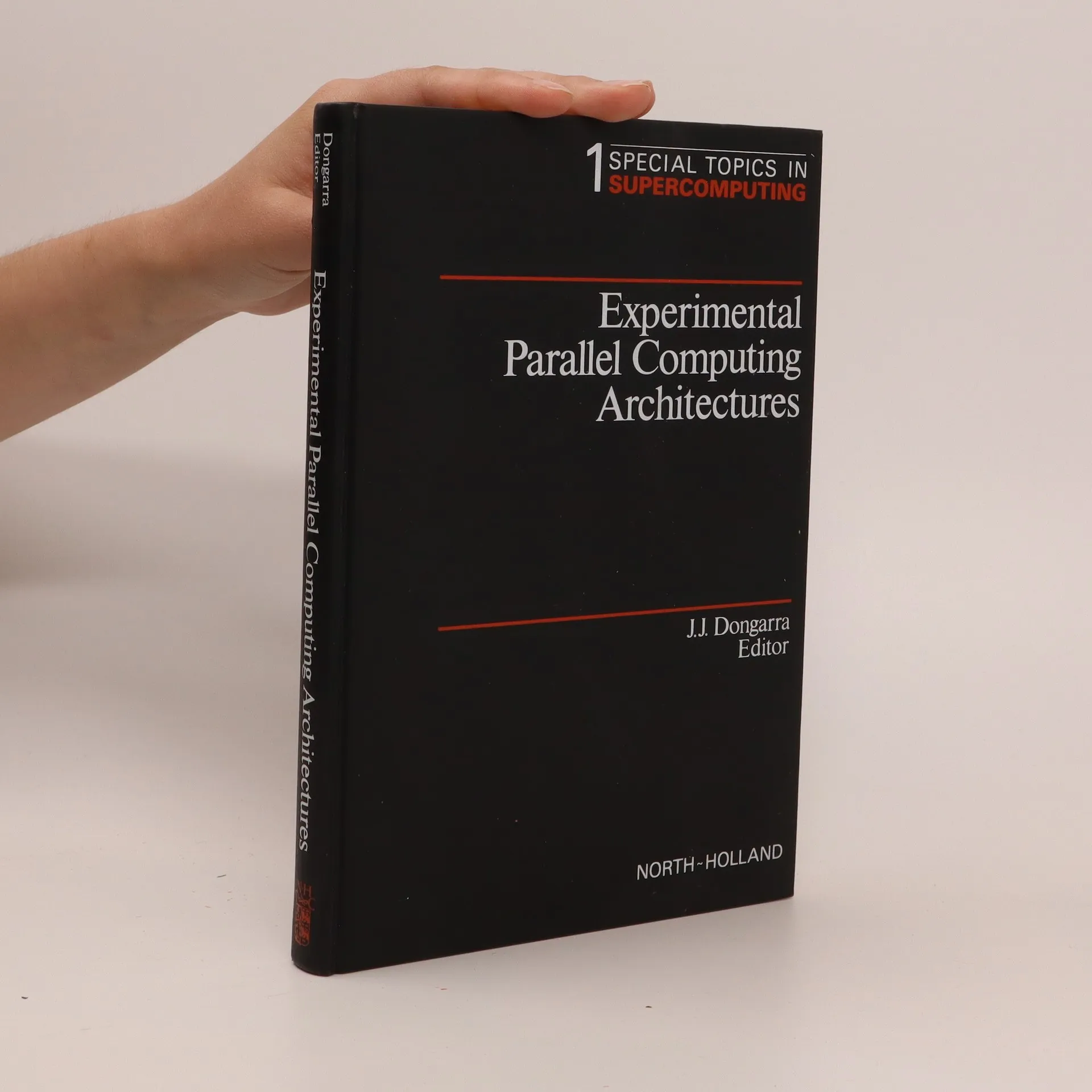
Experimental Parallel Computing Architectures, J. J. Dongarra
- Język

- Rok wydania
- 1987
- Oprawa
- (twarda)
Metody płatności
Nikt jeszcze nie ocenił.
- Tytuł
- Experimental Parallel Computing Architectures
- Język
- angielski
- Autorzy
- J. J. Dongarra
- Wydawca
- Elsevier Science Publishers
- Rok wydania
- 1987
- Oprawa
- twarda
- ISBN10
- 0444702342
- ISBN13
- 9780444702340
- Seria
- Kolekcja
- Special Topics in Supercomputing
- Tagi
- Opis
- Increasing sophistication in research has led to a need for larger and faster computers. In this quest, supercomputers are themselves stimulating the redevelopment of the methods of computation. The results play a vital role in the advancement of science, engineering and modern industrial technology. Describing a few of the many research directions being taken to investigate potential parallel-computer designs, this book enables the researcher to keep pace with rapid advances in the development of computer architectures directed towards parallel processing and high execution rates. It discusses projects being conducted at universities, national laboratories and in industry, guided by the applications at those sites and the scientific expertise located there. The projects are not limited to developing a prototype computer; they are building new hardware concepts, and switching networks and developing new algorithms for parallel computing.