

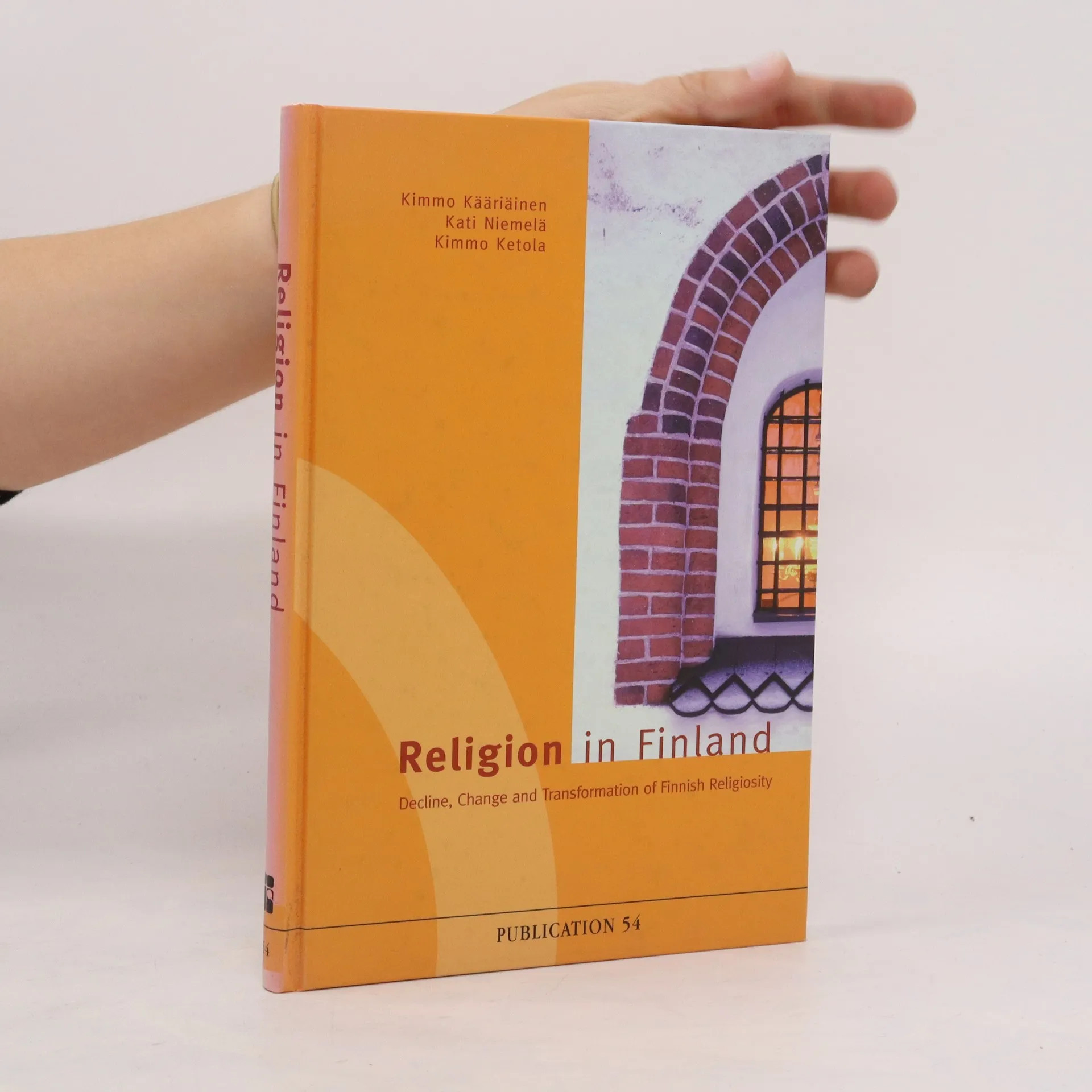
Więcej o książce
This book examines Finnish religiosity. It aims to describe and explain present-day Finnish religiosity by producing a cross-section of features present in contemporary religion. This task is carried out by making use of the framework of sociological theory of religion in relation to the nature of modern society. During the past 150 years, Finland has changed from a principally agrarian and traditional society to a post-industrial service industry society. It is clear that such wide-ranging changes do not leave the religious tradition of the nation unaffected. However, the development of modernization does not seem to be leading unambiguously to the constant decline of religion in every area, nor to complete metamorphosis. The institutional religion, which in Finland is represented by the Evangelical Lutheran Church, has maintained its position as a channel of the people's religiosity surprisingly well, despite many predictions to the contrary. The principal source material for the empirical part of the study is the World Values 2000 survey, studies of Finnish religiosity accumulated over several years and the Lutheran Church's statistics.
Zakup książki
Religion in Finland, Kimmo Kääriäinen, Kati Niemelä, Kimmo Ketola
- Język

- Rok wydania
- 2005
- Oprawa
- (twarda)
Metody płatności
Nikt jeszcze nie ocenił.
- Tytuł
- Religion in Finland
- Język
- angielski
- Autorzy
- Kimmo Kääriäinen, Kati Niemelä, Kimmo Ketola
- Rok wydania
- 2005
- Oprawa
- twarda
- Liczba stron
- 185
- ISBN10
- 9516932630
- ISBN13
- 9789516932630
- Seria
- Kategorie
- Tagi
- Opis
- This book examines Finnish religiosity. It aims to describe and explain present-day Finnish religiosity by producing a cross-section of features present in contemporary religion. This task is carried out by making use of the framework of sociological theory of religion in relation to the nature of modern society. During the past 150 years, Finland has changed from a principally agrarian and traditional society to a post-industrial service industry society. It is clear that such wide-ranging changes do not leave the religious tradition of the nation unaffected. However, the development of modernization does not seem to be leading unambiguously to the constant decline of religion in every area, nor to complete metamorphosis. The institutional religion, which in Finland is represented by the Evangelical Lutheran Church, has maintained its position as a channel of the people's religiosity surprisingly well, despite many predictions to the contrary. The principal source material for the empirical part of the study is the World Values 2000 survey, studies of Finnish religiosity accumulated over several years and the Lutheran Church's statistics.