

Więcej o książce
This study shows the relevance of the Integrated Pest Management (IPM) approach for African agriculture by giving an account of the rationale and historical development of IPM, as well as an overview of pest management issues in Africa. Because crop protection problems and options vary with the level of agricultural technology involved, three types of common African cropping situations are examined: (1) subsistence farming, (2) production based on high levels of external inputs including pesticides, and (3) systems in the process of intensification -- which generally involves a transition from low to intermediate or high use of external inputs. The study then examines 11 current IPM projects in Africa to determine how the IPM approach might best be applied, developed, and implemented. The analysis focuses on socio-economic, political, and technical factors which determine the appropriate elements of an IPM program and the degree to which it becomes adopted by crop protection agencies and farmers
Zakup książki
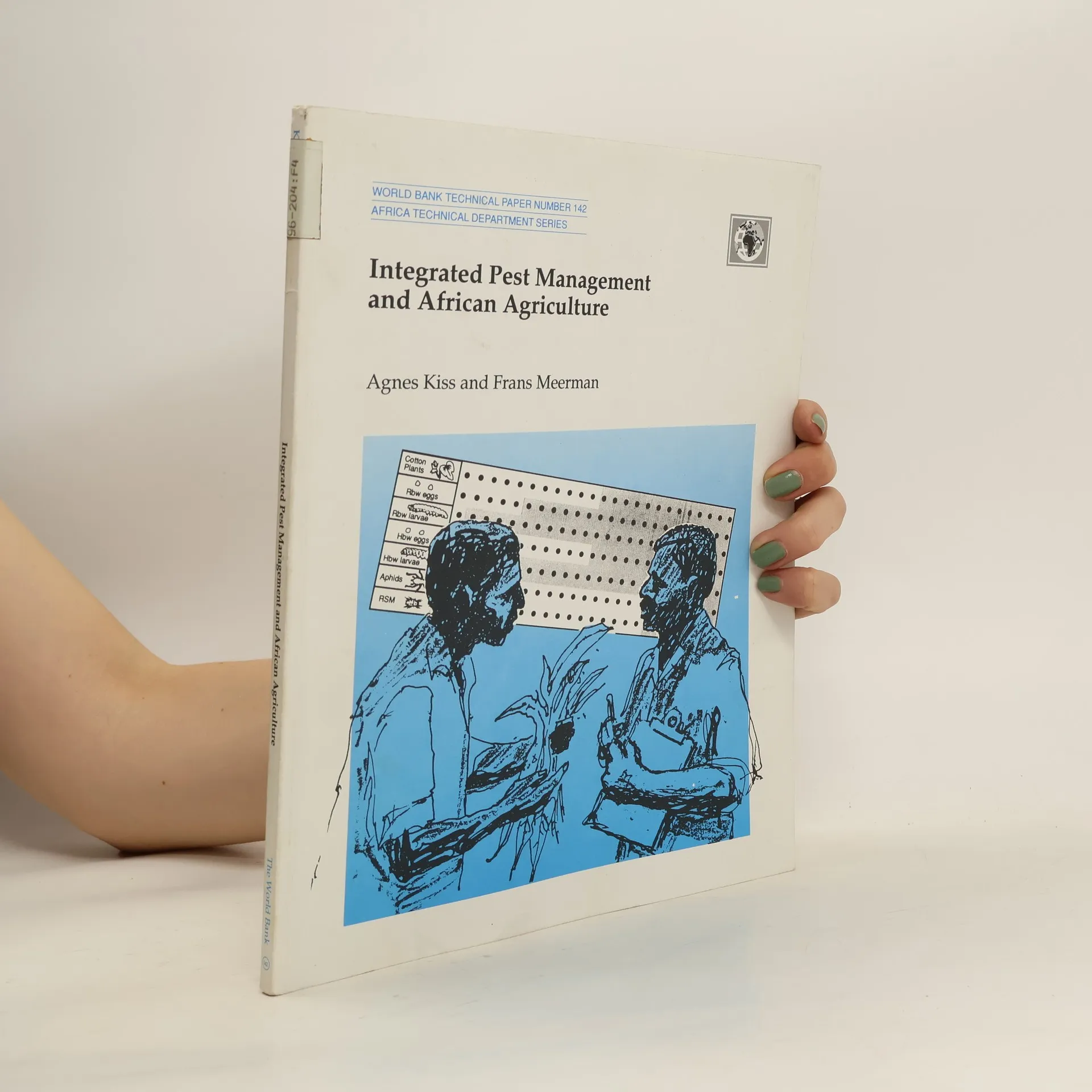
Integrated Pest Management and African Agriculture, Agnes Kiss, Frans Meerman
- Język

- Rok wydania
- 1991
- Oprawa
- (miękka)
Metody płatności
Nikt jeszcze nie ocenił.
- Tytuł
- Integrated Pest Management and African Agriculture
- Język
- angielski
- Autorzy
- Agnes Kiss, Frans Meerman
- Wydawca
- World Bank Publications
- Rok wydania
- 1991
- Oprawa
- miękka
- Liczba stron
- 122
- ISBN10
- 0821318721
- ISBN13
- 9780821318720
- Seria
- Kategorie
- Opis
- This study shows the relevance of the Integrated Pest Management (IPM) approach for African agriculture by giving an account of the rationale and historical development of IPM, as well as an overview of pest management issues in Africa. Because crop protection problems and options vary with the level of agricultural technology involved, three types of common African cropping situations are examined: (1) subsistence farming, (2) production based on high levels of external inputs including pesticides, and (3) systems in the process of intensification -- which generally involves a transition from low to intermediate or high use of external inputs. The study then examines 11 current IPM projects in Africa to determine how the IPM approach might best be applied, developed, and implemented. The analysis focuses on socio-economic, political, and technical factors which determine the appropriate elements of an IPM program and the degree to which it becomes adopted by crop protection agencies and farmers