

Parametry
Więcej o książce
Over the last 15 years, high-performance liquid chromatogra phy (LC) has made the transition from an instrument used only by experts in research labs to a tool used for routine applications by relatively unskilled workers. With this transition have come in instrumentation and column technology. In major advances the past, the operator had to be a jack-of-all-trades, with a screw driver, soldering iron, and various wrenches as constant compan ions in the LC lab. Today, many instruments contain micropro cessors as powerful as those of mainframe computers of earlier days. With this technology has come a variety of self-diagnostic tools that allow the LC system to locate many of its own prob lems. Traditionally, well-honed LC troubleshooting skills have been a result of years of work at the bench. Today the LC system itself often can do a better job of troubleshooting than the operator can. Yet many of the problems of the past are still the major problems of air bubbles, check valves, detector lamps, and, of course, problems with the separation. An added pressure on the operator of today's LC system is that of productivity-the lab often cannot afford unnecessary downtime. This means that the operator has to be a troubleshooting expert, or has to have that expertise at his or her fingertips. The present book was written to provide this expertise in an easy-to-use format for users at all levels of experience.
Zakup książki
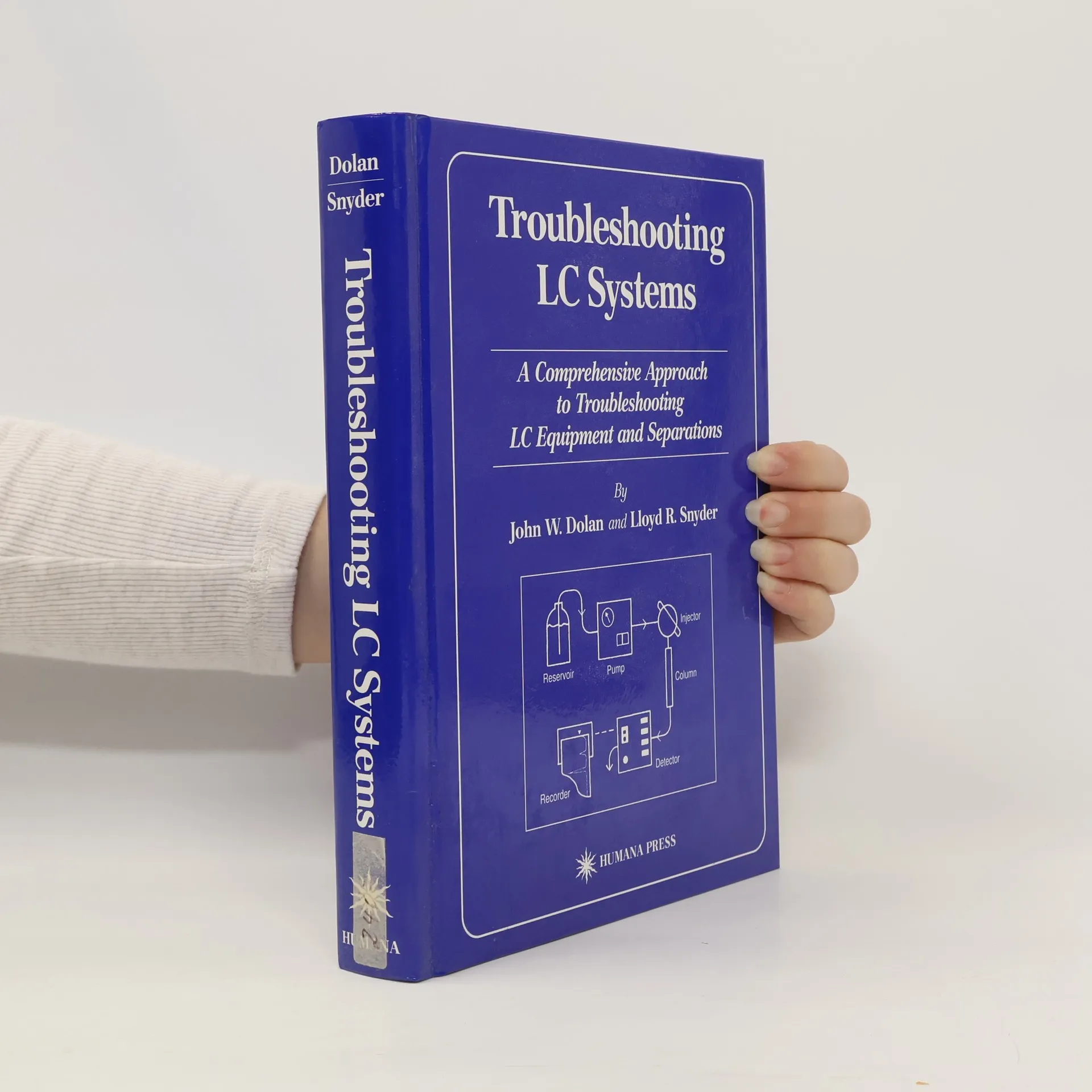
Troubleshooting LC systems : a comprehensive approach to troubleshooting LC equipment and separations, Lloyd R Snyder, John W Dolan
- Język

- Rok wydania
- 1989
- Oprawa
- (twarda)
Metody płatności
Nikt jeszcze nie ocenił.
- Tytuł
- Troubleshooting LC systems : a comprehensive approach to troubleshooting LC equipment and separations
- Język
- angielski
- Autorzy
- Lloyd R Snyder, John W Dolan
- Wydawca
- Humana Press
- Rok wydania
- 1989
- Oprawa
- twarda
- ISBN10
- 0896031519
- ISBN13
- 9780896031517
- Seria
- Tagi
- Opis
- Over the last 15 years, high-performance liquid chromatogra phy (LC) has made the transition from an instrument used only by experts in research labs to a tool used for routine applications by relatively unskilled workers. With this transition have come in instrumentation and column technology. In major advances the past, the operator had to be a jack-of-all-trades, with a screw driver, soldering iron, and various wrenches as constant compan ions in the LC lab. Today, many instruments contain micropro cessors as powerful as those of mainframe computers of earlier days. With this technology has come a variety of self-diagnostic tools that allow the LC system to locate many of its own prob lems. Traditionally, well-honed LC troubleshooting skills have been a result of years of work at the bench. Today the LC system itself often can do a better job of troubleshooting than the operator can. Yet many of the problems of the past are still the major problems of air bubbles, check valves, detector lamps, and, of course, problems with the separation. An added pressure on the operator of today's LC system is that of productivity-the lab often cannot afford unnecessary downtime. This means that the operator has to be a troubleshooting expert, or has to have that expertise at his or her fingertips. The present book was written to provide this expertise in an easy-to-use format for users at all levels of experience.