



Więcej o książce
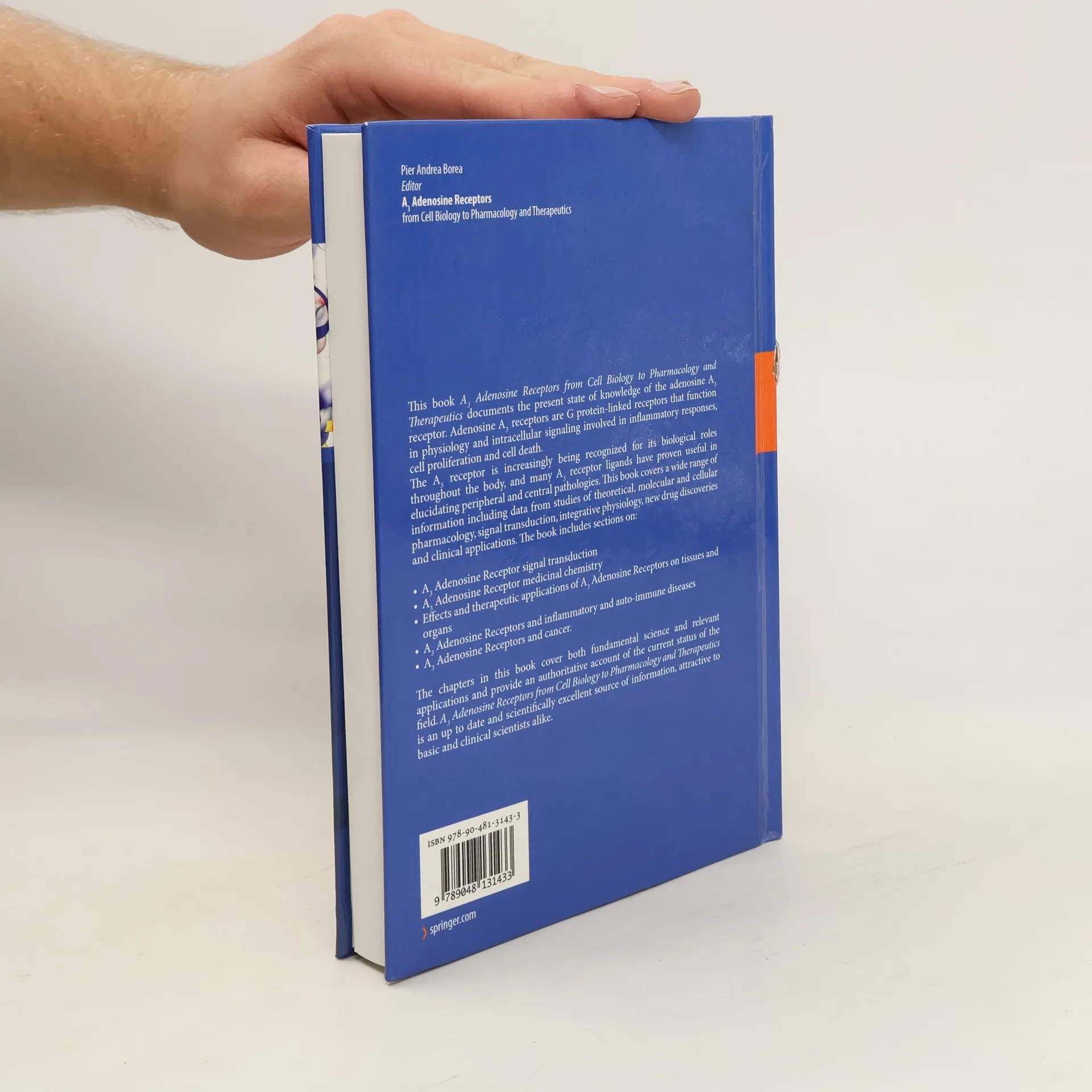
This book, with its 16 chapters, documents the present state of knowledge of the adenosine A receptor. It covers a wide range of information, including data from 3 studies of theoretical, molecular and cellular pharmacology, signal transduction, integrative physiology, new drug discoveries and clinical applications. It fills an important gap in the literature since no alternative source of such information is currently available. Although the A receptor is increasingly being recognized for 3 its increasing number of biological roles throughout the body and many A receptor 3 ligands have proven useful in elucidating peripheral and central pathologies, many issues remain unresolved. Moreover, research activity in this field continues to grow exponentially, resulting in a constant flow of new information. The chapters in this book cover both basic science and the relevant applications and provide an authoritative account of the current status of the field. They have enabled my goal as editor to make “A Adenosine Receptors from Cell Biology to Pharmacology and 3 Therapeutics” an up to date, scientifically excellent, reference source, attractive to basic and clinical scientists alike, a reality. Detailed understanding of the physico-chemical aspects and molecular biology of the A receptor provides a solid basis for its future development as a target for 3 adenosine-based pharmacotherapies (Chapters 2 and 3).
Zakup książki
A3 Adenosine Receptors. from Cell Biology to Pharmacology and Therapeutics, Pier Andrea Borea
- Język

- Rok wydania
- 2009
- Oprawa
- (twarda)
Metody płatności
Nikt jeszcze nie ocenił.
- Tytuł
- A3 Adenosine Receptors. from Cell Biology to Pharmacology and Therapeutics
- Język
- angielski
- Autorzy
- Pier Andrea Borea
- Wydawca
- Springer
- Rok wydania
- 2009
- Oprawa
- twarda
- Liczba stron
- 322
- ISBN10
- 904813143X
- ISBN13
- 9789048131433
- Seria
- Kategorie
- Opis
- This book, with its 16 chapters, documents the present state of knowledge of the adenosine A receptor. It covers a wide range of information, including data from 3 studies of theoretical, molecular and cellular pharmacology, signal transduction, integrative physiology, new drug discoveries and clinical applications. It fills an important gap in the literature since no alternative source of such information is currently available. Although the A receptor is increasingly being recognized for 3 its increasing number of biological roles throughout the body and many A receptor 3 ligands have proven useful in elucidating peripheral and central pathologies, many issues remain unresolved. Moreover, research activity in this field continues to grow exponentially, resulting in a constant flow of new information. The chapters in this book cover both basic science and the relevant applications and provide an authoritative account of the current status of the field. They have enabled my goal as editor to make “A Adenosine Receptors from Cell Biology to Pharmacology and 3 Therapeutics” an up to date, scientifically excellent, reference source, attractive to basic and clinical scientists alike, a reality. Detailed understanding of the physico-chemical aspects and molecular biology of the A receptor provides a solid basis for its future development as a target for 3 adenosine-based pharmacotherapies (Chapters 2 and 3).