



Więcej o książce
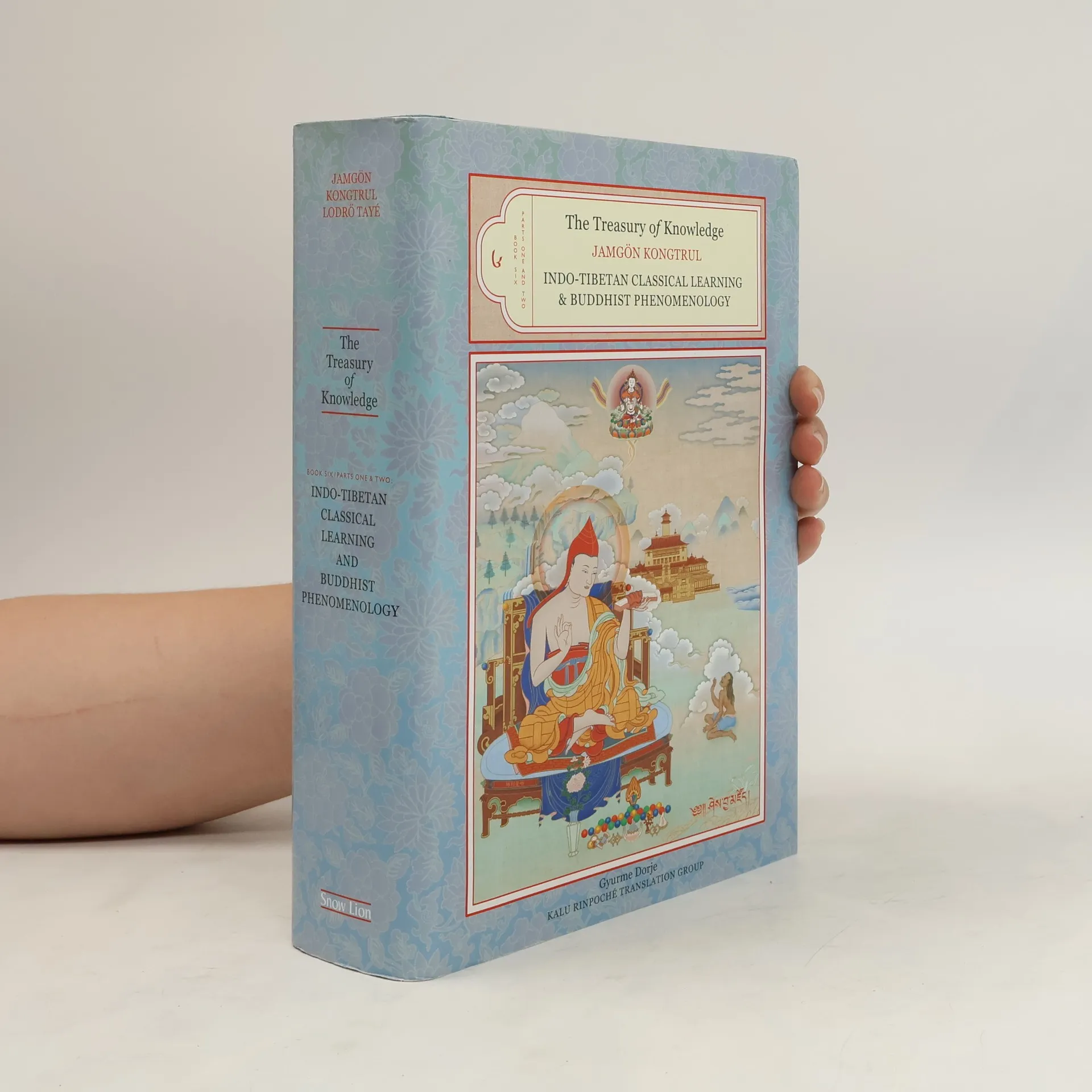
Jamgön Kongtrul’s encyclopedic Treasury of Knowledge presents a complete account of the major lines of thought and practice that comprise Tibetan Buddhism. Among the ten books that make up this tour de force, Book Six is by far the longest—concisely summarizing the theoretical fields of knowledge to be studied prior to the cultivation of reflection and discriminative awareness. The first two parts of Book Six, contained in this volume, respectively concern Indo-Tibetan classical learning and Buddhist phenomenology. The former analyzes the traditional subjects of phonology and Sanskrit grammar, logic, fine art, and medicine, along with astrology, poetics, prosody, synonymics, and dramaturgy. The principal non-Buddhist philosophical systems of ancient India are then summarized and contrasted with the hierarchical meditative concentrations and formless absorptions through which the “summit of cyclic existence” can genuinely be attained. Part Two examines the phenomenological structures of Abhidharma—the shared inheritance of all Buddhist traditions—from three distinct perspectives, corresponding to the three successive turnings of the doctrinal wheel.
Zakup książki
The Treasury of Knowledge. Indo-Tibetan Classical Learning and Buddhist Phenomenology, Jamgon Kongrul Lodro Taye, Gyurme Dorje
- Język

- Rok wydania
- 2012
- Oprawa
- (twarda)
Metody płatności
Brakuje nam tutaj Twojej recenzji.
- Tytuł
- The Treasury of Knowledge. Indo-Tibetan Classical Learning and Buddhist Phenomenology
- Język
- angielski
- Wydawca
- Natl Book Network
- Rok wydania
- 2012
- Oprawa
- twarda
- Liczba stron
- 992
- ISBN13
- 9781559393898
- Seria
- Kategorie
- Tagi
- Tematy religijne
- Ocena
- 4 z 5
- Opis
- Jamgön Kongtrul’s encyclopedic Treasury of Knowledge presents a complete account of the major lines of thought and practice that comprise Tibetan Buddhism. Among the ten books that make up this tour de force, Book Six is by far the longest—concisely summarizing the theoretical fields of knowledge to be studied prior to the cultivation of reflection and discriminative awareness. The first two parts of Book Six, contained in this volume, respectively concern Indo-Tibetan classical learning and Buddhist phenomenology. The former analyzes the traditional subjects of phonology and Sanskrit grammar, logic, fine art, and medicine, along with astrology, poetics, prosody, synonymics, and dramaturgy. The principal non-Buddhist philosophical systems of ancient India are then summarized and contrasted with the hierarchical meditative concentrations and formless absorptions through which the “summit of cyclic existence” can genuinely be attained. Part Two examines the phenomenological structures of Abhidharma—the shared inheritance of all Buddhist traditions—from three distinct perspectives, corresponding to the three successive turnings of the doctrinal wheel.