


Więcej o książce
The ongoing development of pediatric sub-specialties is a significant advancement, allowing for better analysis of complex syndromes in terms of pathogenesis and symptomatology, as well as more effective therapeutic control. This specialization has led to unprecedented levels of treatment effectiveness, which pediatricians cannot overlook. However, the increased knowledge also presents challenges for individual physicians, as the diversity of diseases can be overwhelming. In private practice, a pediatrician may admit an acutely ill child to the hospital unnecessarily or without adequate diagnostic insight. Conversely, hospital-based physicians might rely too heavily on laboratory tests and specialists when faced with ambiguous cases. When illnesses do not align with textbook descriptions, physicians may resort to extensive biochemical investigations and "tolerance tests," which can lead to further confusion. The vastness of medical literature makes it difficult for many physicians to stay updated, often resulting in superficial engagement with pediatric literature or complete neglect. This lack of thorough understanding can ultimately harm the sick child, highlighting the need for continuous education and adaptation in the face of evolving medical knowledge.
Zakup książki
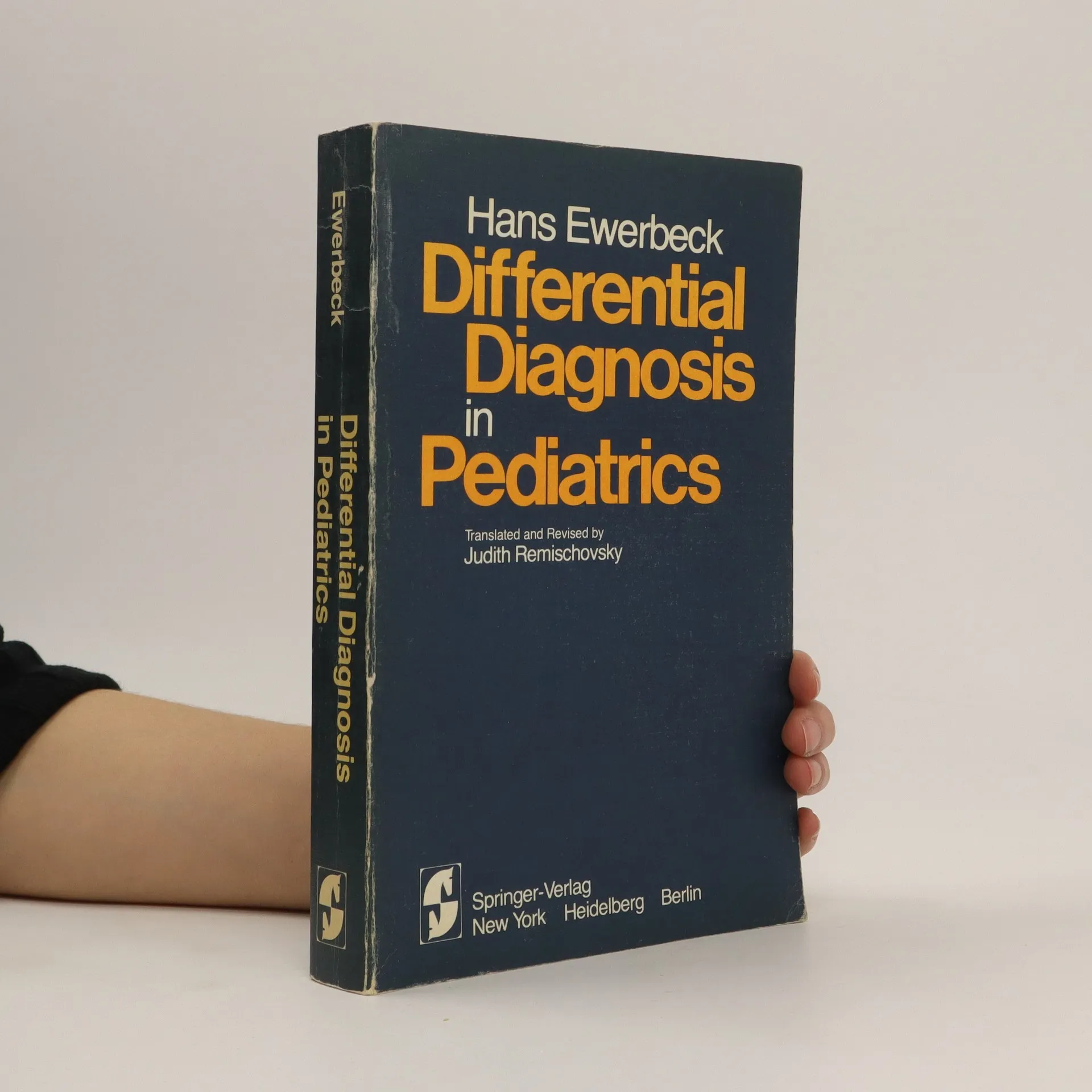
Differential Diagnosis in Pediatrics, Hans Ewerbeck, Judith Remischovsky
- Język

- Rok wydania
- 1976
- Oprawa
- (miękka)
Metody płatności
Nikt jeszcze nie ocenił.
- Tytuł
- Differential Diagnosis in Pediatrics
- Język
- angielski
- Autorzy
- Hans Ewerbeck, Judith Remischovsky
- Wydawca
- Springer-Verlag
- Rok wydania
- 1976
- Oprawa
- miękka
- Liczba stron
- 471
- ISBN10
- 0387904743
- ISBN13
- 9780387904740
- Seria
- Kategorie
- Opis
- The ongoing development of pediatric sub-specialties is a significant advancement, allowing for better analysis of complex syndromes in terms of pathogenesis and symptomatology, as well as more effective therapeutic control. This specialization has led to unprecedented levels of treatment effectiveness, which pediatricians cannot overlook. However, the increased knowledge also presents challenges for individual physicians, as the diversity of diseases can be overwhelming. In private practice, a pediatrician may admit an acutely ill child to the hospital unnecessarily or without adequate diagnostic insight. Conversely, hospital-based physicians might rely too heavily on laboratory tests and specialists when faced with ambiguous cases. When illnesses do not align with textbook descriptions, physicians may resort to extensive biochemical investigations and "tolerance tests," which can lead to further confusion. The vastness of medical literature makes it difficult for many physicians to stay updated, often resulting in superficial engagement with pediatric literature or complete neglect. This lack of thorough understanding can ultimately harm the sick child, highlighting the need for continuous education and adaptation in the face of evolving medical knowledge.