




Więcej o książce
The bundling of political authority into mutually exclusive territorial boundaries - territoriality - is a fundamental principle of modern political organization. Indeed, it provides the foundation for other cherished institutions - national sovereignty, citizenship, the modern welfare state, and democracy. Are globalization, internationalization, and Europeanization conspiring to unbundle territoriality? If so, are sovereignty, citizenship, the welfare state, and democracy unravelling as well? Is a new post-national, non-territorial form of political organization, heralded by the European Union, being born? With a focus on Europe, this volume explores these issues from various substantive and theoretical perspectives. The authors find evidence of the diffusion of authority both within and beyond the state, producing novel institutional arrangements and new modes of governance. But the United States may provide more useful insights into the new dispensation than the idea of a post-national, non-territorial politics. Interest in contemporary challenges to democracy run throughout this volume.
Zakup książki
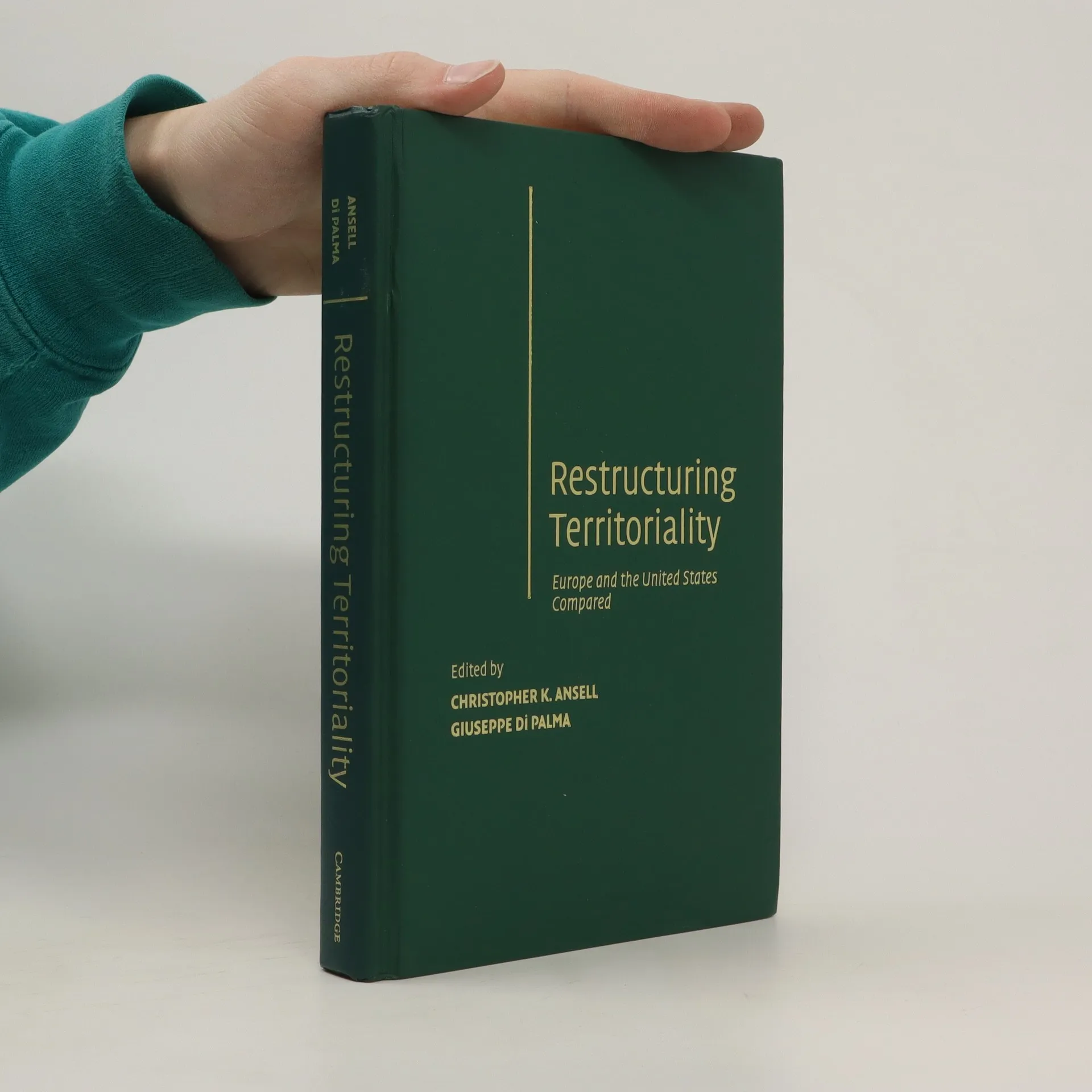
Restructuring Territoriality Europe and the United States compared, Christopher K. Ansell, Giuseppe Di Palma
- Język

- Rok wydania
- 2004
- Oprawa
- (twarda)
Metody płatności
Nikt jeszcze nie ocenił.
- Tytuł
- Restructuring Territoriality Europe and the United States compared
- Język
- angielski
- Wydawca
- Cambridge
- Rok wydania
- 2004
- Oprawa
- twarda
- Liczba stron
- 316
- ISBN10
- 0521825555
- ISBN13
- 9780521825559
- Seria
- Tagi
- Opis
- The bundling of political authority into mutually exclusive territorial boundaries - territoriality - is a fundamental principle of modern political organization. Indeed, it provides the foundation for other cherished institutions - national sovereignty, citizenship, the modern welfare state, and democracy. Are globalization, internationalization, and Europeanization conspiring to unbundle territoriality? If so, are sovereignty, citizenship, the welfare state, and democracy unravelling as well? Is a new post-national, non-territorial form of political organization, heralded by the European Union, being born? With a focus on Europe, this volume explores these issues from various substantive and theoretical perspectives. The authors find evidence of the diffusion of authority both within and beyond the state, producing novel institutional arrangements and new modes of governance. But the United States may provide more useful insights into the new dispensation than the idea of a post-national, non-territorial politics. Interest in contemporary challenges to democracy run throughout this volume.