

Więcej o książce
Contemporary military interventions involve public relations. Strategic communication to inform and persuade publics has become part of achieving specific political and organisational, as well as military, goals. This book analyses NATO's communication operations in the 1999 Kosovo Campaign against Yugoslavia. It argues that NATO used the Kosovo Campaign as a vehicle to transform its identity and establish its relevance to the changing demands of the 21st century. The Kosovo Campaign simultaneously supported a specific 78-day bombing campaign, promoted armed intervention, and legitimised a post-Cold War role for NATO. The book examines how public relations maintained the historical credibility of the organisation. By justifying its actions as humanitarian intervention, NATO provided an acceptable human face for its military and a rationale for the organisation itself to survive.The book is essential reading for communication, international relations and public relations, and will be important background reading for students of media, organisations, political science, strategy, and the role of supranational organisations.
Zakup książki
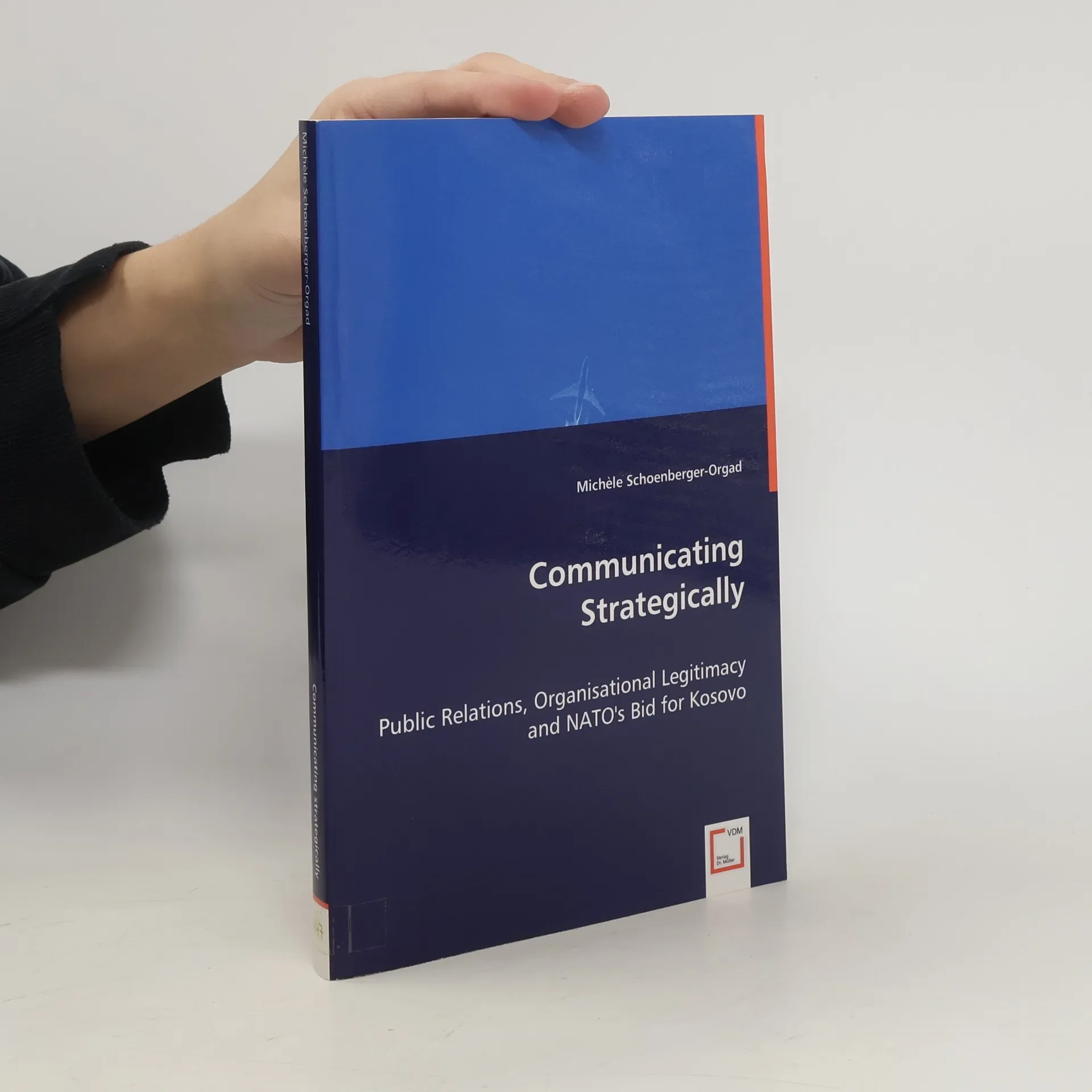
Communicating strategically. Public relations, organisational legitimacy and NATO's bid for Kosovo, Michele SchoenbergerOrgad
- Język

- Rok wydania
- 2008
- Oprawa
- (miękka)
Metody płatności
Nikt jeszcze nie ocenił.
- Tytuł
- Communicating strategically. Public relations, organisational legitimacy and NATO's bid for Kosovo
- Język
- angielski
- Autorzy
- Michele SchoenbergerOrgad
- Wydawca
- VDM Verlag
- Rok wydania
- 2008
- Oprawa
- miękka
- Liczba stron
- 204
- ISBN10
- 3639026268
- ISBN13
- 9783639026269
- Seria
- Tagi
- Opis
- Contemporary military interventions involve public relations. Strategic communication to inform and persuade publics has become part of achieving specific political and organisational, as well as military, goals. This book analyses NATO's communication operations in the 1999 Kosovo Campaign against Yugoslavia. It argues that NATO used the Kosovo Campaign as a vehicle to transform its identity and establish its relevance to the changing demands of the 21st century. The Kosovo Campaign simultaneously supported a specific 78-day bombing campaign, promoted armed intervention, and legitimised a post-Cold War role for NATO. The book examines how public relations maintained the historical credibility of the organisation. By justifying its actions as humanitarian intervention, NATO provided an acceptable human face for its military and a rationale for the organisation itself to survive.The book is essential reading for communication, international relations and public relations, and will be important background reading for students of media, organisations, political science, strategy, and the role of supranational organisations.