

Więcej o książce
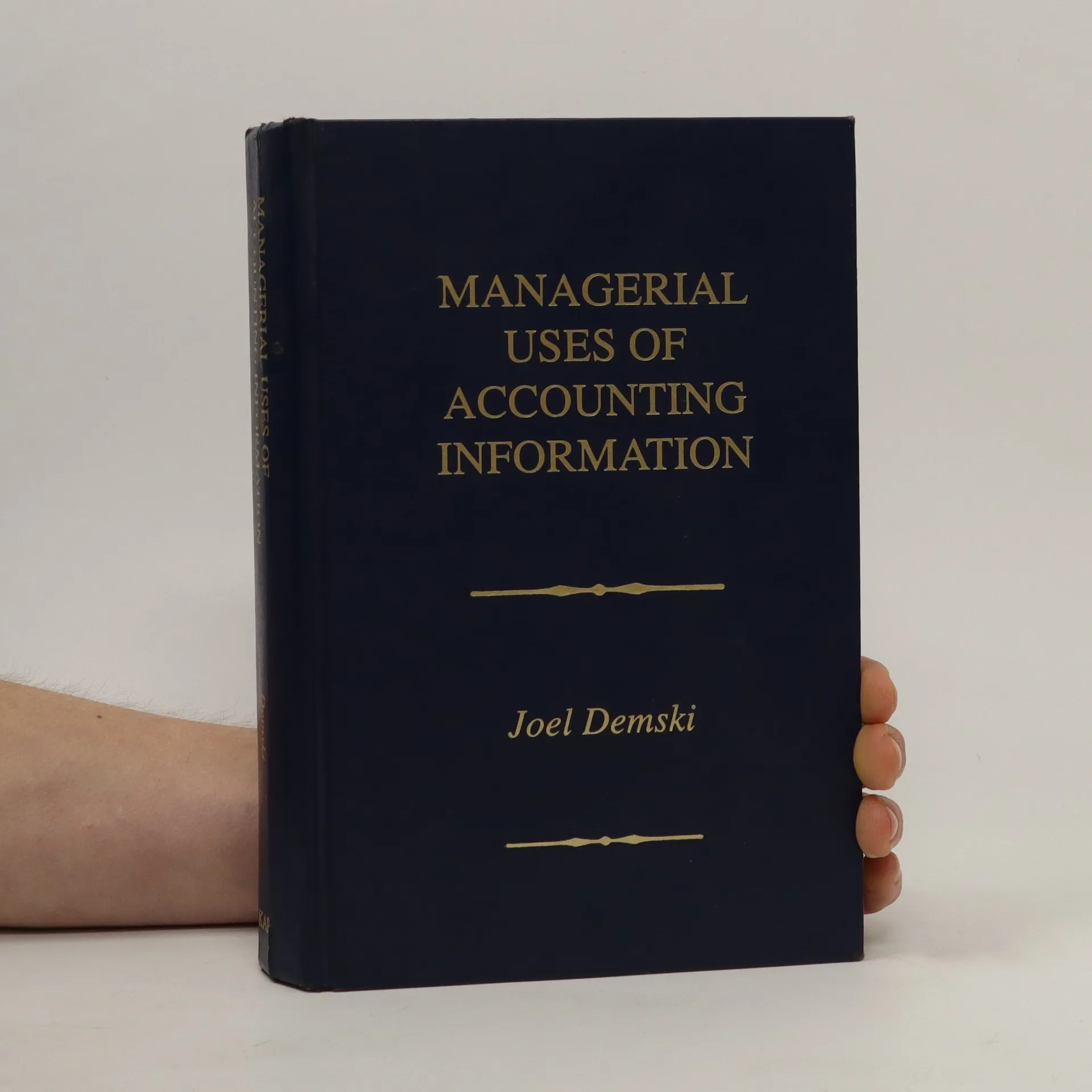
This book invites readers to explore the managerial applications of accounting information, focusing on three key themes. First, it presents the accounting system as a library of financial statistics, emphasizing that valuable insights can be uncovered by those willing to interrogate this "library" rather than relying on standard formats. Second, it highlights that accounting information is only one part of a manager's toolkit; effectively combining accounting with non-accounting information is essential for successful management. Third, the book underscores the importance of the professional manager—an individual equipped with skill, talent, and imagination, bringing a high level of professionalism to management tasks. Readers are expected to have a foundational understanding of financial accounting, economics, statistics, and concepts related to risk and decision-making. Familiarity with strategic modeling and a comfort with abstract notation are also assumed, though the book does not require advanced mathematical skills. A basic knowledge of linear programming and the ability to perform simple derivatives are helpful, but the primary requirement is a tolerance for abstract notation. This style and the prerequisites are essential for engaging with the material effectively.
Zakup książki
Managerial uses of accounting information, Joel Demski
- Język

- Rok wydania
- 1994
- Oprawa
- (twarda)
Metody płatności
Brakuje nam tutaj Twojej recenzji.
- Tytuł
- Managerial uses of accounting information
- Język
- angielski
- Autorzy
- Joel Demski
- Wydawca
- Kluwer Academic Publishers
- Rok wydania
- 1994
- Oprawa
- twarda
- Liczba stron
- 655
- ISBN10
- 0792394062
- ISBN13
- 9780792394068
- Seria
- Tagi
- Biznes, Księgowość
- Ocena
- 3,65 z 5
- Opis
- This book invites readers to explore the managerial applications of accounting information, focusing on three key themes. First, it presents the accounting system as a library of financial statistics, emphasizing that valuable insights can be uncovered by those willing to interrogate this "library" rather than relying on standard formats. Second, it highlights that accounting information is only one part of a manager's toolkit; effectively combining accounting with non-accounting information is essential for successful management. Third, the book underscores the importance of the professional manager—an individual equipped with skill, talent, and imagination, bringing a high level of professionalism to management tasks. Readers are expected to have a foundational understanding of financial accounting, economics, statistics, and concepts related to risk and decision-making. Familiarity with strategic modeling and a comfort with abstract notation are also assumed, though the book does not require advanced mathematical skills. A basic knowledge of linear programming and the ability to perform simple derivatives are helpful, but the primary requirement is a tolerance for abstract notation. This style and the prerequisites are essential for engaging with the material effectively.