

Więcej o książce
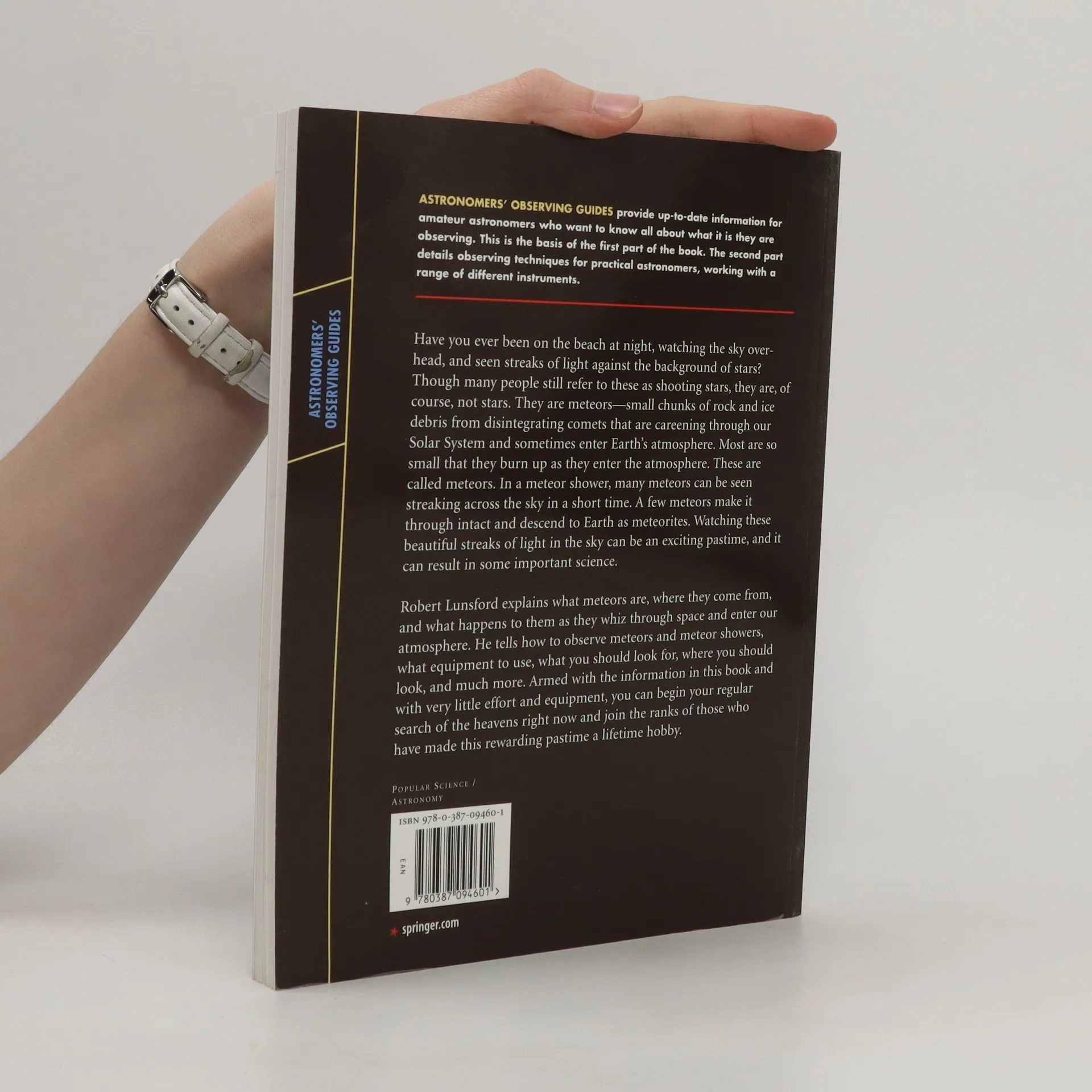
In this era of high-tech instruments, meteor observing is the one facet of astr- omy that needs nothing more than your naked eye. Meteors can be easily seen without the aid of cameras, binoculars, or telescopes. Just ? nd a comfortable chair and lie back and watch for the surprises that await high above you. It is a great way to involve the family in science where everyone is active at the same time, not wa- ing to take turns at the eyepiece. The kids especially enjoy the hunt for “shooting stars,” oohing and ahing at each streak of light that crosses the sky. While gazing upwards, it is also a great way to get more familiar with the sky by learning the constellations and seeing if you can see the warrior among the stars of Orion or the scorpion among the stars of Scorpius. Until just recently, one could simply go outside and watch for meteors from his or her yard. Unfortunately, humankind’s fear of the dark and the widespread use of lighting as advertisement have lit the nighttime scene in urban areas so that only the brightest stars are visible. Serious meteor observing under such conditions is nearly impossible as the more numerous faint meteors are now lost in the glare of urban skies. Today, a serious meteor observing session entails organizing an outing to a country site where the stars can be seen in all their glory and meteors of all magnitudes can be viewed.
Zakup książki
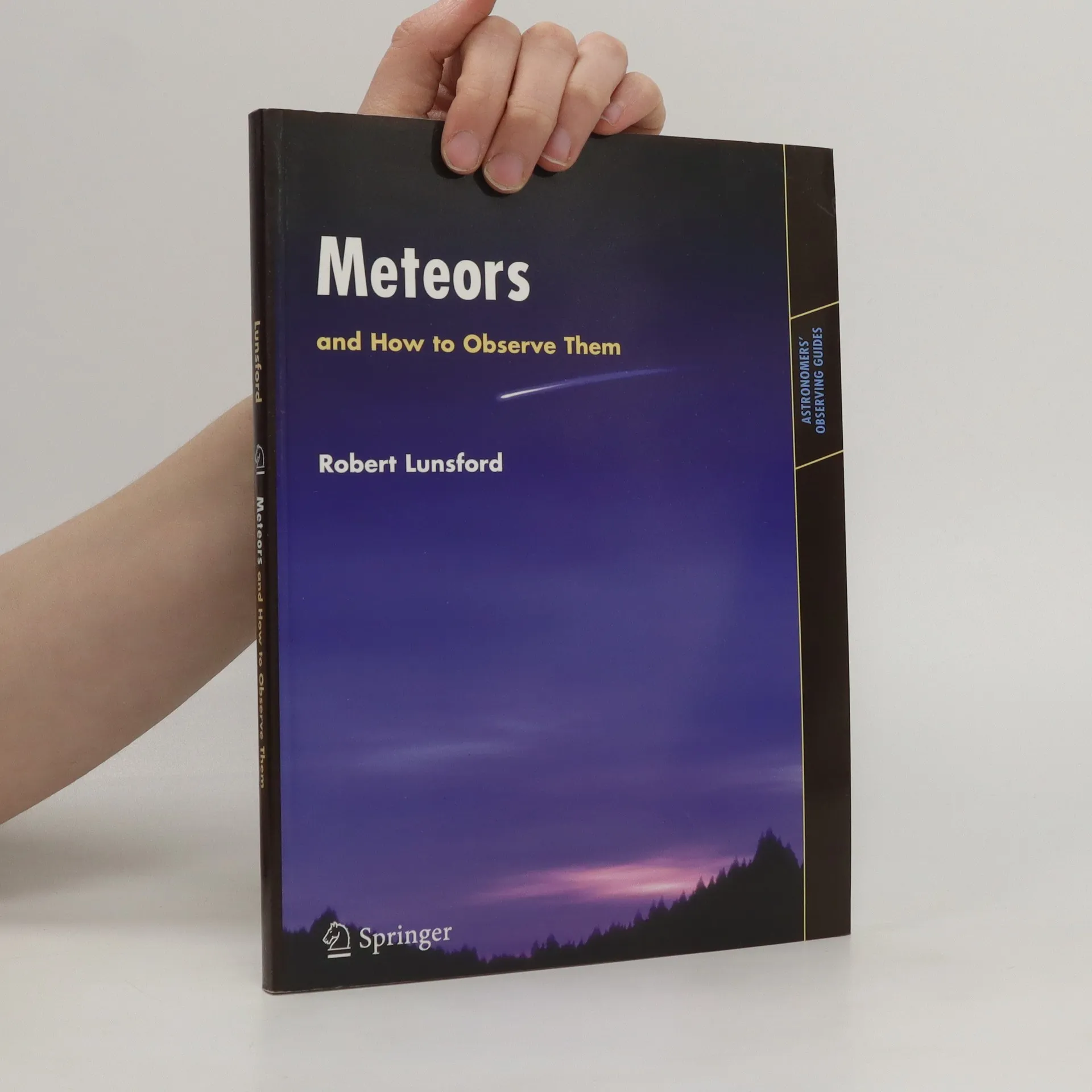
Meteors and how to observe them, Robert Lunsford
- Język

- Rok wydania
- 2009
- Oprawa
- (miękka)
Metody płatności
Brakuje nam tutaj Twojej recenzji.
- Tytuł
- Meteors and how to observe them
- Język
- angielski
- Autorzy
- Robert Lunsford
- Wydawca
- Springer
- Rok wydania
- 2009
- Oprawa
- miękka
- Liczba stron
- 192
- ISBN10
- 0387094601
- ISBN13
- 9780387094601
- Kolekcja
- Astronomers' observing guides
- Tagi
- Kosmos
- Ocena
- 4 z 5
- Opis
- In this era of high-tech instruments, meteor observing is the one facet of astr- omy that needs nothing more than your naked eye. Meteors can be easily seen without the aid of cameras, binoculars, or telescopes. Just ? nd a comfortable chair and lie back and watch for the surprises that await high above you. It is a great way to involve the family in science where everyone is active at the same time, not wa- ing to take turns at the eyepiece. The kids especially enjoy the hunt for “shooting stars,” oohing and ahing at each streak of light that crosses the sky. While gazing upwards, it is also a great way to get more familiar with the sky by learning the constellations and seeing if you can see the warrior among the stars of Orion or the scorpion among the stars of Scorpius. Until just recently, one could simply go outside and watch for meteors from his or her yard. Unfortunately, humankind’s fear of the dark and the widespread use of lighting as advertisement have lit the nighttime scene in urban areas so that only the brightest stars are visible. Serious meteor observing under such conditions is nearly impossible as the more numerous faint meteors are now lost in the glare of urban skies. Today, a serious meteor observing session entails organizing an outing to a country site where the stars can be seen in all their glory and meteors of all magnitudes can be viewed.