



Więcej o książce
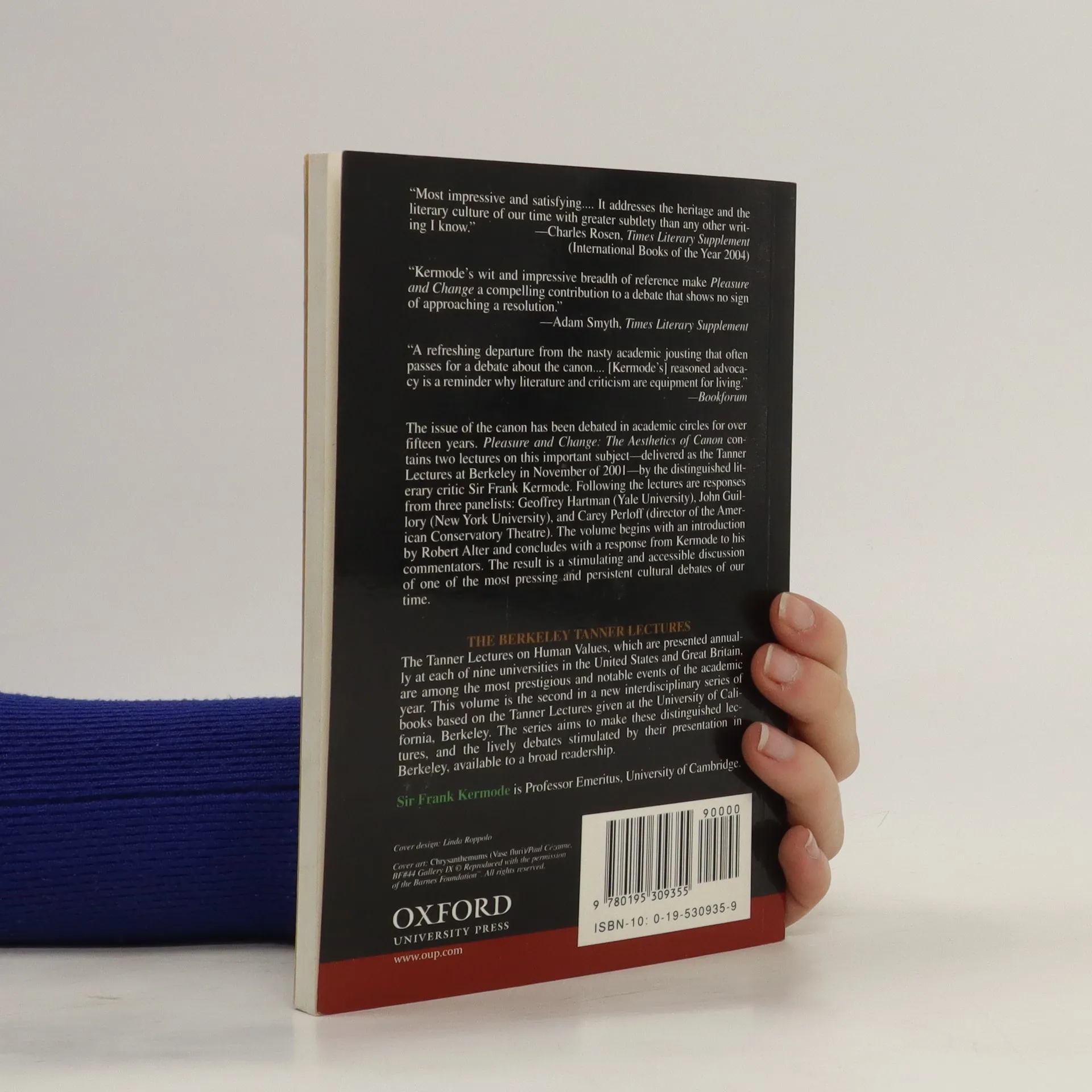
The question of the canon has been the subject of debate in academic circles for over fifteen years. Pleasure and Change contains two lectures on this important subject by the distinguished literary critic Sir Frank Kermode. In essays that were originally delivered as Tanner Lectures at Berkeley in November of 2001, Kermode reinterprets the question of canon formation in light of two related and central pleasure and change . He asks how aesthetic pleasure informs what we find valuable, and how this perception changes over time. Kermode also explores the role of chance, observing the connections between canon formation and unintentional and sometimes even random circumstance. Geoffrey Hartmann (Yale University), John Guillory (New York University), and Carey Perloff (director of the American Conservatory Theatre) offer incisive comments on these essays, to which Kermode responds in a lively rejoinder. The volume begins with a helpful introduction by Robert Alter. Theresult is a stimulating and accessible discussion of a highly significant cultural debate.
Zakup książki
Pleasure and change: the aesthetics of canon, Frank Kermode, Robert Alter
- Język

- Rok wydania
- 2004
- Oprawa
- (miękka)
Metody płatności
Brakuje nam tutaj Twojej recenzji.
- Tytuł
- Pleasure and change: the aesthetics of canon
- Język
- angielski
- Autorzy
- Frank Kermode, Robert Alter
- Wydawca
- Oxford University Press
- Rok wydania
- 2004
- Oprawa
- miękka
- Liczba stron
- 108
- ISBN10
- 0195309359
- ISBN13
- 9780195309355
- Seria
- Kolekcja
- The Berkeley Tanner lectures
- Ocena
- 3,45 z 5
- Opis
- The question of the canon has been the subject of debate in academic circles for over fifteen years. Pleasure and Change contains two lectures on this important subject by the distinguished literary critic Sir Frank Kermode. In essays that were originally delivered as Tanner Lectures at Berkeley in November of 2001, Kermode reinterprets the question of canon formation in light of two related and central pleasure and change . He asks how aesthetic pleasure informs what we find valuable, and how this perception changes over time. Kermode also explores the role of chance, observing the connections between canon formation and unintentional and sometimes even random circumstance. Geoffrey Hartmann (Yale University), John Guillory (New York University), and Carey Perloff (director of the American Conservatory Theatre) offer incisive comments on these essays, to which Kermode responds in a lively rejoinder. The volume begins with a helpful introduction by Robert Alter. Theresult is a stimulating and accessible discussion of a highly significant cultural debate.