



Więcej o książce
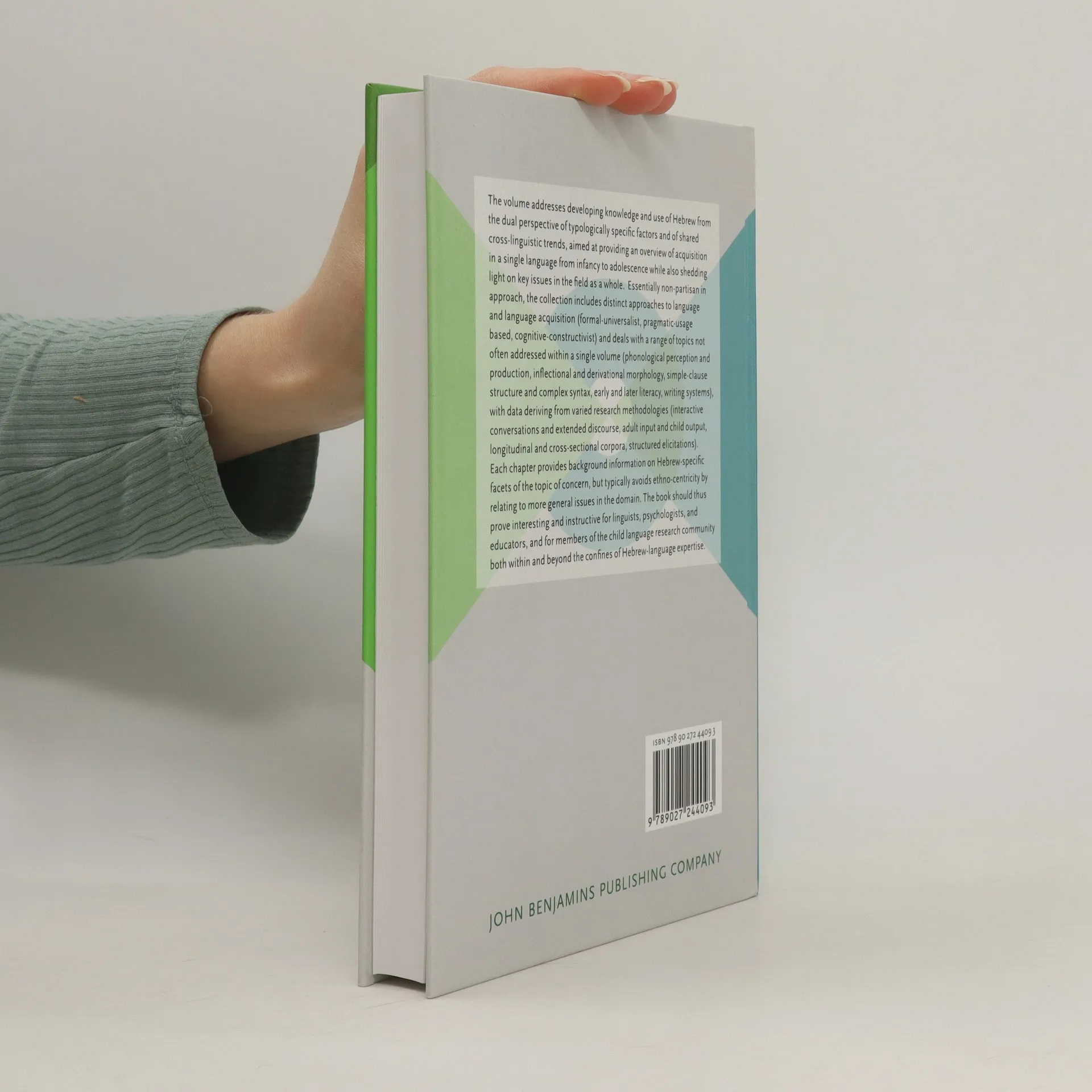
The volume addresses developing knowledge and use of Hebrew from the dual perspective of typologically specific factors and of shared cross-linguistic trends, aimed at providing an overview of acquisition in a single language from infancy to adolescence while also shedding light on key issues in the field as a whole. Essentially non-partisan in approach, the collection includes distinct approaches to language and language acquisition (formal-universalist, pragmatic-usage based, cognitive-constructivist) and deals with a range of topics not often addressed within a single volume (phonological perception and production, inflectional and derivational morphology, simple-clause structure and complex syntax, early and later literacy, writing systems), with data deriving from varied research methodologies (interactive conversations and extended discourse, adult input and child output, longitudinal and cross-sectional corpora, structured elicitations). Each chapter provides background information on Hebrew-specific facets of the topic of concern, but typically avoids ethno-centricity by relating to more general issues in the domain. The book should thus prove interesting and instructive for linguists, psychologists, and educators, and for members of the child language research community both within and beyond the confines of Hebrew-language expertise.
Zakup książki
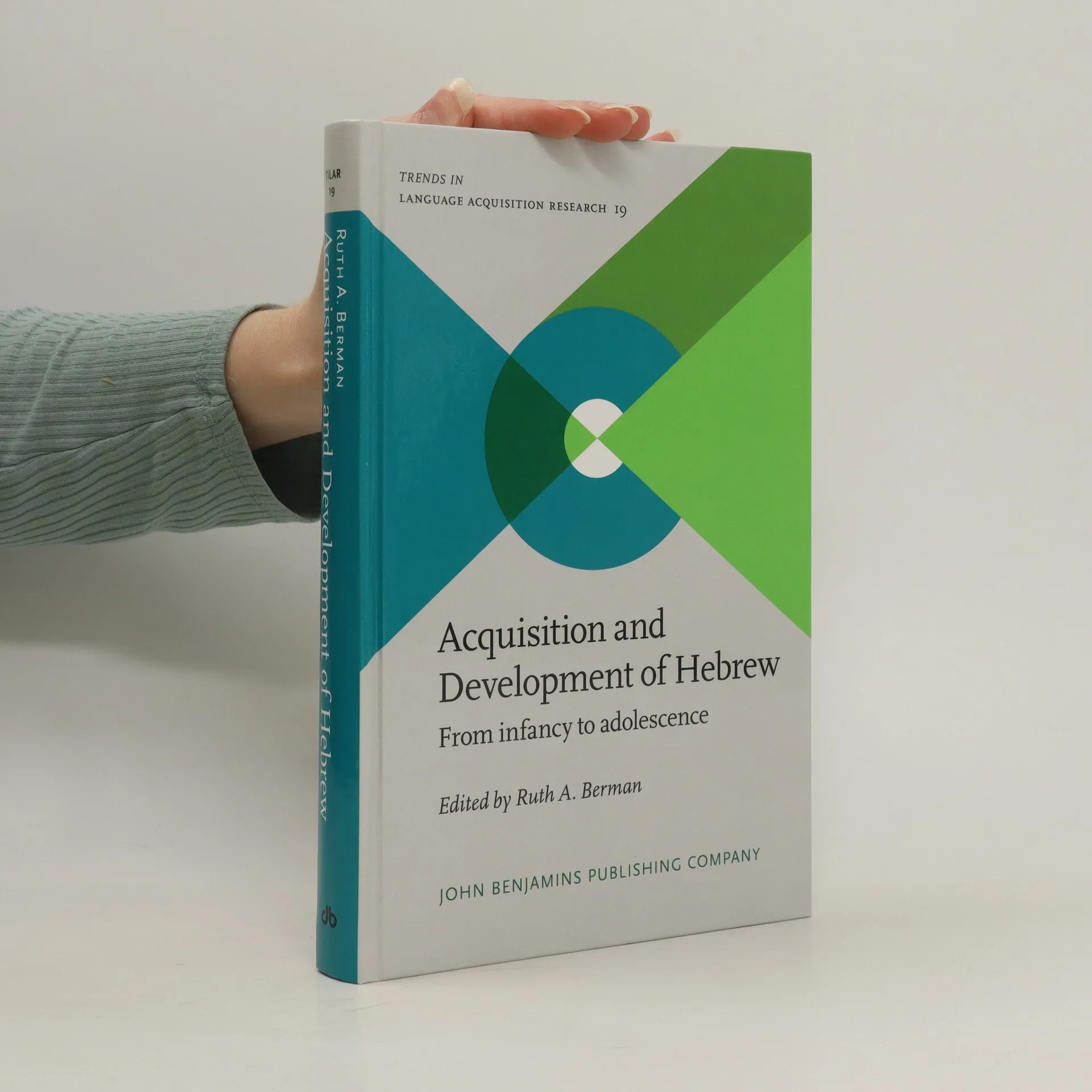
Acquisition and development of Hebrew, Ruth A. Berman
- Język

- Rok wydania
- 2016
- Oprawa
- (twarda)
Metody płatności
Nikt jeszcze nie ocenił.
- Tytuł
- Acquisition and development of Hebrew
- Język
- angielski
- Autorzy
- Ruth A. Berman
- Rok wydania
- 2016
- Oprawa
- twarda
- Liczba stron
- 422
- ISBN10
- 902724409x
- ISBN13
- 9789027244093
- Seria
- Kategorie
- Opis
- The volume addresses developing knowledge and use of Hebrew from the dual perspective of typologically specific factors and of shared cross-linguistic trends, aimed at providing an overview of acquisition in a single language from infancy to adolescence while also shedding light on key issues in the field as a whole. Essentially non-partisan in approach, the collection includes distinct approaches to language and language acquisition (formal-universalist, pragmatic-usage based, cognitive-constructivist) and deals with a range of topics not often addressed within a single volume (phonological perception and production, inflectional and derivational morphology, simple-clause structure and complex syntax, early and later literacy, writing systems), with data deriving from varied research methodologies (interactive conversations and extended discourse, adult input and child output, longitudinal and cross-sectional corpora, structured elicitations). Each chapter provides background information on Hebrew-specific facets of the topic of concern, but typically avoids ethno-centricity by relating to more general issues in the domain. The book should thus prove interesting and instructive for linguists, psychologists, and educators, and for members of the child language research community both within and beyond the confines of Hebrew-language expertise.