


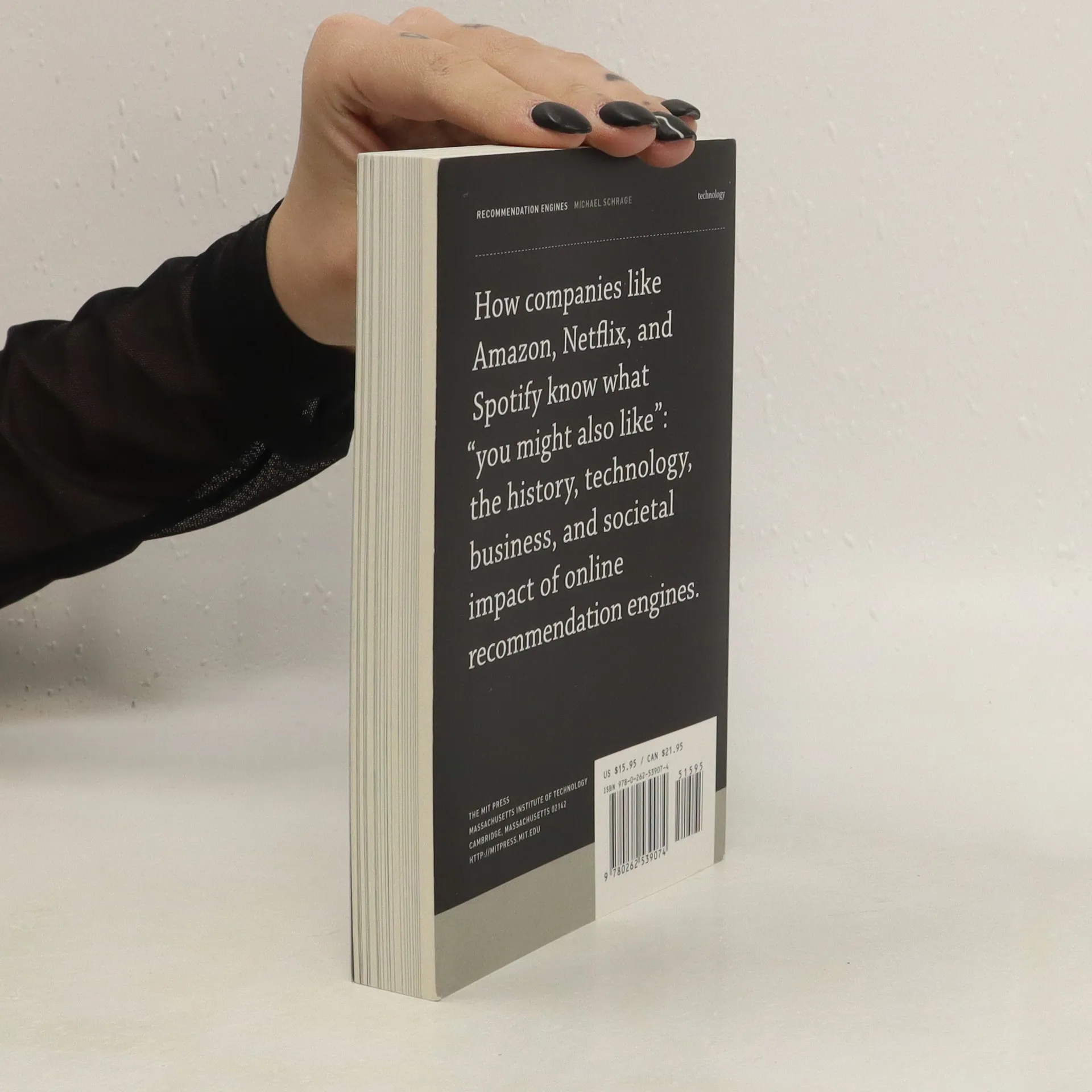

Parametry
- 176 stron
- 7 godzin czytania
Więcej o książce
How does Netflix know what to suggest next? How does Amazon identify what a "customer like you" has purchased? The answer lies in recommender systems, a key technology for successful digital economy companies. The origins of these systems date back further than expected, with historical examples like the Oracle at Delphi. The author examines the technology behind recommenders, including AI and machine learning algorithms that drive these platforms. He also discusses user experience design and how design choices serve as nudges, influencing which recommendations are more prominent. Through case studies of Spotify, Bytedance, and Stitch Fix, he illustrates how recommenders can generate innovative business solutions and extend beyond curation to content creation. The final chapter delves into the future of recommender systems, shifting focus from technology to philosophy. It questions the concept of free will in a world influenced by recommendations, emphasizing that a recommendation implies choice. The author explores how these systems can enhance personal development. This work aims to deepen our understanding of recommender systems, highlighting their societal roles and future opportunities.
Zakup książki
Recommendation engines, Michael Schrage
- Język

- Rok wydania
- 2020
- Oprawa
- (miękka)
Metody płatności
Brakuje nam tutaj Twojej recenzji.
- Tytuł
- Recommendation engines
- Język
- angielski
- Autorzy
- Michael Schrage
- Wydawca
- MIT Press
- Rok wydania
- 2020
- Oprawa
- miękka
- Liczba stron
- 176
- ISBN10
- 0262539071
- ISBN13
- 9780262539074
- Seria
- Kategorie
- Ocena
- 3,65 z 5
- Opis
- How does Netflix know what to suggest next? How does Amazon identify what a "customer like you" has purchased? The answer lies in recommender systems, a key technology for successful digital economy companies. The origins of these systems date back further than expected, with historical examples like the Oracle at Delphi. The author examines the technology behind recommenders, including AI and machine learning algorithms that drive these platforms. He also discusses user experience design and how design choices serve as nudges, influencing which recommendations are more prominent. Through case studies of Spotify, Bytedance, and Stitch Fix, he illustrates how recommenders can generate innovative business solutions and extend beyond curation to content creation. The final chapter delves into the future of recommender systems, shifting focus from technology to philosophy. It questions the concept of free will in a world influenced by recommendations, emphasizing that a recommendation implies choice. The author explores how these systems can enhance personal development. This work aims to deepen our understanding of recommender systems, highlighting their societal roles and future opportunities.