

Seria
Parametry
Więcej o książce
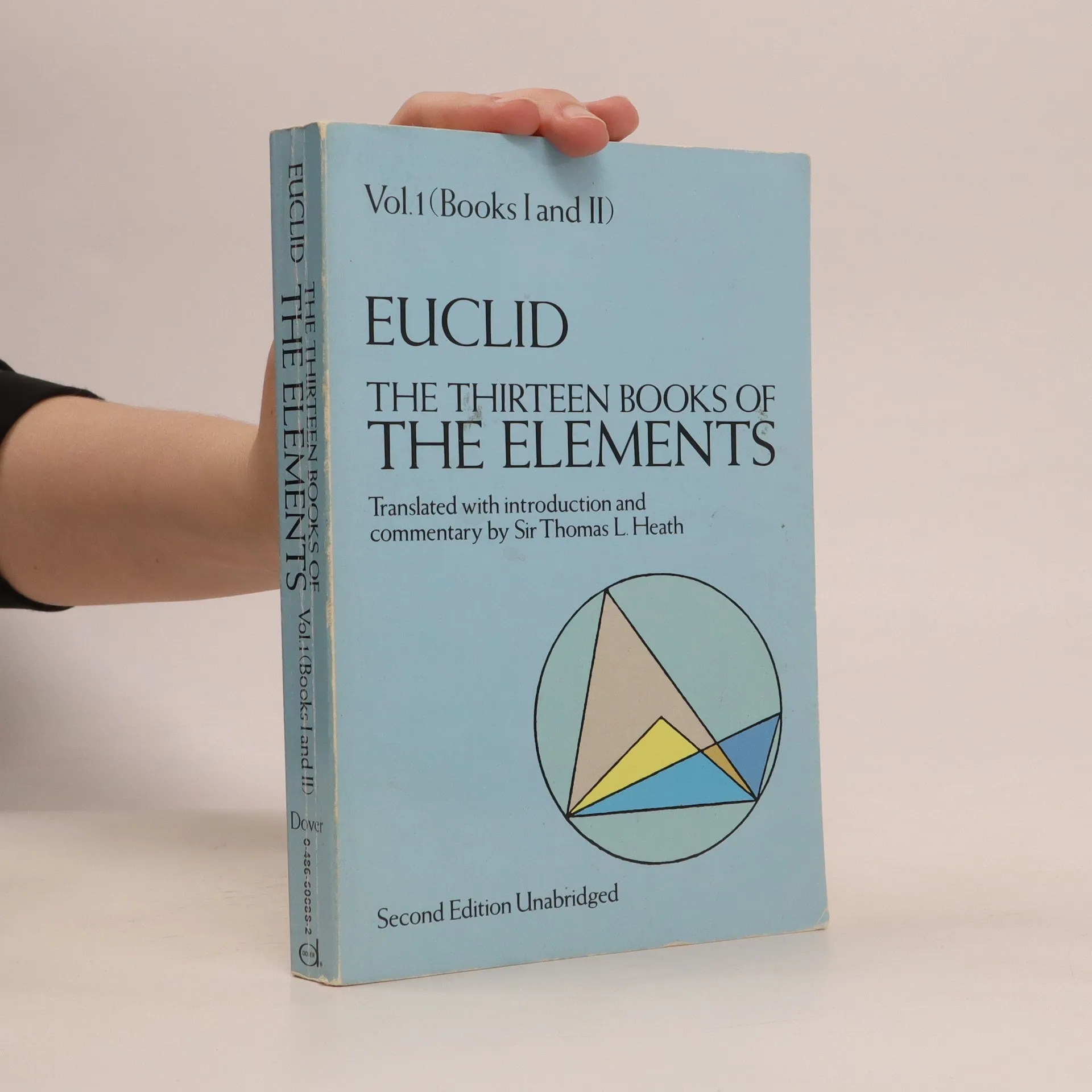
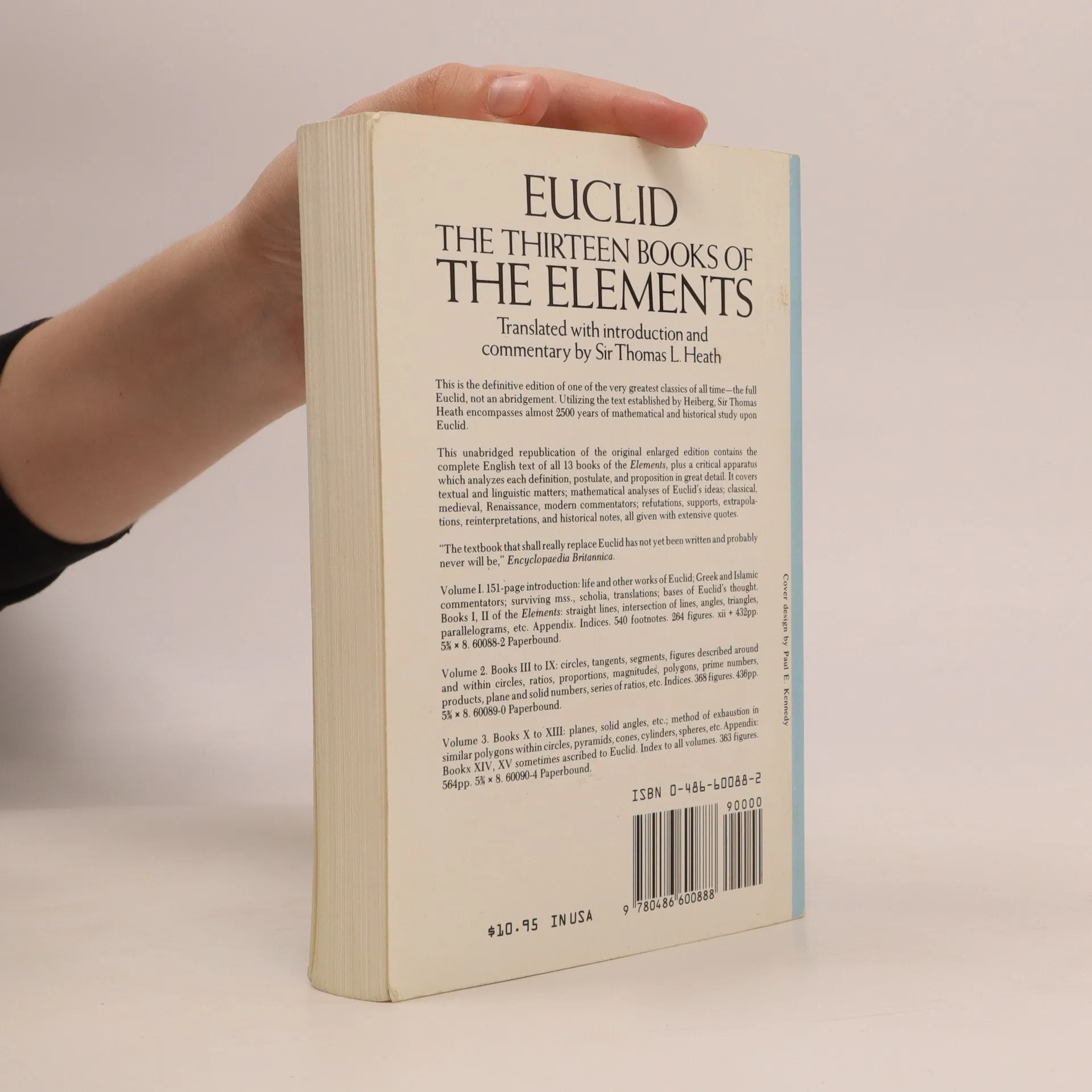
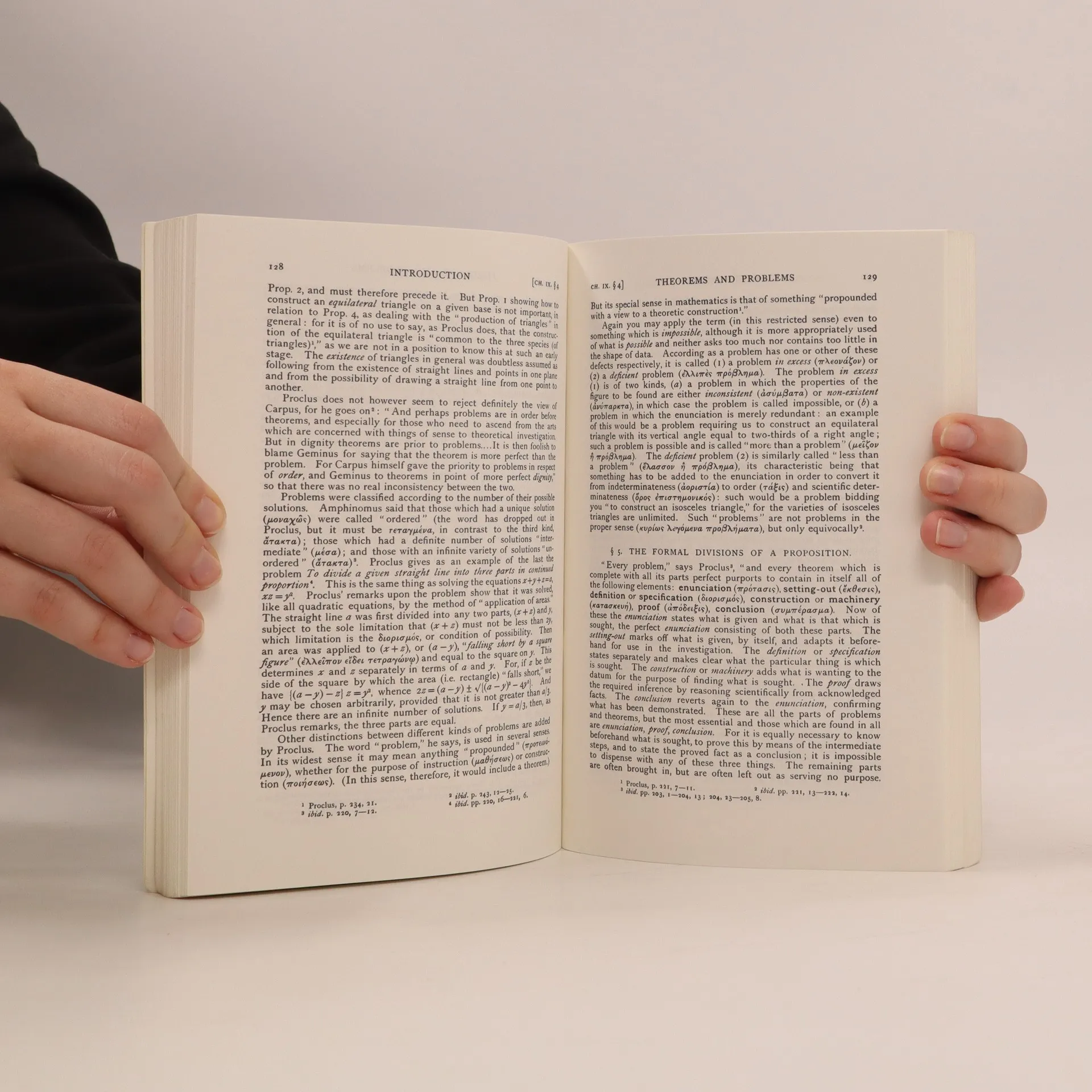
This definitive edition presents the complete Euclid, featuring the full text established by Heiberg, encompassing nearly 2,500 years of mathematical and historical study. This unabridged republication includes all 13 books of the Elements, accompanied by a critical apparatus that meticulously analyzes each definition, postulate, and proposition. It delves into textual and linguistic aspects, mathematical interpretations of Euclid’s concepts, and insights from classical, medieval, Renaissance, and modern commentators, supplemented by extensive quotations. The introduction spans 151 pages, covering Euclid's life, other works, Greek and Islamic commentators, surviving manuscripts, scholia, translations, and the foundations of his thought. Volume 1 includes Books I and II, addressing straight lines, angles, intersections, triangles, and parallelograms. Volume 2 encompasses Books III-IX, discussing circles, tangents, segments, ratios, proportions, polygons, prime numbers, and more. Volume 3 covers Books X to XIII, exploring planes, solid angles, and the method of exhaustion in similar polygons, pyramids, cones, cylinders, and spheres. An appendix features Books XIV and XV, which are sometimes attributed to Euclid.
Zakup książki
The thirteen books of Euclid's elements. Vol. 1, Thomas Little Heath
- Język

- Rok wydania
- 1998
- Oprawa
- (miękka)
Metody płatności
Brakuje nam tutaj Twojej recenzji.
- Tytuł
- The thirteen books of Euclid's elements. Vol. 1
- Język
- angielski
- Autorzy
- Thomas Little Heath
- Wydawca
- Dover
- Rok wydania
- 1998
- Oprawa
- miękka
- ISBN10
- 0486600882
- ISBN13
- 9780486600888
- Seria
- The Elements
- Ocena
- 4,2 z 5
- Opis
- This definitive edition presents the complete Euclid, featuring the full text established by Heiberg, encompassing nearly 2,500 years of mathematical and historical study. This unabridged republication includes all 13 books of the Elements, accompanied by a critical apparatus that meticulously analyzes each definition, postulate, and proposition. It delves into textual and linguistic aspects, mathematical interpretations of Euclid’s concepts, and insights from classical, medieval, Renaissance, and modern commentators, supplemented by extensive quotations. The introduction spans 151 pages, covering Euclid's life, other works, Greek and Islamic commentators, surviving manuscripts, scholia, translations, and the foundations of his thought. Volume 1 includes Books I and II, addressing straight lines, angles, intersections, triangles, and parallelograms. Volume 2 encompasses Books III-IX, discussing circles, tangents, segments, ratios, proportions, polygons, prime numbers, and more. Volume 3 covers Books X to XIII, exploring planes, solid angles, and the method of exhaustion in similar polygons, pyramids, cones, cylinders, and spheres. An appendix features Books XIV and XV, which are sometimes attributed to Euclid.