



Więcej o książce
This volume provides language teachers, software designers, and researchers with essential insights into the integration of technology in second or foreign language education. It fosters critical reading of existing literature, enabling a comprehensive understanding of the field. Through detailed descriptions, analyses, examples, and discussions, the book constructs a nuanced picture of modern CALL, broadly defined to encompass technology-enhanced language learning, Web-enhanced language learning, and information and communication technologies. Notably, it addresses a variety of languages beyond just English. The authors introduce key areas of interest and growth in CALL before delving into seven significant dimensions: design, evaluation, computer-mediated communication, theory, research, practice, and technology. Each chapter reviews recent literature, identifies themes, and presents illustrative projects, followed by in-depth analyses and conclusions with suggestions for future work. Comprehensive references and links facilitate further exploration of topics of personal interest. The concluding chapters synthesize the various dimensions, first from a practical perspective and then considering the overall development of CALL.
Zakup książki
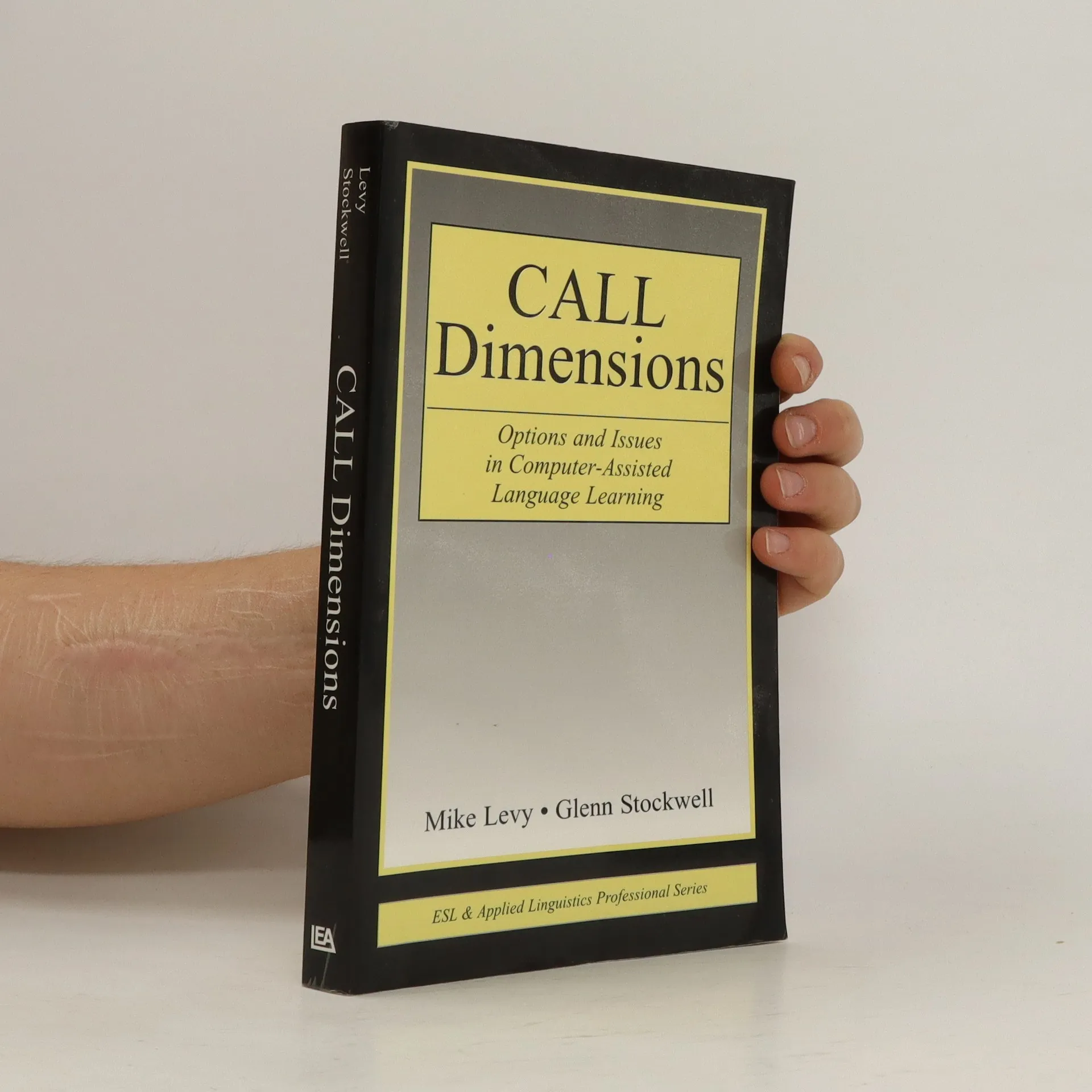
CALL dimensions : options and issues in computer-assisted language learning, Mike Levy, Glenn Stockwell
- Język

- Rok wydania
- 2006
- Oprawa
- (miękka)
Metody płatności
Brakuje nam tutaj Twojej recenzji.
- Tytuł
- CALL dimensions : options and issues in computer-assisted language learning
- Język
- angielski
- Autorzy
- Mike Levy, Glenn Stockwell
- Wydawca
- Lawrence Erbaum Associates
- Rok wydania
- 2006
- Oprawa
- miękka
- Liczba stron
- 310
- ISBN10
- 080585634x
- ISBN13
- 9780805856347
- Tagi
- Ocena
- 3 z 5
- Opis
- This volume provides language teachers, software designers, and researchers with essential insights into the integration of technology in second or foreign language education. It fosters critical reading of existing literature, enabling a comprehensive understanding of the field. Through detailed descriptions, analyses, examples, and discussions, the book constructs a nuanced picture of modern CALL, broadly defined to encompass technology-enhanced language learning, Web-enhanced language learning, and information and communication technologies. Notably, it addresses a variety of languages beyond just English. The authors introduce key areas of interest and growth in CALL before delving into seven significant dimensions: design, evaluation, computer-mediated communication, theory, research, practice, and technology. Each chapter reviews recent literature, identifies themes, and presents illustrative projects, followed by in-depth analyses and conclusions with suggestions for future work. Comprehensive references and links facilitate further exploration of topics of personal interest. The concluding chapters synthesize the various dimensions, first from a practical perspective and then considering the overall development of CALL.