


Work Hard. Be Nice. : How Two Inspired Teachers Created the Most Promising Schools in America
Autorzy
Ocena książki
Parametry
- 328 stron
- 12 godzin czytania
Więcej o książce
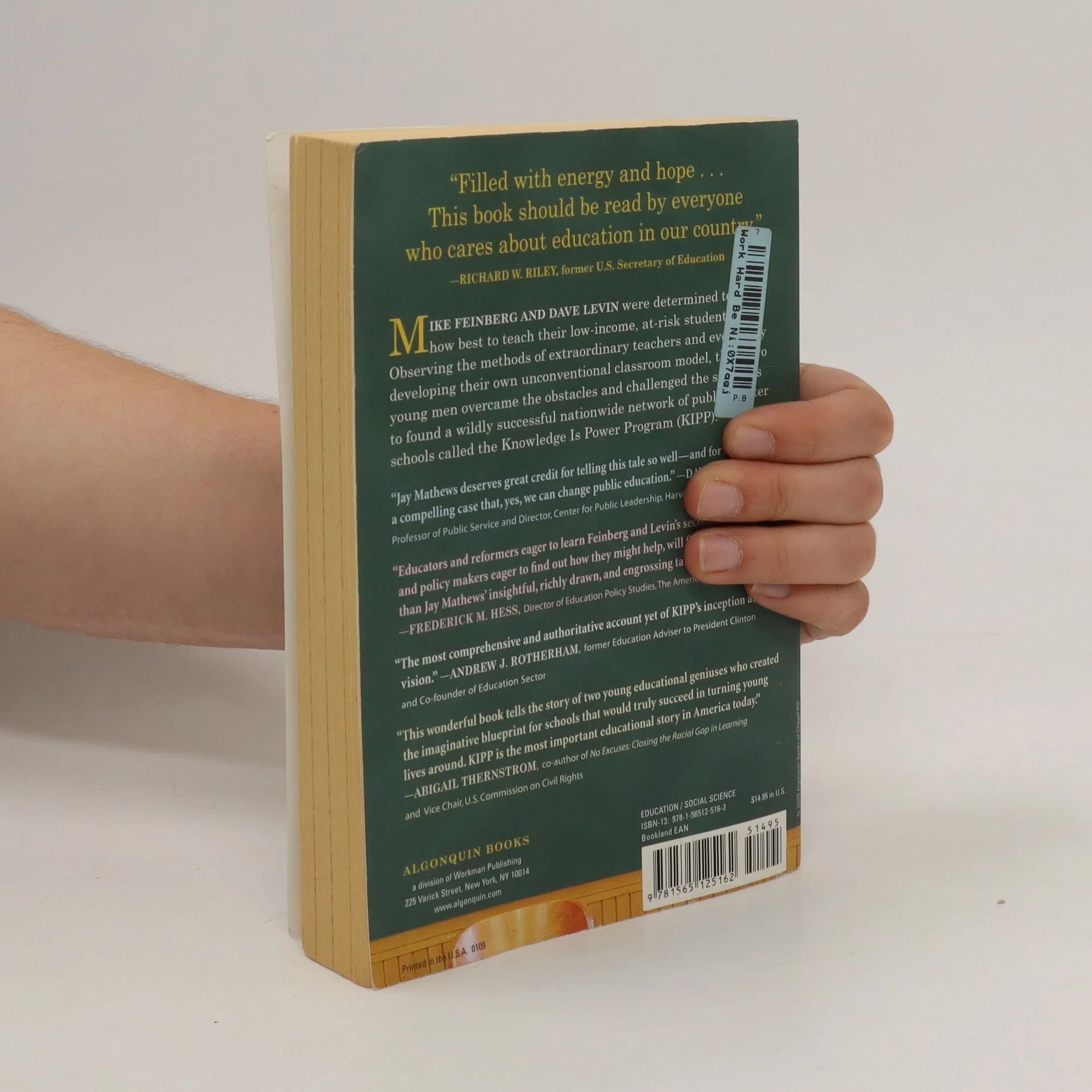
When Mike Feinberg and Dave Levin signed up for Teach for America right after college and found themselves utter failures in the classroom, they vowed to remake themselves into superior educators. They did that—and more. In their early twenties, by sheer force of talent and determination never to take no for an answer, they created a wildly successful fifth-grade experience that would grow into the Knowledge Is Power Program (KIPP), which today includes sixty-six schools in nineteen states and the District of Columbia.KIPP schools incorporate what Feinberg and Levin learned from America's best, most charismatic lessons need to be lively; school days need to be longer (the KIPP day is nine and a half hours); the completion of homework has to be sacrosanct (KIPP teachers are available by telephone day and night). Chants, songs, and slogans such as "Work hard, be nice" energize the program. Illuminating the ups and downs of the KIPP founders and their students, Mathews gives us something quite a hopeful book about education.
Zakup książki
Work Hard. Be Nice. : How Two Inspired Teachers Created the Most Promising Schools in America, Jay Mathews
- Język

- Rok wydania
- 2009
- Oprawa
- (miękka)
Metody płatności
Brakuje nam tutaj Twojej recenzji.
- Tytuł
- Work Hard. Be Nice. : How Two Inspired Teachers Created the Most Promising Schools in America
- Język
- angielski
- Autorzy
- Jay Mathews
- Rok wydania
- 2009
- Oprawa
- miękka
- Liczba stron
- 328
- ISBN10
- 1565125169
- ISBN13
- 9781565125162
- Seria
- Kategorie
- Ocena
- 3,8 z 5
- Opis
- When Mike Feinberg and Dave Levin signed up for Teach for America right after college and found themselves utter failures in the classroom, they vowed to remake themselves into superior educators. They did that—and more. In their early twenties, by sheer force of talent and determination never to take no for an answer, they created a wildly successful fifth-grade experience that would grow into the Knowledge Is Power Program (KIPP), which today includes sixty-six schools in nineteen states and the District of Columbia.KIPP schools incorporate what Feinberg and Levin learned from America's best, most charismatic lessons need to be lively; school days need to be longer (the KIPP day is nine and a half hours); the completion of homework has to be sacrosanct (KIPP teachers are available by telephone day and night). Chants, songs, and slogans such as "Work hard, be nice" energize the program. Illuminating the ups and downs of the KIPP founders and their students, Mathews gives us something quite a hopeful book about education.