

Więcej o książce
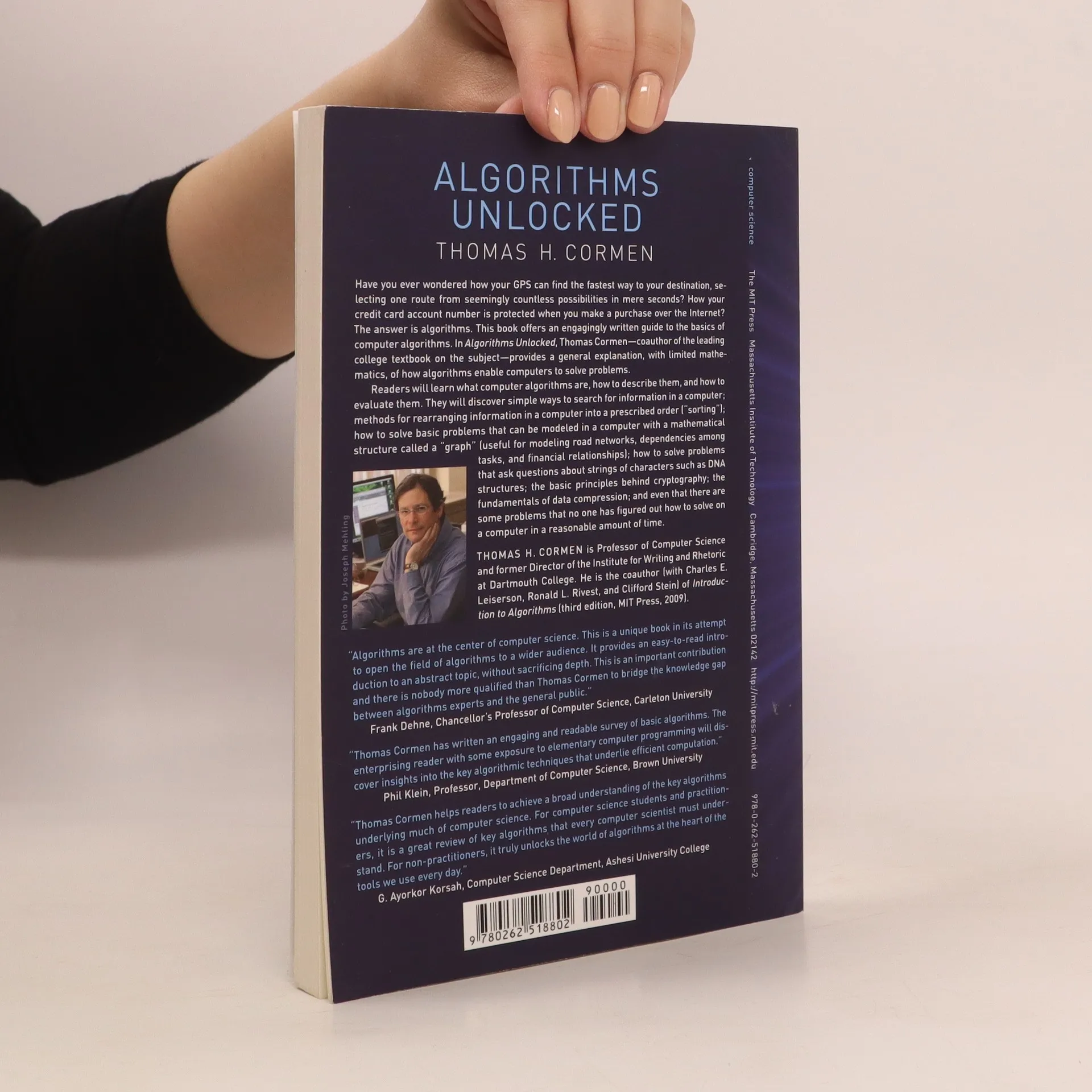
"This book offers an engagingly written guide to the basics of computer algorithms. In Algorithms Unlocked, Thomas Cormen- coauthor of the leading college textbook on the subject- provides a general explanation, with limited mathematics, of how algorithms enable computers to solve problems. Readers will learn what computer algorithms are, how to describe them, and how to evaluate them. They will discover simples ways to search for information in a computer; methods for rearranging information in a computer into a prescribed order ("sorting"); how to solve basic problems that can be modeled in a computer with a mathematical structure called a "graph" (useful for modeling road networks, dependencies among tasks, and financial relationships); how to solve problems that ask questions about strings of characters such as DNA structures; the basic principles behind cryptography; the fundamentals of data compression; and even that there are some problems that no one has figured out how to solve on a computer in a reasonable amount of time."--Back cover
Zakup książki
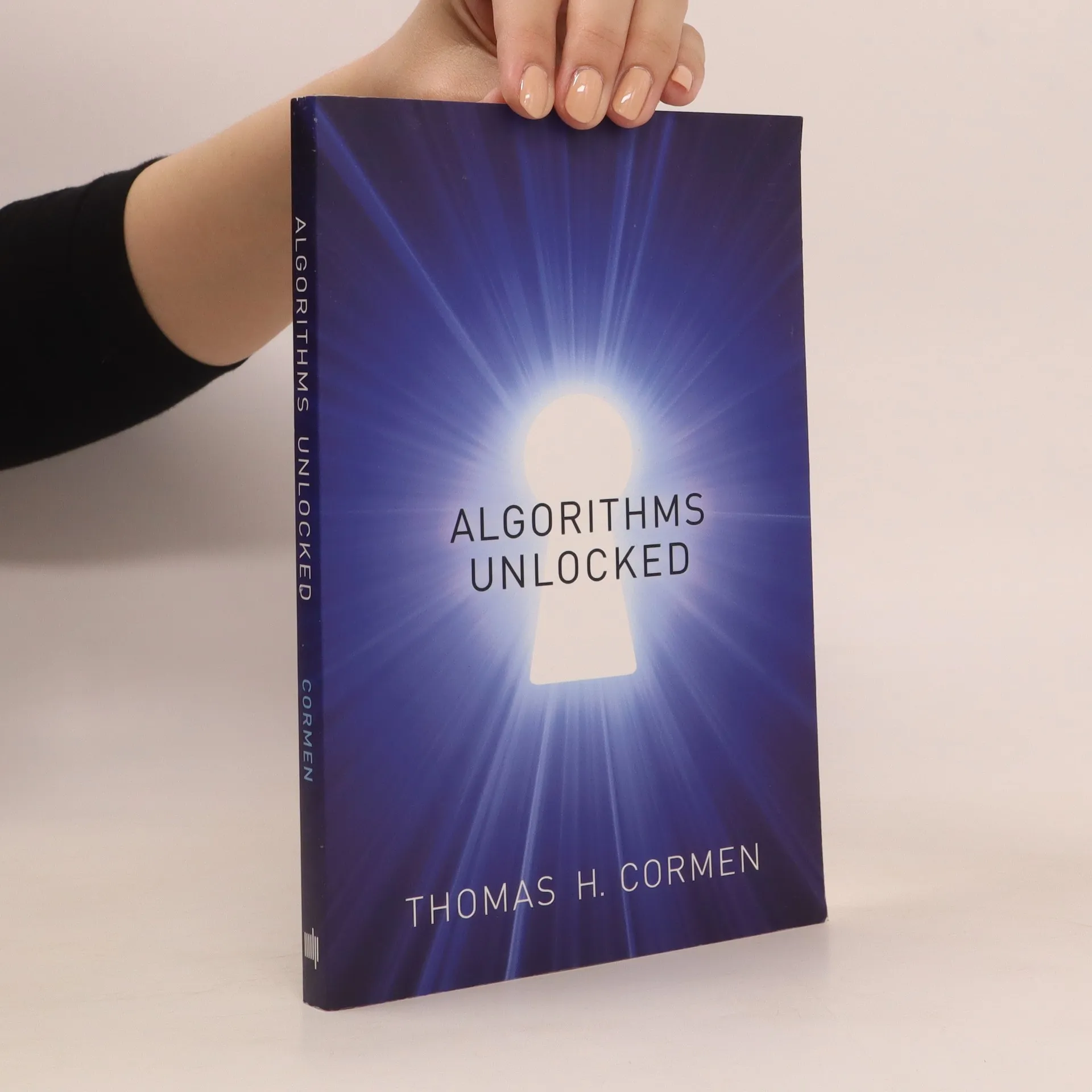
Algorithms unlocked, Thomas H. Cormen
- Język

- Rok wydania
- 2013
- Oprawa
- (miękka)
Metody płatności
Brakuje nam tutaj Twojej recenzji.
- Tytuł
- Algorithms unlocked
- Język
- angielski
- Autorzy
- Thomas H. Cormen
- Wydawca
- MIT Press
- Rok wydania
- 2013
- Oprawa
- miękka
- ISBN10
- 0262518805
- ISBN13
- 9780262518802
- Seria
- Kategorie
- Tagi
- Podręczniki, Nauka, Technologia, Algorytmy
- Ocena
- 3,8 z 5
- Opis
- "This book offers an engagingly written guide to the basics of computer algorithms. In Algorithms Unlocked, Thomas Cormen- coauthor of the leading college textbook on the subject- provides a general explanation, with limited mathematics, of how algorithms enable computers to solve problems. Readers will learn what computer algorithms are, how to describe them, and how to evaluate them. They will discover simples ways to search for information in a computer; methods for rearranging information in a computer into a prescribed order ("sorting"); how to solve basic problems that can be modeled in a computer with a mathematical structure called a "graph" (useful for modeling road networks, dependencies among tasks, and financial relationships); how to solve problems that ask questions about strings of characters such as DNA structures; the basic principles behind cryptography; the fundamentals of data compression; and even that there are some problems that no one has figured out how to solve on a computer in a reasonable amount of time."--Back cover