

Parametry
Więcej o książce
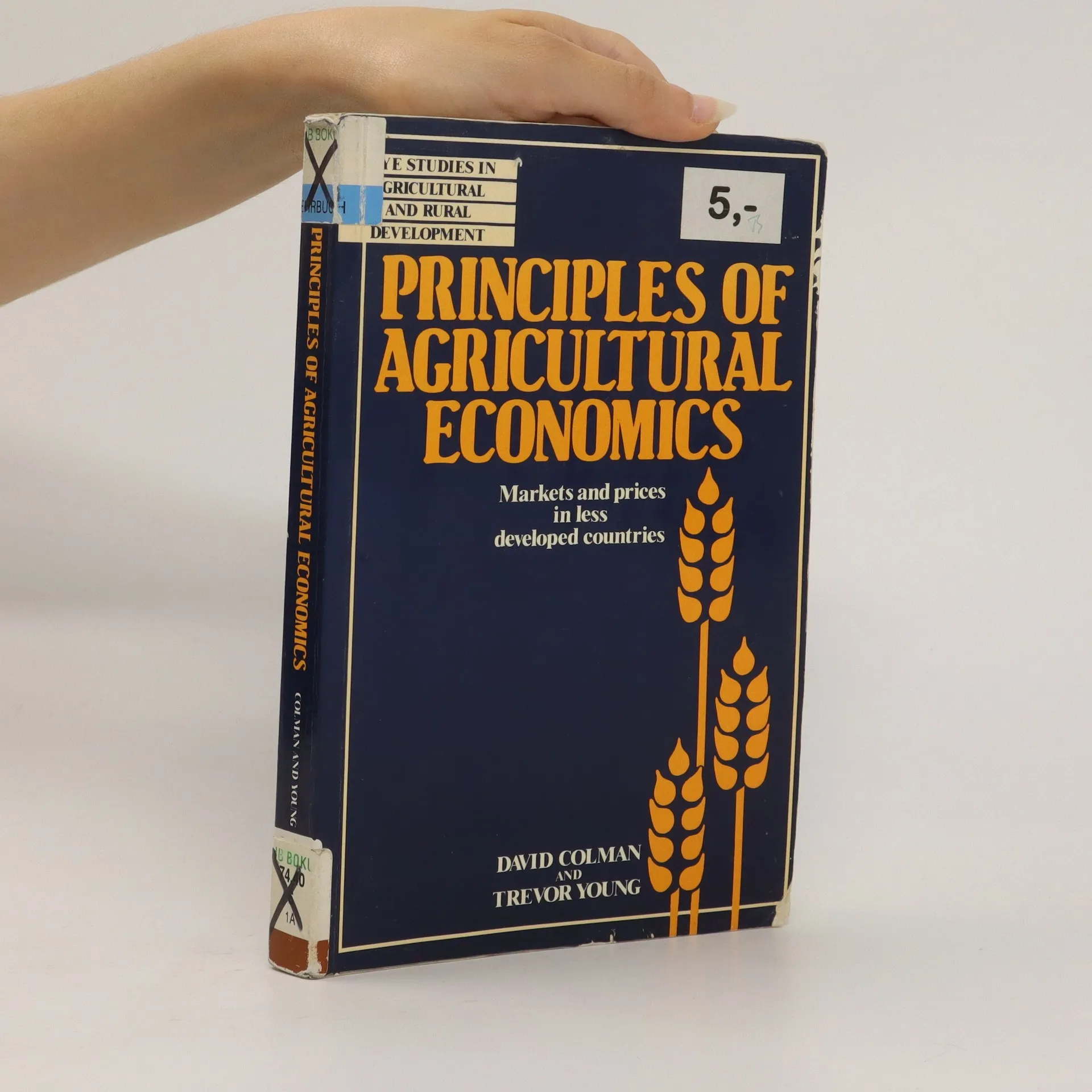
This textbook focuses on essential economic principles for agricultural economists engaged in rural development. While the principles of micro-economics or price-theory are relevant globally, the book emphasizes their significance in the context of agricultural and food sectors in developing countries. It sets itself apart from other texts by using hypothetical and real-world examples primarily from these nations, unlike many that rely on industrialized country scenarios. The first half covers foundational concepts of production, supply, and demand, which are crucial for managing agricultural sectors and food markets. The second half integrates supply and demand into discussions of equilibrium and exchange, followed by trade and economic welfare theory. The concluding chapter illustrates how earlier material can be synthesized by agricultural economists to analyze and compare the impacts of various agricultural policies. This structured approach allows agricultural economics to offer a consistent framework for addressing policy challenges, thereby playing a vital role in promoting rural development.
Zakup książki
Principles of agricultural economics: markets and prices in less developed countries, David Colman, Trevor Leonard Young
- Język

- Rok wydania
- 1989
- Oprawa
- (miękka)
Metody płatności
Brakuje nam tutaj Twojej recenzji.
- Tytuł
- Principles of agricultural economics: markets and prices in less developed countries
- Język
- angielski
- Autorzy
- David Colman, Trevor Leonard Young
- Wydawca
- Cambridge University Press
- Rok wydania
- 1989
- Oprawa
- miękka
- ISBN10
- 0521336643
- ISBN13
- 9780521336642
- Kategorie
- Tagi
- Ocena
- 4 z 5
- Opis
- This textbook focuses on essential economic principles for agricultural economists engaged in rural development. While the principles of micro-economics or price-theory are relevant globally, the book emphasizes their significance in the context of agricultural and food sectors in developing countries. It sets itself apart from other texts by using hypothetical and real-world examples primarily from these nations, unlike many that rely on industrialized country scenarios. The first half covers foundational concepts of production, supply, and demand, which are crucial for managing agricultural sectors and food markets. The second half integrates supply and demand into discussions of equilibrium and exchange, followed by trade and economic welfare theory. The concluding chapter illustrates how earlier material can be synthesized by agricultural economists to analyze and compare the impacts of various agricultural policies. This structured approach allows agricultural economics to offer a consistent framework for addressing policy challenges, thereby playing a vital role in promoting rural development.