



Więcej o książce
Why doesn't cognitive processing occur "in the dark," without consciousness? This question is central to the growing field of consciousness studies, explored by philosophers, physicists, psychologists, neurophysiologists, computer scientists, and others. At the 1994 conference "Toward a Scientific Basis for Consciousness," philosopher David Chalmers differentiated between the "easy" problems, which involve explaining cognitive functions like discrimination and behavior control, and the "hard" problem, which seeks to understand why these functions are linked to phenomenal experience. Some contributors challenge Chalmers' distinction, arguing that the hard problem may not be a genuine issue or that the explanatory gap is insurmountable. Others propose various solutions, drawing from cognitive science, fundamental physics, empirical phenomenology, or theories that regard consciousness as irreducible. The diverse perspectives of contributors such as Bernard J. Baars, Patricia S. Churchland, Daniel C. Dennett, and Roger Penrose enrich the discourse, highlighting the complexity and depth of the inquiry into the nature of consciousness and its relationship to cognitive processes.
Zakup książki
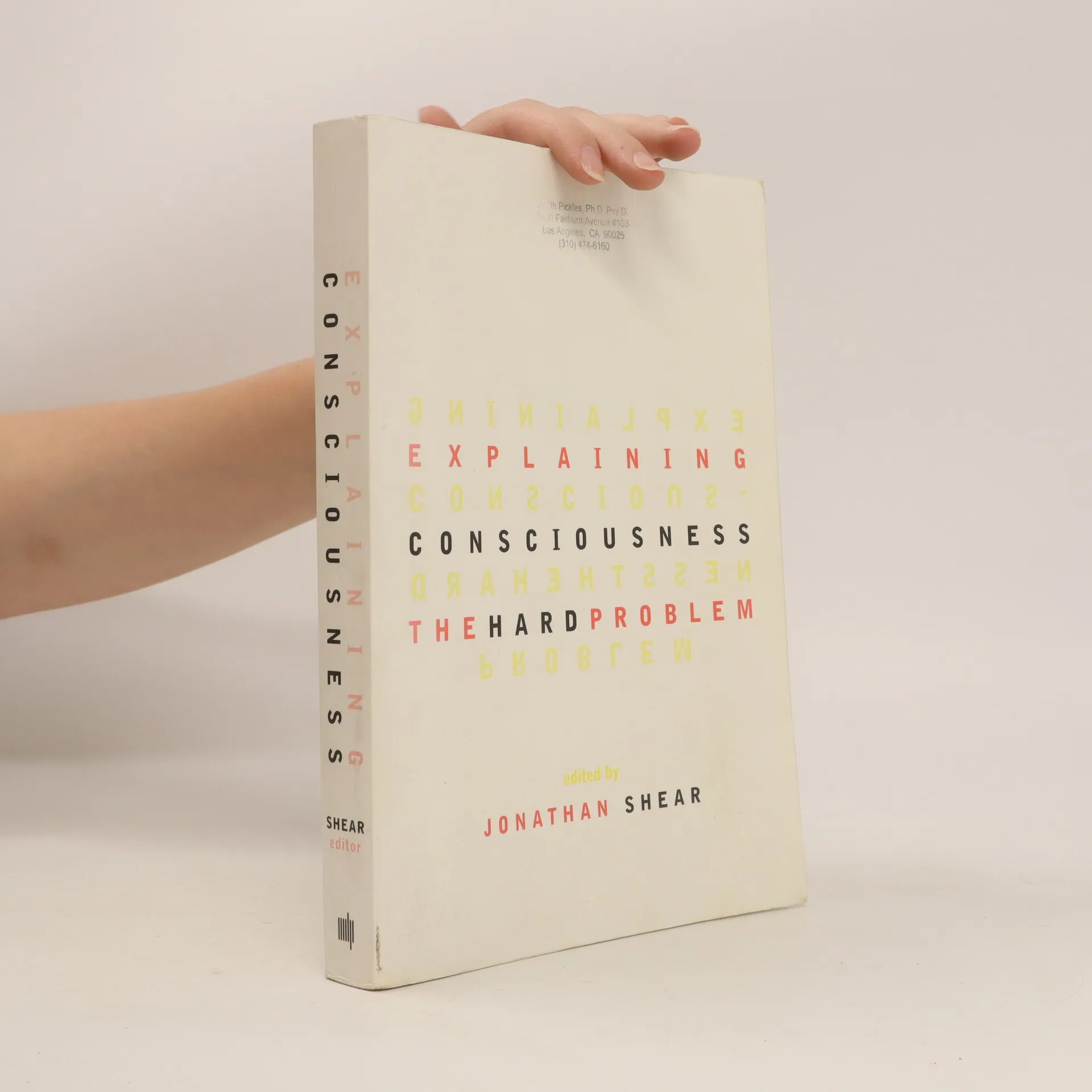
Explaining Consciousness, Jonathan Shear
- Język

- Rok wydania
- 2000
- Oprawa
- (miękka)
Metody płatności
Brakuje nam tutaj Twojej recenzji.
- Tytuł
- Explaining Consciousness
- Język
- angielski
- Autorzy
- Jonathan Shear
- Wydawca
- MIT Press
- Rok wydania
- 2000
- Oprawa
- miękka
- Liczba stron
- 430
- ISBN10
- 026269221x
- ISBN13
- 9780262692212
- Seria
- Ocena
- 3,6 z 5
- Opis
- Why doesn't cognitive processing occur "in the dark," without consciousness? This question is central to the growing field of consciousness studies, explored by philosophers, physicists, psychologists, neurophysiologists, computer scientists, and others. At the 1994 conference "Toward a Scientific Basis for Consciousness," philosopher David Chalmers differentiated between the "easy" problems, which involve explaining cognitive functions like discrimination and behavior control, and the "hard" problem, which seeks to understand why these functions are linked to phenomenal experience. Some contributors challenge Chalmers' distinction, arguing that the hard problem may not be a genuine issue or that the explanatory gap is insurmountable. Others propose various solutions, drawing from cognitive science, fundamental physics, empirical phenomenology, or theories that regard consciousness as irreducible. The diverse perspectives of contributors such as Bernard J. Baars, Patricia S. Churchland, Daniel C. Dennett, and Roger Penrose enrich the discourse, highlighting the complexity and depth of the inquiry into the nature of consciousness and its relationship to cognitive processes.