


Parametry
Więcej o książce
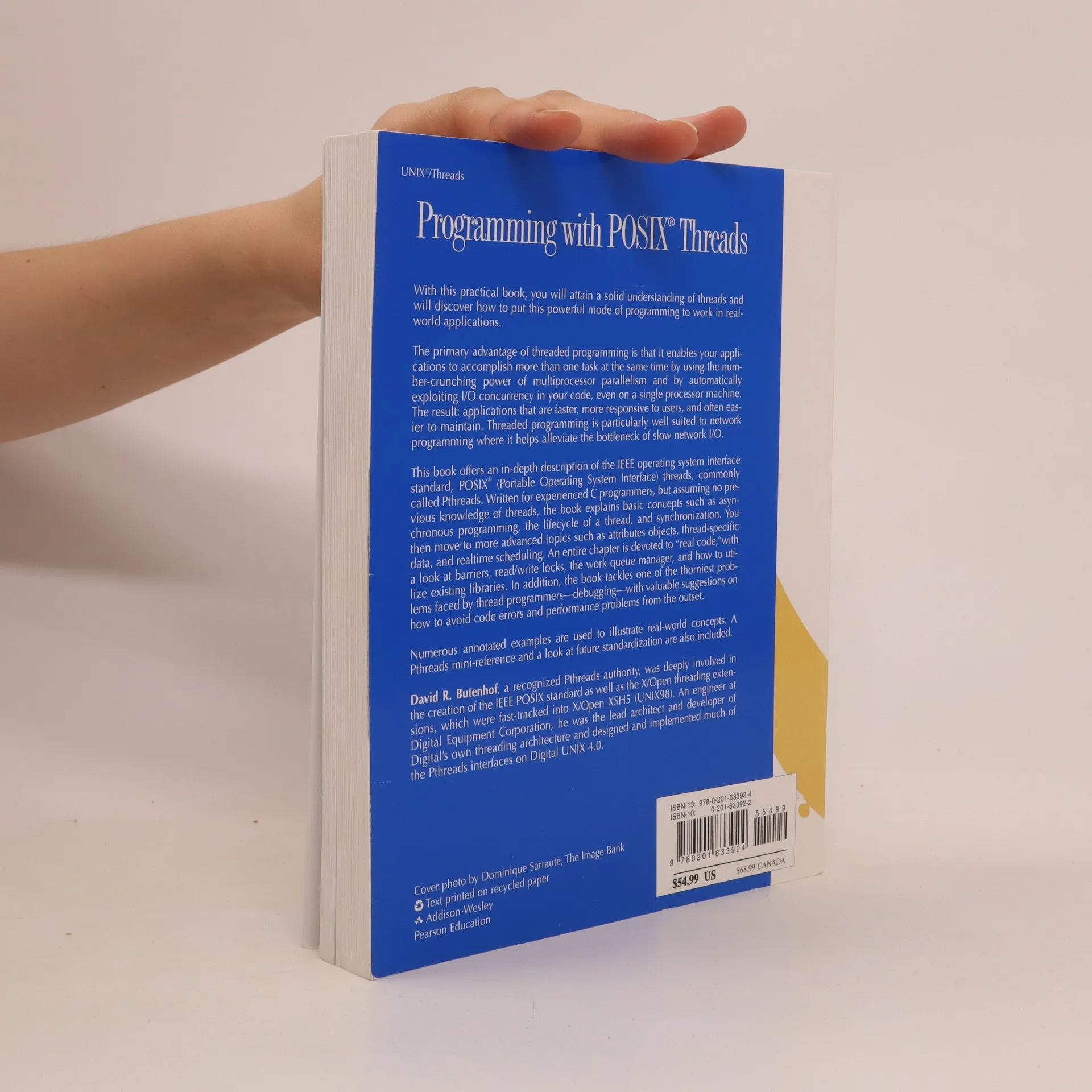
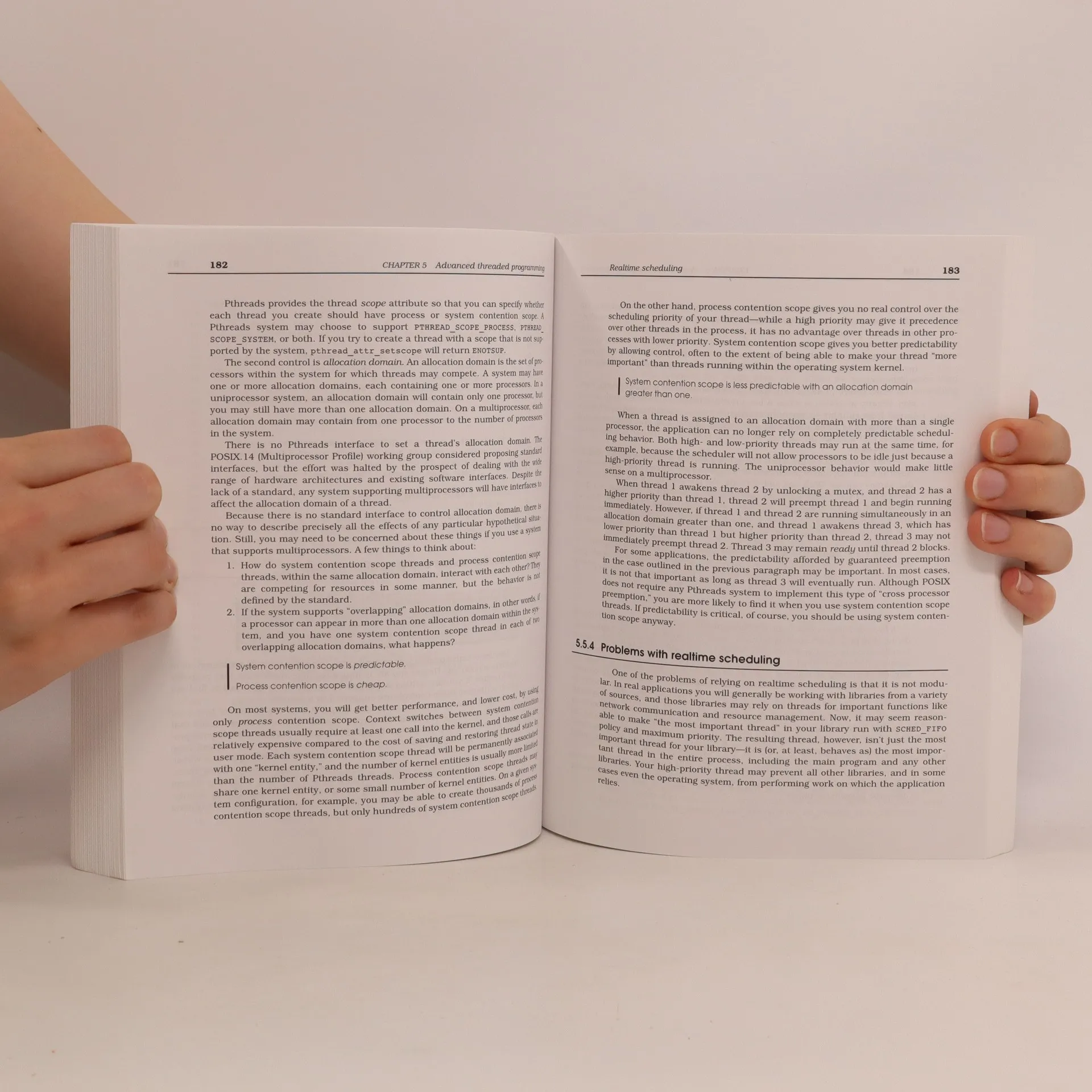
This practical guide provides a solid understanding of threaded programming, enabling you to implement this powerful technique in real-world applications. Threaded programming allows applications to perform multiple tasks simultaneously, leveraging multiprocessor parallelism and enhancing I/O concurrency, even on single-processor machines. The outcome is faster, more responsive applications that are often easier to maintain. This approach is particularly beneficial in network programming, where it mitigates slow network I/O bottlenecks. The book offers an in-depth exploration of the IEEE operating system interface standard, POSIX threads (Pthreads), targeting experienced C programmers without prior knowledge of threads. It covers fundamental concepts such as asynchronous programming, thread lifecycle, and synchronization, progressing to advanced topics like attributes objects, thread-specific data, and real-time scheduling. A dedicated chapter on "real code" examines barriers, read/write locks, and the work queue manager, along with guidance on utilizing existing libraries. Additionally, it addresses the challenging issue of debugging in threaded programming, providing strategies to prevent code errors and performance issues from the start. Numerous annotated examples illustrate real-world concepts, complemented by a Pthreads mini-reference and insights into future standardization.
Zakup książki
Programming with POSIX threads, David R. Butenhof
- Język

- Rok wydania
- 1997
- Oprawa
- (miękka)
Metody płatności
Brakuje nam tutaj Twojej recenzji.
- Tytuł
- Programming with POSIX threads
- Język
- angielski
- Autorzy
- David R. Butenhof
- Wydawca
- Addison-Wesley
- Rok wydania
- 1997
- Oprawa
- miękka
- ISBN10
- 0201633922
- ISBN13
- 9780201633924
- Seria
- Tagi
- Oprogramowanie
- Ocena
- 4,3 z 5
- Opis
- This practical guide provides a solid understanding of threaded programming, enabling you to implement this powerful technique in real-world applications. Threaded programming allows applications to perform multiple tasks simultaneously, leveraging multiprocessor parallelism and enhancing I/O concurrency, even on single-processor machines. The outcome is faster, more responsive applications that are often easier to maintain. This approach is particularly beneficial in network programming, where it mitigates slow network I/O bottlenecks. The book offers an in-depth exploration of the IEEE operating system interface standard, POSIX threads (Pthreads), targeting experienced C programmers without prior knowledge of threads. It covers fundamental concepts such as asynchronous programming, thread lifecycle, and synchronization, progressing to advanced topics like attributes objects, thread-specific data, and real-time scheduling. A dedicated chapter on "real code" examines barriers, read/write locks, and the work queue manager, along with guidance on utilizing existing libraries. Additionally, it addresses the challenging issue of debugging in threaded programming, providing strategies to prevent code errors and performance issues from the start. Numerous annotated examples illustrate real-world concepts, complemented by a Pthreads mini-reference and insights into future standardization.