




Więcej o książce
In this important book, three prominent economists propose that there are different varieties of capitalism in the world today--some good for economic growth, others decidedly bad. Writing in an accessible style, William J. Baumol, Robert E. Litan, and Carl J. Schramm documentfour different varieties of capitalism and identify the conditions that characterize Good Capitalism--the right blend of entrepreneurial and established firms, which can vary among countries--as well as the features of Bad Capitalism. They examine how countries catching up to the United States can move faster toward the economic frontier, while laying out the need for the United States itself to stick to and reinforce the recipe for growth that has enabled it to be the leading economic force in the world. This pathbreaking book is a must read for anyone who cares about global growth and how to ensure America's economic future.
Zakup książki
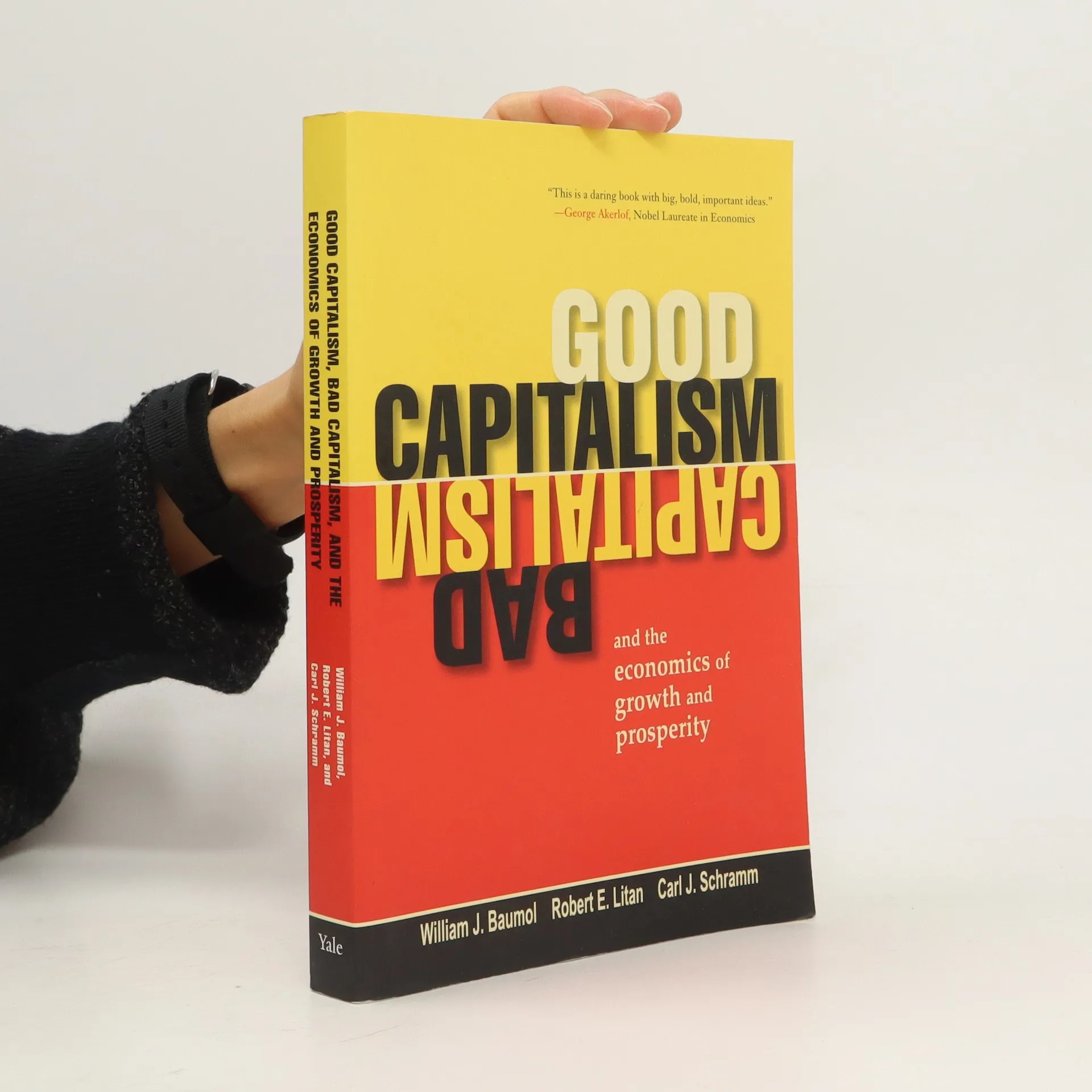
Good Capitalism, Bad Capitalism, and the Economics of Growth and Prosperity, William J. Baumol, Robert E. Litan, Carl J. Schramm
- Język

- Rok wydania
- 2007
- Oprawa
- (miękka)
Metody płatności
Brakuje nam tutaj Twojej recenzji.
- Tytuł
- Good Capitalism, Bad Capitalism, and the Economics of Growth and Prosperity
- Język
- angielski
- Wydawca
- Yale University Press
- Rok wydania
- 2007
- Oprawa
- miękka
- Liczba stron
- 336
- ISBN10
- 0300158327
- ISBN13
- 9780300158328
- Seria
- Tagi
- Biznes
- Ocena
- 3,1 z 5
- Opis
- In this important book, three prominent economists propose that there are different varieties of capitalism in the world today--some good for economic growth, others decidedly bad. Writing in an accessible style, William J. Baumol, Robert E. Litan, and Carl J. Schramm documentfour different varieties of capitalism and identify the conditions that characterize Good Capitalism--the right blend of entrepreneurial and established firms, which can vary among countries--as well as the features of Bad Capitalism. They examine how countries catching up to the United States can move faster toward the economic frontier, while laying out the need for the United States itself to stick to and reinforce the recipe for growth that has enabled it to be the leading economic force in the world. This pathbreaking book is a must read for anyone who cares about global growth and how to ensure America's economic future.