



Więcej o książce
The essays in this collection signal a new relationship between anthropology and the study of art. The authors explore the boundaries and affinities between art, anthropology, representation, and culture, casting a critical, ethnographic light on the art worlds of the contemporary West and their "traffic" in non-Western objects. Starting from the premise that the traditional anthropology of art has been developed within categories and practices of Western art worlds, this volume develops a new framework for understanding how Western art—its avant-gardes, scholars, commentators, and collectors—have appropriated anthropological subjects like the "primitive" and the "exotic other." Contributions examine the circulation of indigenous art in the international market, the commodification of remote music cultures, and contentious struggles over art, censorship, and funding in the United States. This volume uncovers the practices and processes that drive the Western art world itself, contrasting with previous approaches focused on representing non-Western objects to Western audiences.
Zakup książki
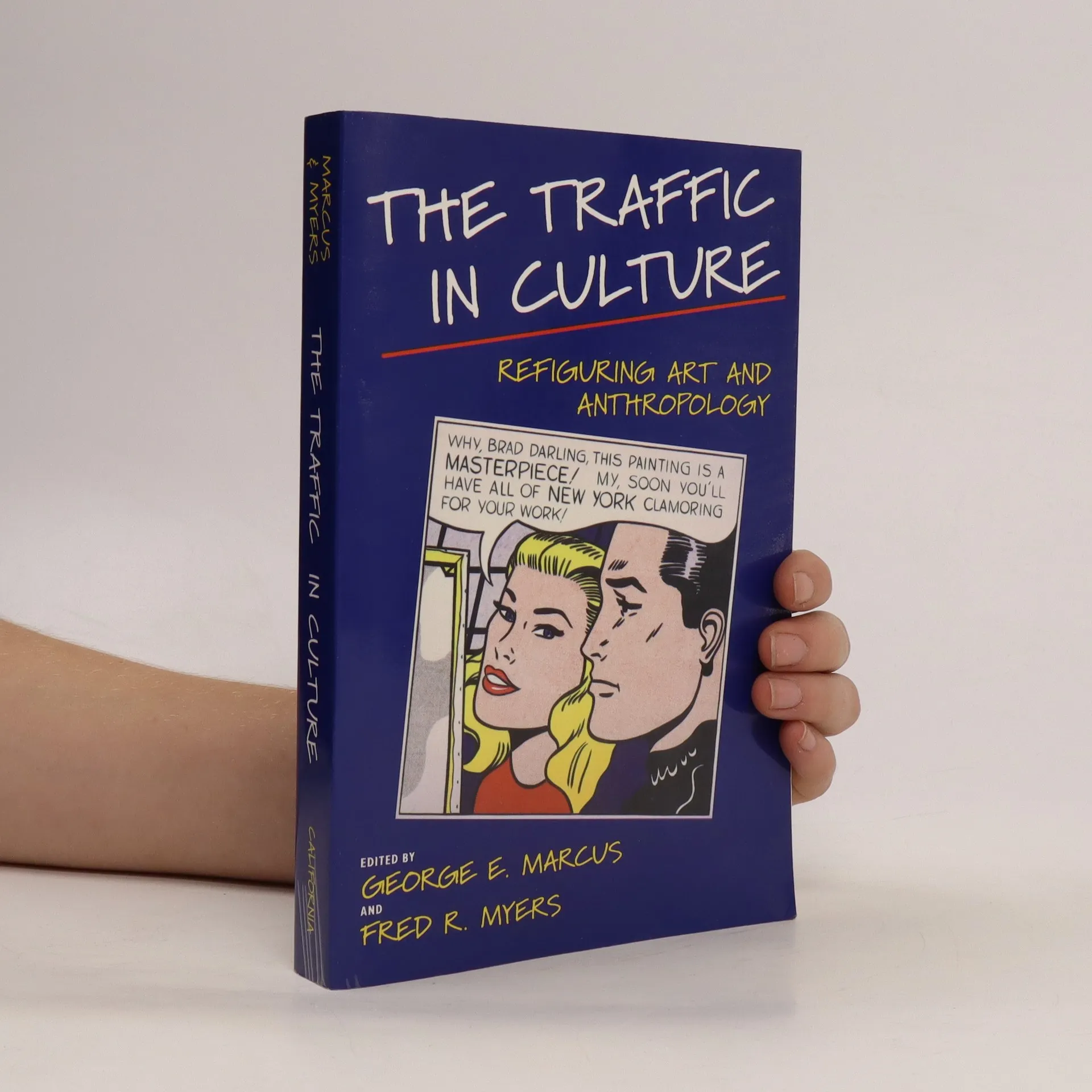
The Traffic in Culture : Refiguring Art and Anthropology, George E. Marcus, Fred R. Myers
- Język

- Rok wydania
- 1995
- Oprawa
- (miękka)
Metody płatności
Brakuje nam tutaj Twojej recenzji.
- Tytuł
- The Traffic in Culture : Refiguring Art and Anthropology
- Język
- angielski
- Autorzy
- George E. Marcus, Fred R. Myers
- Rok wydania
- 1995
- Oprawa
- miękka
- Liczba stron
- 390
- ISBN10
- 0520088476
- ISBN13
- 9780520088474
- Seria
- Tagi
- Sztuki piękne
- Ocena
- 3,9 z 5
- Opis
- The essays in this collection signal a new relationship between anthropology and the study of art. The authors explore the boundaries and affinities between art, anthropology, representation, and culture, casting a critical, ethnographic light on the art worlds of the contemporary West and their "traffic" in non-Western objects. Starting from the premise that the traditional anthropology of art has been developed within categories and practices of Western art worlds, this volume develops a new framework for understanding how Western art—its avant-gardes, scholars, commentators, and collectors—have appropriated anthropological subjects like the "primitive" and the "exotic other." Contributions examine the circulation of indigenous art in the international market, the commodification of remote music cultures, and contentious struggles over art, censorship, and funding in the United States. This volume uncovers the practices and processes that drive the Western art world itself, contrasting with previous approaches focused on representing non-Western objects to Western audiences.